
Paul Twitchell Biography Quotes 8 Report mistakes
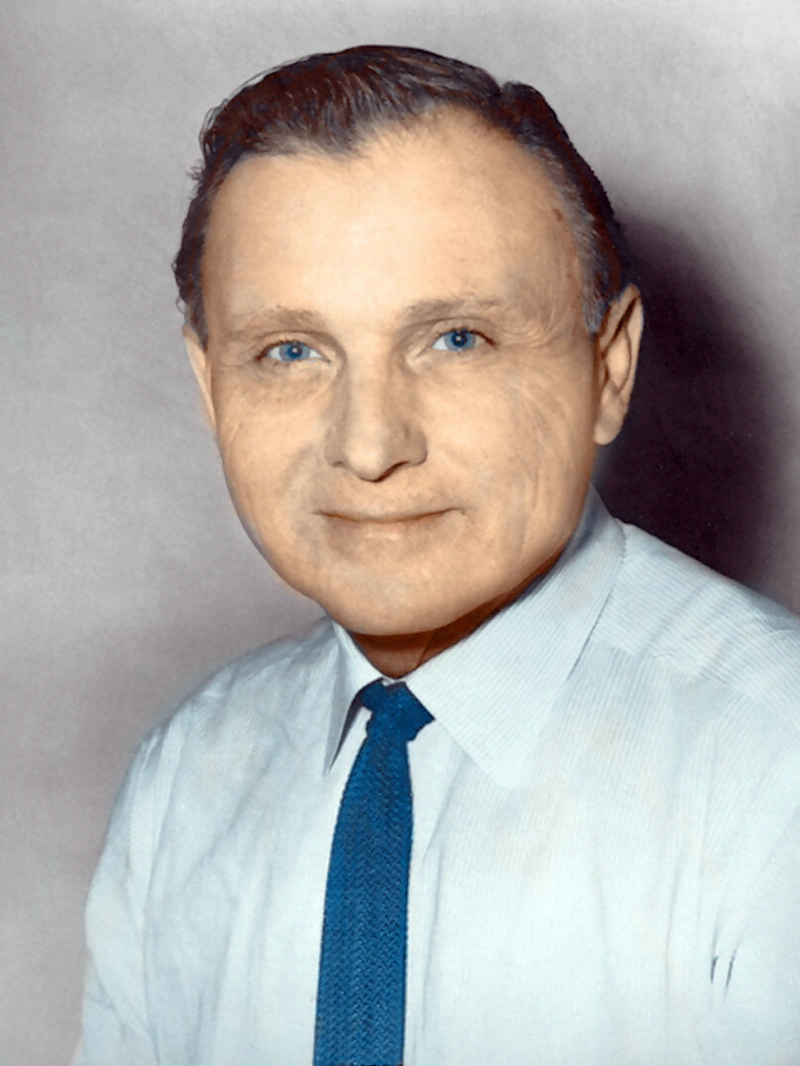
Attr: ECKANKAR
| 8 Quotes | |
| Occup. | Celebrity |
| From | USA |
| Born | October 2, 1908 |
| Died | September 17, 1971 |
| Aged | 62 years |
| Cite | |
Citation Formats
APA Style (7th ed.)
Paul twitchell biography, facts and quotes. (2026, February 11). FixQuotes. https://fixquotes.com/authors/paul-twitchell/
Chicago Style
"Paul Twitchell biography, facts and quotes." FixQuotes. February 11, 2026. https://fixquotes.com/authors/paul-twitchell/.
MLA Style (9th ed.)
"Paul Twitchell biography, facts and quotes." FixQuotes, 11 Feb. 2026, https://fixquotes.com/authors/paul-twitchell/. Accessed 28 Mar. 2026.
Overview
Paul Twitchell was an American spiritual teacher best known as the founder of Eckankar, a modern religious movement introduced in the mid-1960s that emphasizes personal experience of the Divine through the Light and Sound of God. Active as an author, lecturer, and organizer, he became a prominent figure in the landscape of new religious movements in the United States. While some details of his early life remain debated, most accounts place his birth around 1908 and his passing in 1971. His work drew a wide circle of admirers, critics, and collaborators, and his legacy persists through the continued activity of Eckankar and its leadership after his death.Early Life and Formative Interests
Accounts of Twitchell's early life are fragmentary and sometimes contradictory, but it is generally held that he grew up in the American South and showed an early interest in metaphysics, comparative religion, and esoteric traditions. He developed a voracious reading habit and cultivated the ability to synthesize ideas from Eastern and Western schools of thought. By midlife, he was already a committed seeker, moving among various spiritual communities, attending talks, and experimenting with different disciplines that promised direct experience of higher states of consciousness.Search for a Path
Twitchell's years of seeking brought him into contact, either personally or through study, with teachers and groups that shaped his views on mysticism, initiation, and the dynamics of spiritual authority. Some accounts place him in correspondence or association with Kirpal Singh, the Sant Mat teacher of Ruhani Satsang, whose emphasis on the inner Sound Current resonated with Twitchell's emerging ideas. Critics and biographers have also noted a period of involvement with Scientology, founded by L. Ron Hubbard, from which he drew organizational and methodological insights even as he moved in another direction. These experiences provided contrasting models of doctrine, technique, and leadership that helped Twitchell articulate his own approach.Founding of Eckankar
Around 1965, Twitchell began publicly presenting Eckankar, which he framed as an ancient path reintroduced for a modern audience. He described the movement as focused on Soul's direct relationship with the Divine, not merely on belief but on personal spiritual adventure. Central to this was the concept of the Living ECK Master, a spiritual guide who assists sincere seekers both outwardly and in the inner worlds. Twitchell cast himself in that role for his time, offering initiations, discourses, and local gatherings that soon grew into a formal organization. His wife, Gail Atkinson, played a significant role as a close collaborator, helping edit, organize, and correspond with students during a period of rapid expansion.Teachings and Practices
Eckankar's practices under Twitchell's leadership emphasized experiential techniques. The HU chant, a simple devotional sound, was presented as a means to open the heart and attune to the Divine. He taught forms of contemplative practice often described as Soul Travel, or conscious awareness beyond the physical body, and encouraged rigorous dream study as a laboratory for spiritual learning. He wrote of the Light and Sound of God as the primal current, suggesting that seekers could perceive these directly through disciplined practice. The teachings proposed a cosmology of inner planes, spiritual masters, and a progression of initiations meant to foster ethical living, self-responsibility, and freedom from fear.Writings and Communications
Twitchell was prolific. He issued discourses, newsletters, and books to build a common vocabulary for a far-flung membership. Among the titles most often associated with him are The Spiritual Notebook, The Tiger's Fang, Eckankar: The Key to Secret Worlds, and the first volumes of The Shariyat-Ki-Sugmad, which he presented as scripture for the path. In these writings, he blended narrative, instruction, and metaphysical speculation, frequently using parables and first-person accounts to illustrate inner experiences and the challenges of discipleship.Influences, Associates, and Inner Masters
Twitchell acknowledged inspiration from a range of sources. Readers and researchers have traced parallels to Sant Mat literature, especially the works of Julian Johnson, whose The Path of the Masters analyzed the Sound Current tradition. Twitchell also spoke of contact with a lineage of ECK Masters, including Rebazar Tarzs, presented as an inner teacher whose guidance shaped his mission. Gail Atkinson remained a pivotal partner in the day-to-day work of sustaining a growing movement. After Twitchell's death, leadership passed to Darwin Gross, and later to Harold Klemp, whose roles as Living ECK Master would carry the teachings into subsequent decades.Controversies and Debates
From early on, Twitchell's claims drew scrutiny. Critics alleged that he adapted passages and ideas from earlier works without sufficient acknowledgment. Debates also arose over biographical questions such as his exact birth date, certain affiliations, and the status of the inner masters he described. Supporters countered that universal truths surface across traditions and that Twitchell's distinctive contribution lay in integrating practical methods with an accessible, contemporary presentation. These arguments became part of the public record surrounding Eckankar, shaping perceptions both within and outside the movement.Leadership and Organization
As Eckankar expanded, Twitchell systematized teachings through initiations, study materials, and conferences. He maintained correspondence with students, often personalizing his counsel while also establishing procedures that could be administered by local groups. Gail Atkinson's administrative skill complemented his charismatic presence, helping to harmonize the flow of publications, classes, and outreach. The resulting structure allowed Eckankar to survive beyond its founder, a key test for any new religious movement.Death and Succession
Paul Twitchell died in 1971. Prior to his passing, he had identified Darwin Gross as his successor, ensuring continuity of leadership for members who had centered their practice on the relationship to the Living ECK Master. In the years that followed, Harold Klemp emerged as the movement's leader, continuing the emphasis on personal spiritual experience, the HU, and the study of dreams and inner guidance. This line of succession would become part of the movement's self-understanding, reinforcing Twitchell's insistence that the path was larger than any single personality.Legacy
Twitchell's legacy is multifaceted. Admirers view him as a pioneering teacher who offered practical methods for engaging the Divine directly, opening spiritual exploration to people outside monastic or sectarian settings. Scholars place him within the broader evolution of American metaphysical and new religious movements of the 1960s and 1970s, noting both his innovations and the controversies that shadowed them. Whatever one's vantage point, Twitchell left a durable imprint: a body of literature, a living organization, and a set of practices that invite seekers to test spiritual claims through their own inner experience. The ongoing activity of Eckankar and the continuing debates about its origins testify to the enduring influence of the figure who set it in motion.Our collection contains 8 quotes written by Paul, under the main topics: Truth - Wisdom - Failure - Faith - God.