
Paul Valery Biography Quotes 37 Report mistakes
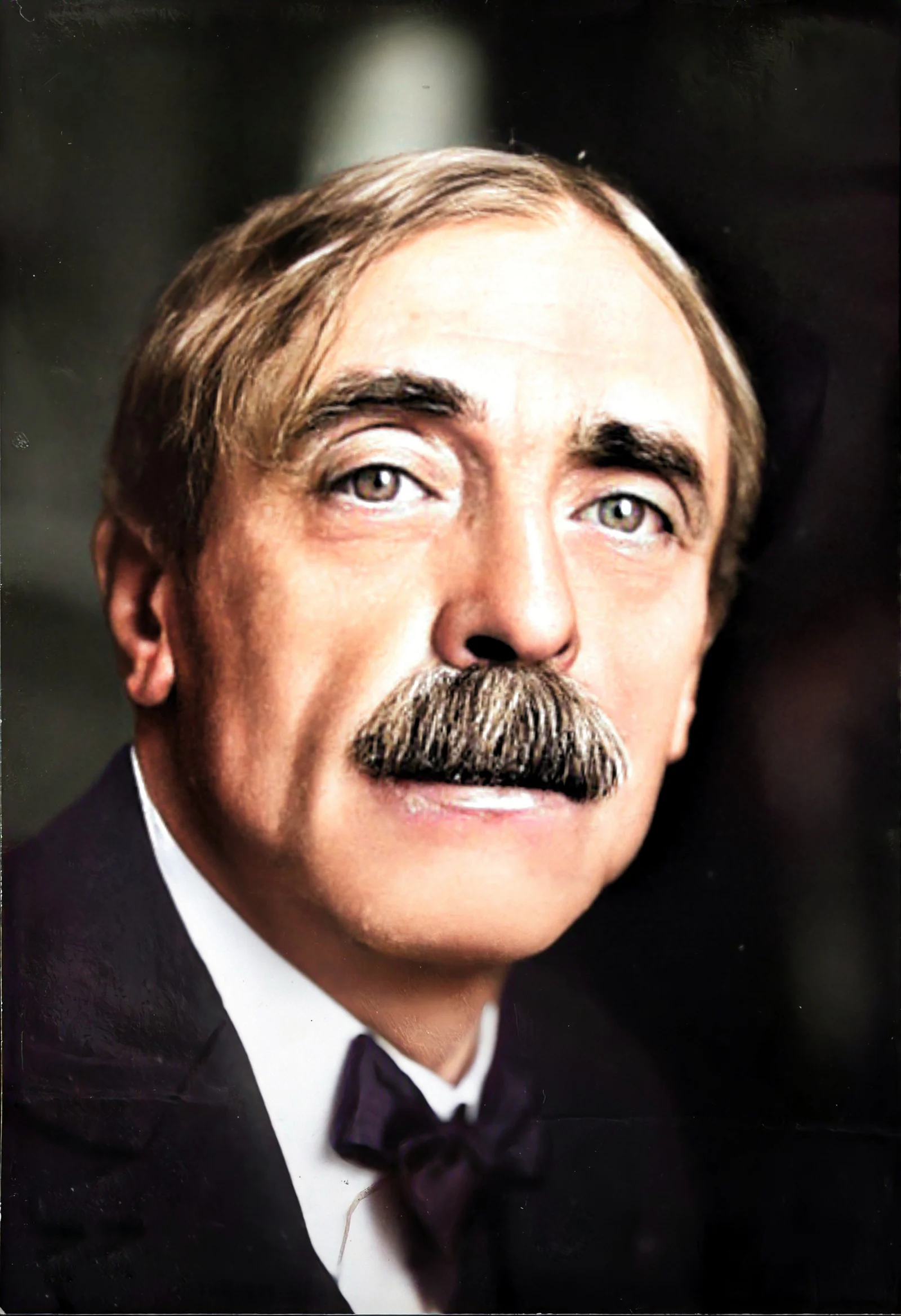
Attr: Henri Manuel
| 37 Quotes | |
| Born as | Paul Ambroise Valéry |
| Occup. | Poet |
| From | France |
| Born | October 30, 1871 Sète, France |
| Died | July 20, 1945 Paris, France |
| Cause | Heart attack |
| Aged | 73 years |
| Cite | |
Citation Formats
APA Style (7th ed.)
Paul valery biography, facts and quotes. (2026, February 8). FixQuotes. https://fixquotes.com/authors/paul-valery/
Chicago Style
"Paul Valery biography, facts and quotes." FixQuotes. February 8, 2026. https://fixquotes.com/authors/paul-valery/.
MLA Style (9th ed.)
"Paul Valery biography, facts and quotes." FixQuotes, 8 Feb. 2026, https://fixquotes.com/authors/paul-valery/. Accessed 7 Mar. 2026.
Early Life and Background
Paul Ambroise Valery was born on 1871-10-30 in Sete, a Mediterranean port in the Herault, into the watchful, mixed-linguistic world of southern France. His father, a Corsican of Italian background, worked in the customs service; his mother was from Genoese stock. The sea, the harbors machinery, and the strict geometry of quays and breakwaters formed an early landscape that later returned transfigured in his most famous meditation, the cemetery above the water at Sete.He came of age in the long aftermath of the Franco-Prussian War and the Paris Commune, when the Third Republic tried to reconcile civic rationalism with mass politics. Valery grew up sensitive to the friction between institutions and the private mind - a tension sharpened by fin-de-siecle anxieties about science, faith, nationalism, and artistic decadence. Early on he showed an inward, analytic temperament that distrusted display, as if the self were something to be engineered rather than confessed.
Education and Formative Influences
He studied law at the University of Montpellier, but his real education was literary and philosophical: the Symbolists (especially Stephane Mallarme), Edgar Allan Poe filtered through Baudelaire, and the mathematical ideal of exact thought. Moving between Montpellier and Paris, he met Mallarme and absorbed the older poets discipline and sense of poetry as a construction of the mind, not an outpouring. A personal crisis in 1892, often associated with a stormy night in Genoa and an unhappy love affair, pushed him away from lyric publication toward a program of self-mastery, logic, and daily intellectual exercises.Career, Major Works, and Turning Points
For two decades he published little poetry, earning a living in Paris as a civil servant and administrator connected to the press and later to the industrialist and patron Edouard Lebey, while filling notebooks that became the lifelong Cahiers (1894-1945), one of modern literatures great laboratories of thought. He re-emerged after World War I with La Jeune Parque (1917), an austere, dazzling poem that announced a new classicism forged from Symbolist intensity and scientific rigor; it was followed by Charmes (1922), containing "Le Cimetiere marin", his Sete elegy of mind versus mortality. In 1925 he was elected to the Academie francaise and became a public intellectual, lecturing widely, writing on Leonardo da Vinci, Degas, and the idea of Europe. During the Occupation he was dismissed from a cultural post at the Centre Universitaire Mediterraneen in Nice and withdrew into guarded independence; he died in Paris on 1945-07-20, receiving a state funeral that underscored the national value attached to his intellectual austerity.Philosophy, Style, and Themes
Valerys inner life was a contest between the sensual world and the minds demand for form. He treated consciousness as a machine with feedback loops: attention, fatigue, desire, and habit were not merely feelings but forces to be measured. This is why his poetry can seem both crystalline and haunted - always asking how thought is made. He distrusted grand systems and rhetorical intoxication, warning against “The folly of mistaking a paradox for a discovery, a metaphor for a proof, a torrent of verbiage for a spring of capital truths, and oneself for an oracle, is inborn in us”. The line is not just a critique of others; it exposes his own fear of self-deception and his need to bind inspiration to verification.His aphorisms about society arose from the same psyche: he saw civilization as a precarious equilibrium between coercion and chaos, with individuals caught inside. “Two dangers constantly threaten the world: order and disorder”. In his work, that paradox becomes aesthetic method - strict meter and syntax holding volatile doubt. The war years deepened his skepticism toward collective passions, and his reflections cut with surgical clarity: “War: a massacre of people who don't know each other for the profit of people who know each other but don't massacre each other”. Poetry, for Valery, was the counter-practice: a disciplined private act that resists propaganda by insisting on precision, music, and the slow construction of meaning.
Legacy and Influence
Valery helped define a modern French classicism: a poetry of exactness, self-scrutiny, and intellectual tension that influenced writers and critics from the interwar period through structuralism and beyond, and his Cahiers became a model for the writers notebook as serious research. He remains central to debates about whether poetry is revelation or craft, and about how an artist can live ethically amid mass politics. If his public roles made him seem Olympian, his enduring gift is the opposite: an art that stages the minds labor in real time, showing how thought becomes form without pretending that form cancels doubt.Our collection contains 37 quotes written by Paul, under the main topics: Witty One-Liners - Motivational - Ethics & Morality - Wisdom - Truth.
Other people related to Paul: Andre Gide (Novelist)
Paul Valery Famous Works
- 1934 Introduction to the Method of Leonardo da Vinci (Essay)
- 1922 Charms (Poetry)
- 1920 The Graveyard by the Sea (Poetry)
- 1919 Monsieur Teste (Novel)
- 1917 The Young Fate (Poetry)
- 1896 The Evening with Monsieur Teste (Novella)
Source / external links