
Pauline Hanson Biography Quotes 20 Report mistakes
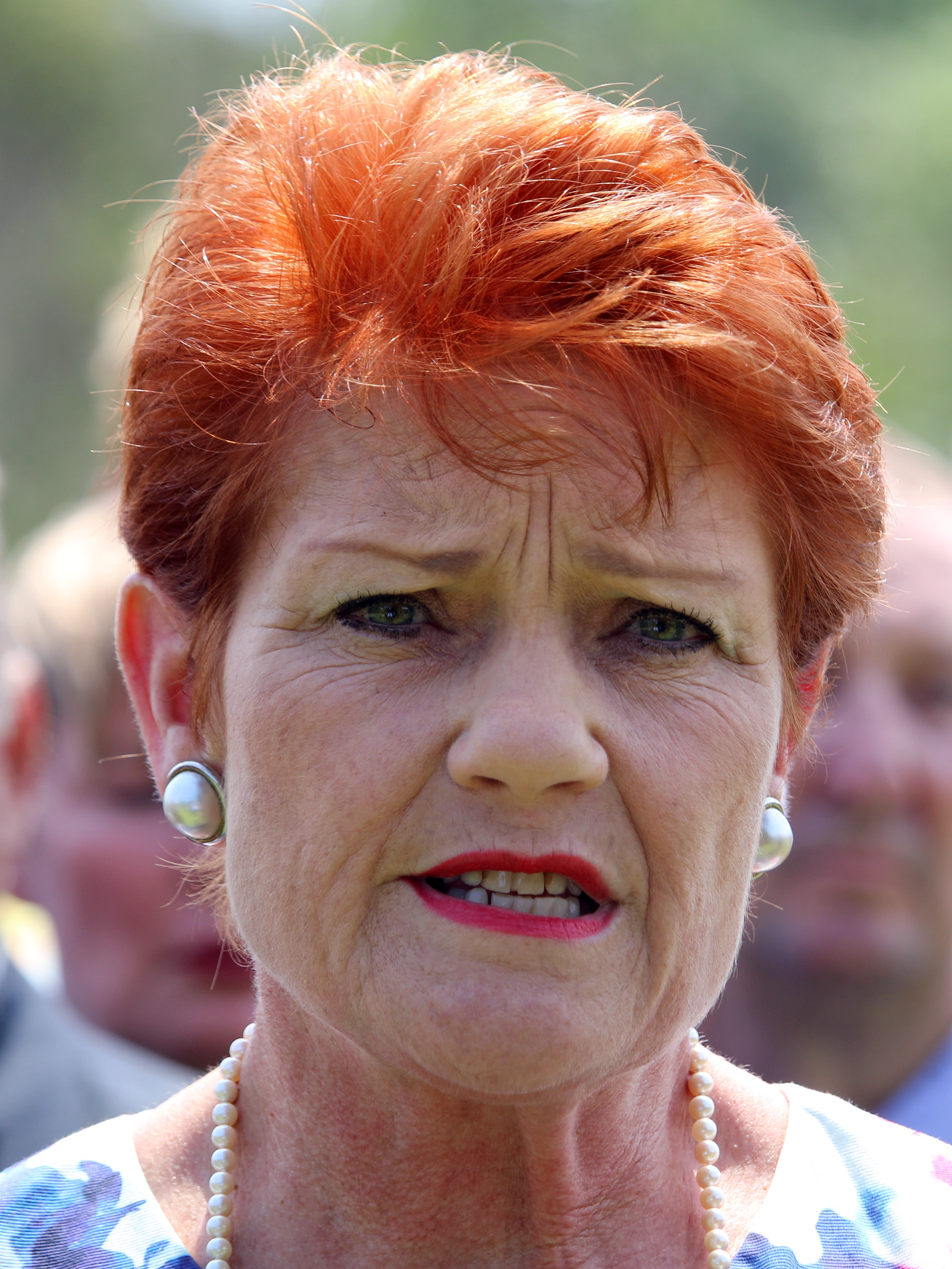
Attr: jfish92, CC0
| 20 Quotes | |
| Born as | Pauline Lee Seccombe |
| Known as | Pauline Lee Hanson |
| Occup. | Politician |
| From | Australia |
| Born | May 27, 1954 Brisbane, Queensland, Australia |
| Age | 71 years |
| Cite | |
Citation Formats
APA Style (7th ed.)
Pauline hanson biography, facts and quotes. (2026, March 24). FixQuotes. https://fixquotes.com/authors/pauline-hanson/
Chicago Style
"Pauline Hanson biography, facts and quotes." FixQuotes. March 24, 2026. https://fixquotes.com/authors/pauline-hanson/.
MLA Style (9th ed.)
"Pauline Hanson biography, facts and quotes." FixQuotes, 24 Mar. 2026, https://fixquotes.com/authors/pauline-hanson/. Accessed 25 Mar. 2026.
Early Life and Background
Pauline Lee Hanson was born on August 26, 1954, in Brisbane, Queensland, into a suburban, working-class Australia shaped by postwar prosperity, tight social hierarchies, and a political culture that prized plain speaking. The country she grew up in was still orienting itself around the White Australia policy's afterlife, the Cold War alliance with the United States, and a conviction that wage security, local manufacturing, and home ownership were both achievable and morally deserved.Before she became a national figure, her life read like the unglamorous ledger of small business and family obligation. She married young, had four children, and later became a single mother. The practical pressures of child-rearing and maintaining income pushed her toward self-reliance as a temperament, and later as a political argument. Her public persona would always draw on this biography of work, debt, and responsibility - a personal narrative that positioned her not as a policy technician but as someone claiming to speak from the kitchen table and the shop counter.
Education and Formative Influences
Hanson left school in her mid-teens, took clerical and shop work, and built her adult identity around experience rather than credentials. Running a small business in Ipswich (including a fish-and-chip shop) placed her in the daily churn of wages, rent, competition, and regulation, and it also located her in a regional-urban corridor where economic restructuring and immigration debates were felt as immediate social change. By the early 1990s, as Australia absorbed the aftershocks of the 1990-91 recession, tariff reductions, and intensifying globalization, Hanson had absorbed a view of politics as something that either protected ordinary households or abandoned them.Career, Major Works, and Turning Points
Hanson entered electoral politics through the Liberal Party, winning preselection for Oxley in 1996, then being disendorsed amid controversy over statements on race and immigration - only to win the seat as an independent in a landslide that signaled a volatile new mood in Australian politics. Her maiden speech to Parliament in September 1996 became the defining text of her early career, and her founding of One Nation in 1997 turned personal notoriety into an organized populist insurgency. The party achieved major state-level breakthroughs in Queensland in 1998, then fractured through internal conflict, leadership disputes, and the difficulties of translating protest into durable governance. Hanson lost her federal seat in 1998, remained a media fixture, and returned to Parliament later via the Senate for Queensland in 2016, re-establishing One Nation as a significant minor party capable of shaping debate on immigration, national identity, security, and regional economic grievance.Philosophy, Style, and Themes
Hanson's politics is built on an ethic of priority: the nation as household, government as gatekeeper, and belonging as a finite resource to be allocated first to insiders. Her rhetorical core is protection - of jobs, industry, borders, and cultural cohesion - and she frames redistribution and spending through a moral arithmetic of who has "earned" claims on the public purse. Her economic nationalism draws on the story of deindustrialization and foreign ownership, portraying sovereignty as something that can be quietly sold off through policy, trade, and capital flows. The emotional engine is not abstract ideology so much as a defensive solidarity with the people she imagines as doing the right thing yet losing ground.Psychologically, Hanson has long insisted on legitimacy through lived experience rather than elite permission: “My view on issues is based on common sense, and my experience as a mother of four children, as a sole parent, and as a businesswoman running a fish and chip shop”. That sentence functions as both biography and shield - a refusal to be displaced by experts, and an assertion that hardship confers epistemic authority. Her moral lens is similarly domestic, extending family budgeting logic to the state: “We must look after our own before lining the pockets of overseas countries and investors”. And her nationalism aims at unity through sameness, not pluralism: “To survive in peace and harmony, united and strong, we must have one people, one nation, one flag”. Across these themes, her style is direct, repetitive, and designed for recirculation; opponents hear simplification, supporters hear clarity.
Legacy and Influence
Hanson's enduring influence lies less in legislation than in the reshaping of Australia's political language and the incentives of its major parties. She helped normalize a harder public conversation about immigration, multiculturalism, and national identity, and she demonstrated how regional economic anxiety could be fused with cultural grievance into a durable electoral brand. One Nation's cycles of rise, rupture, and return also became a template for later populist and minor-party movements: charismatic leadership, media-driven messaging, and the constant struggle to convert outsider energy into stable organization. Whether viewed as tribune or provocateur, Hanson remains a marker of the era in which many Australians stopped believing that prosperity would automatically be shared - and started demanding that the nation define, and defend, who it is for.Our collection contains 20 quotes written by Pauline, under the main topics: Justice - Never Give Up - Freedom - Resilience - Equality.
Source / external links