
Paulo Coelho Biography Quotes 20 Report mistakes
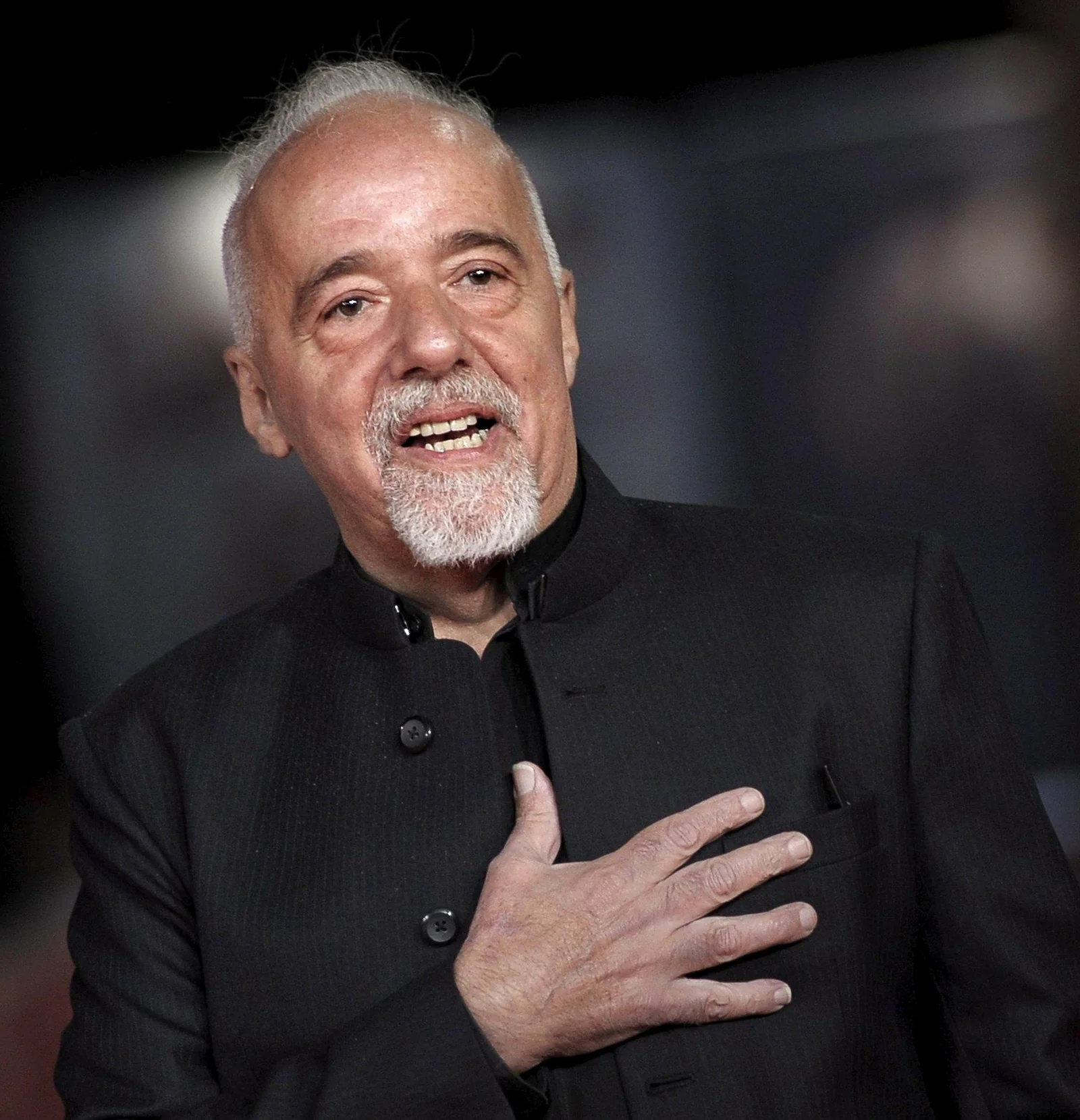
| 20 Quotes | |
| Occup. | Novelist |
| From | Brazil |
| Born | August 24, 1947 |
| Age | 78 years |
| Cite | |
Citation Formats
APA Style (7th ed.)
Paulo coelho biography, facts and quotes. (2026, February 11). FixQuotes. https://fixquotes.com/authors/paulo-coelho/
Chicago Style
"Paulo Coelho biography, facts and quotes." FixQuotes. February 11, 2026. https://fixquotes.com/authors/paulo-coelho/.
MLA Style (9th ed.)
"Paulo Coelho biography, facts and quotes." FixQuotes, 11 Feb. 2026, https://fixquotes.com/authors/paulo-coelho/. Accessed 5 Mar. 2026.
Early Life and Background
Paulo Coelho de Souza was born on August 24, 1947, in Rio de Janeiro, Brazil, into a middle-class Catholic family shaped by postwar conservatism and the promise of rapid urban modernity. His father, Pedro, worked as an engineer, and his mother, Lygia, insisted on discipline and respectability - expectations that clashed early with a son drawn to books, theater, and a restless interior life. Rio in the 1950s and early 1960s was a city of radios, samba, and political argument, but also of tightening social norms that treated artistic vocation as indulgence rather than fate.As a teenager Coelho declared he would become a writer, and the declaration became a domestic crisis. His parents, alarmed by his nonconformity, had him committed to psychiatric institutions more than once in the 1960s, an experience that later informed his suspicion of social "normality" and his fascination with liberation through spiritual rather than merely political means. When Brazil fell under military dictatorship in 1964, coercion moved from the household to the state; Coelho matured in an atmosphere where obedience was demanded, dissent punished, and private longing often had to disguise itself as eccentricity or faith.
Education and Formative Influences
He studied at Jesuit schools and, yielding to parental pressure, enrolled in law, though he soon abandoned it, drifting through the counterculture that flourished despite the dictatorship: theater, journalism, and an interest in esotericism that mixed Catholic imagery with occult and mystical traditions. The era also pushed him toward a hard-earned pragmatism: friends were surveilled, artists were censored, and the simplest act of self-definition carried consequences. This tension between the visible world of institutions and the hidden world of vocation would become a permanent engine in his work.Career, Major Works, and Turning Points
In the 1970s Coelho became widely known in Brazil not as a novelist but as a lyricist, notably collaborating with rock musician Raul Seixas on songs that blended rebellion with mysticism; the partnership drew attention from the regime, and Coelho was arrested and interrogated. After years of wandering, including travel through Europe and a decisive Catholic revival, a pilgrimage on the Camino de Santiago in 1986 became his central turning point; he transformed the experience into The Pilgrimage (1987) and soon after wrote The Alchemist (1988), the fable that made him a global phenomenon. Later novels - Brida (1990), By the River Piedra I Sat Down and Wept (1994), Veronika Decides to Die (1998), The Devil and Miss Prym (2000), and Eleven Minutes (2003) - expanded his international readership, while his public persona, including candid reflections on faith, doubt, and discipline, turned the author himself into a kind of character in the culture.Philosophy, Style, and Themes
Coelho writes in parable-like clarity: short scenes, legible symbols, and a moral pressure that pushes characters toward decision. His deepest subject is not romance or adventure but the inner argument between fear and calling, honed by early confinement and later political intimidation. The sentence “Waiting is painful. Forgetting is painful. But not knowing which to do is the worse kind of suffering”. distills the psychological trap he returns to again and again - the stalled self that cannot choose, and therefore cannot live. In this sense his fiction functions as applied spiritual psychology, offering narrative as a tool for motion when the psyche has frozen.His optimism is not naive so much as transactional: the world answers those who act, but it demands risk and endurance. “Be brave. Take risks. Nothing can substitute experience”. reads like a rebuttal to the institutions that tried to manage his unruliness with diagnosis, punishment, or career planning. Yet his most famous credo - “When a person really desires something, all the universe conspires to help that person to realize his dream”. - also reveals a vulnerability: the need to believe that private longing is not merely private, that fate has an ear. Across his novels, spiritual signs appear not to cancel suffering but to give it meaning, translating anxiety into pilgrimage and turning personal fracture into a disciplined search.
Legacy and Influence
Coelho became one of the most widely read authors of the late 20th and early 21st centuries, with The Alchemist in particular entering the global canon of motivational literature and modern fable, influencing everyone from pop musicians to entrepreneurs and athletes who quote his lines as portable scripture. In Brazil he helped legitimize a mass-market, spiritually direct novel at a time when literary prestige often leaned toward irony or experimental form; internationally he popularized a Brazilian voice that spoke in universalist, devotional tones. His lasting influence lies in making vocation - not as career, but as existential commitment - feel narratable and achievable, and in giving countless readers language for the private, stubborn hope that a life can be rewritten by the courage to choose it.Our collection contains 20 quotes written by Paulo, under the main topics: Motivational - Wisdom - Love - Life - Live in the Moment.
Paulo Coelho Famous Works
- 2006 The Witch of Portobello (Novel)
- 2005 The Zahir (Novel)
- 2000 The Devil and Miss Prym (Novel)
- 1994 By the River Piedra I Sat Down and Wept (Novel)
- 1992 The Valkyries (Novel)
- 1990 Brida (Novel)
- 1988 The Alchemist (Novel)
Source / external links