
Pearl S. Buck Biography Quotes 43 Report mistakes
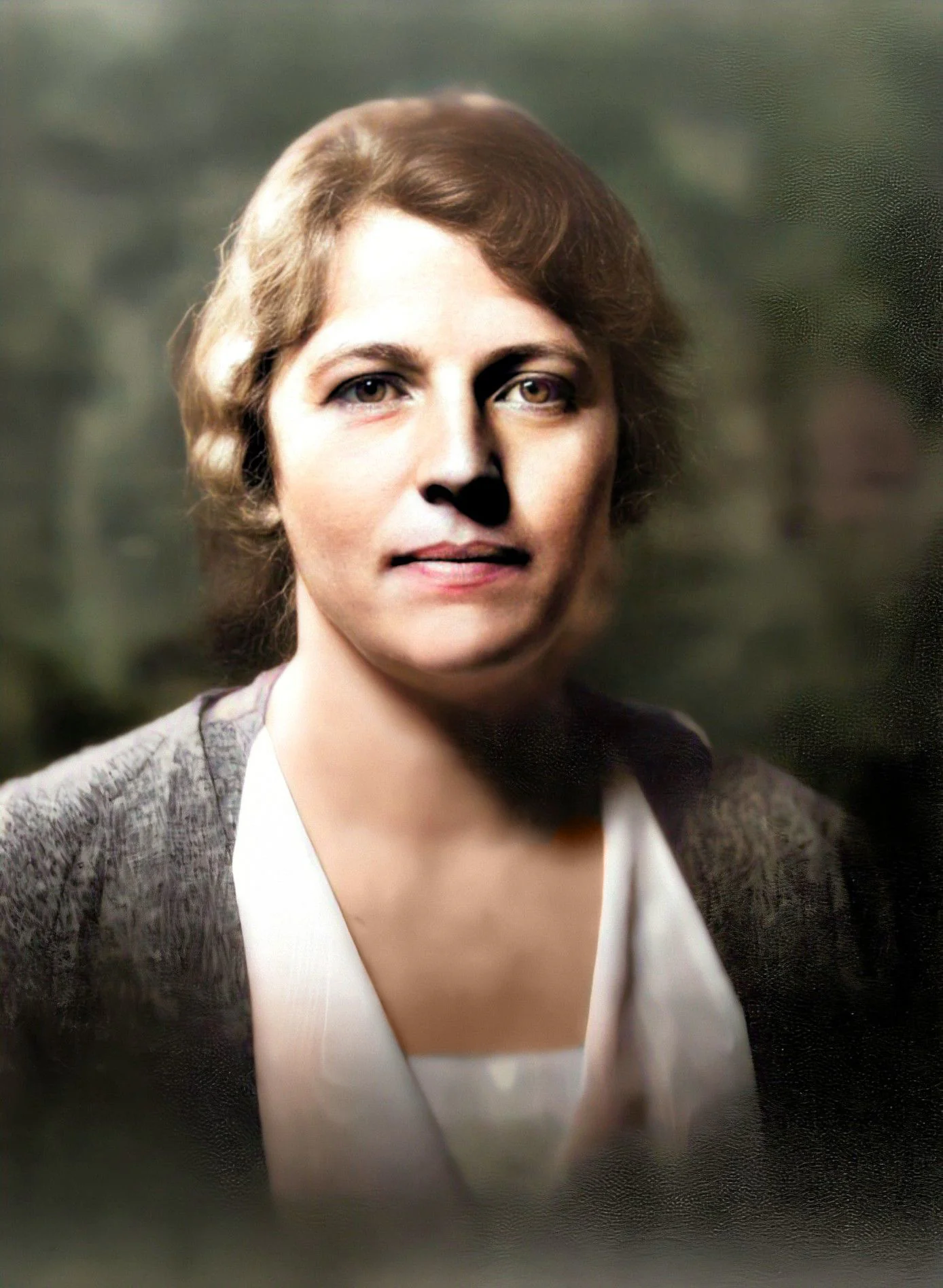
Attr: Arnold Genthe
| 43 Quotes | |
| Born as | Pearl Comfort Sydenstricker |
| Occup. | Novelist |
| From | USA |
| Spouse | John Lossing Buck |
| Born | June 6, 1892 Hillsboro, West Virginia, USA |
| Died | March 6, 1973 Danby, Vermont, USA |
| Cause | Stroke |
| Aged | 80 years |
| Cite | |
Citation Formats
APA Style (7th ed.)
Pearl s. buck biography, facts and quotes. (2026, February 11). FixQuotes. https://fixquotes.com/authors/pearl-s-buck/
Chicago Style
"Pearl S. Buck biography, facts and quotes." FixQuotes. February 11, 2026. https://fixquotes.com/authors/pearl-s-buck/.
MLA Style (9th ed.)
"Pearl S. Buck biography, facts and quotes." FixQuotes, 11 Feb. 2026, https://fixquotes.com/authors/pearl-s-buck/. Accessed 25 Mar. 2026.
Early Life and Background
Pearl Comfort Sydenstricker was born on June 26, 1892, in Hillsboro, West Virginia, the daughter of Southern Presbyterian missionaries. Within months she was carried to China, and the country that would become her imaginative homeland shaped her earliest senses of sound, ritual, and belonging. She grew up largely in Zhenjiang (then commonly romanized as Chinkiang) on the Yangtze, moving between a Chinese-speaking street world and the enclosed, Bible-centered world of the mission compound.Her childhood was marked by doubleness and tension. Her father, Absalom Sydenstricker, was austere and driven; her mother, Caroline Stulting, prized self-reliance and storytelling, and encouraged her daughter to read widely. Pearl absorbed two moral vocabularies at once - Christian certainty and the practical ethics of her Chinese neighbors - and she witnessed upheavals that made politics personal: anti-foreign sentiment, the aftershocks of the Boxer era, and the weakening of the Qing dynasty. By adolescence she had learned that identity could be both gift and wound, and that home might be a language rather than a nation.
Education and Formative Influences
In 1910 she was sent to the United States for college, a disorienting return to a country that was technically hers but emotionally unfamiliar. She studied at Randolph-Macon Woman's College in Lynchburg, Virginia, graduating in 1914, and returned to China as a teacher. Her formative influences were not only Western literature and the Protestant tradition, but also the lived textures of rural China, the cadence of Chinese speech, and the daily negotiations of a cross-cultural life - all of which later gave her fiction its distinctive clarity and moral immediacy.Career, Major Works, and Turning Points
In 1917 she married John Lossing Buck, an agricultural economist, and lived in north China, including periods in Suzhou and later Nanjing. Motherhood and crisis altered her trajectory: her daughter Carol was born in 1920 with a profound developmental disability, and Buck's later advocacy for people with disabilities grew from that private grief. The Nanjing Incident of 1927, when foreign residents were attacked amid civil war turmoil, forced her to confront the fragility of expatriate privilege. She began publishing seriously, and her breakthrough novel, The Good Earth (1931), a saga of the farmer Wang Lung and his wife O-lan, turned global readers toward the dignity and complexity of Chinese peasant life. Success enabled independence; she divorced John Buck and married her editor, Richard J. Walsh, in 1935, settling in Pennsylvania. In 1938 she became the first American woman to win the Nobel Prize in Literature, recognized for fiction that fused social witness with narrative grace. Alongside novels like Sons (1932) and A House Divided (1935), she wrote biographies, essays, and later the "Asian Saga", while increasingly devoting herself to humanitarian work, including founding Welcome House (1949) to promote international and mixed-race adoption.Philosophy, Style, and Themes
Buck's inner life was defined by a need to reconcile worlds without flattening either. She believed memory was an ethical instrument rather than nostalgia, insisting that the present could not be judged without historical depth: “If you want to understand today, you have to search yesterday”. That impulse drove her to write backward into the forces that made ordinary lives legible - famine, land tenure, patriarchy, warlordism - while refusing to reduce characters to mere victims of circumstance.Her style is often described as plain, but its plainness is deliberate: an English tuned to the moral directness of Chinese storytelling and to the mission child's habit of saying hard things simply. Beneath that surface was a fiercely protected privacy, a psychological reservoir that made her prolific and resilient: “Inside myself is a place where I live all alone and that is where I renew my springs that never dry up”. Her novels repeatedly return to endurance as a kind of artistry, and to the stubborn continuity of culture amid catastrophe; she wrote not to romanticize China but to challenge Western caricature with the blunt fact of survival: “Nothing and no one can destroy the Chinese people. They are relentless survivors”. In that insistence is her central theme - that empathy is not sentiment but disciplined attention.
Legacy and Influence
Pearl S. Buck died on March 6, 1973, leaving a body of work that permanently widened the American novel's geographic and moral scope. Celebrated and contested in equal measure, she was criticized for political naivete by some contemporaries and later faulted for cultural simplification, yet her achievement endures: she made millions of readers take non-Western interior lives seriously at a time when that was rare, and she leveraged fame into advocacy for children, adoption, and interracial family-making. Her deepest influence is neither purely literary nor purely political but humanistic - a conviction, born of living between languages, that the "foreign" is often only the unloved neighbor rendered strange by ignorance.Our collection contains 43 quotes written by Pearl, under the main topics: Witty One-Liners - Motivational - Ethics & Morality - Truth - Wisdom.
Pearl S. Buck Famous Works
- 1948 The Big Wave (Novel)
- 1946 Pavilion of Women (Novel)
- 1942 Dragon Seed (Novel)
- 1931 The Good Earth (Novel)
- 1931 House of Earth Trilogy (Novel)
Source / external links