
Peggy Noonan Biography Quotes 18 Report mistakes
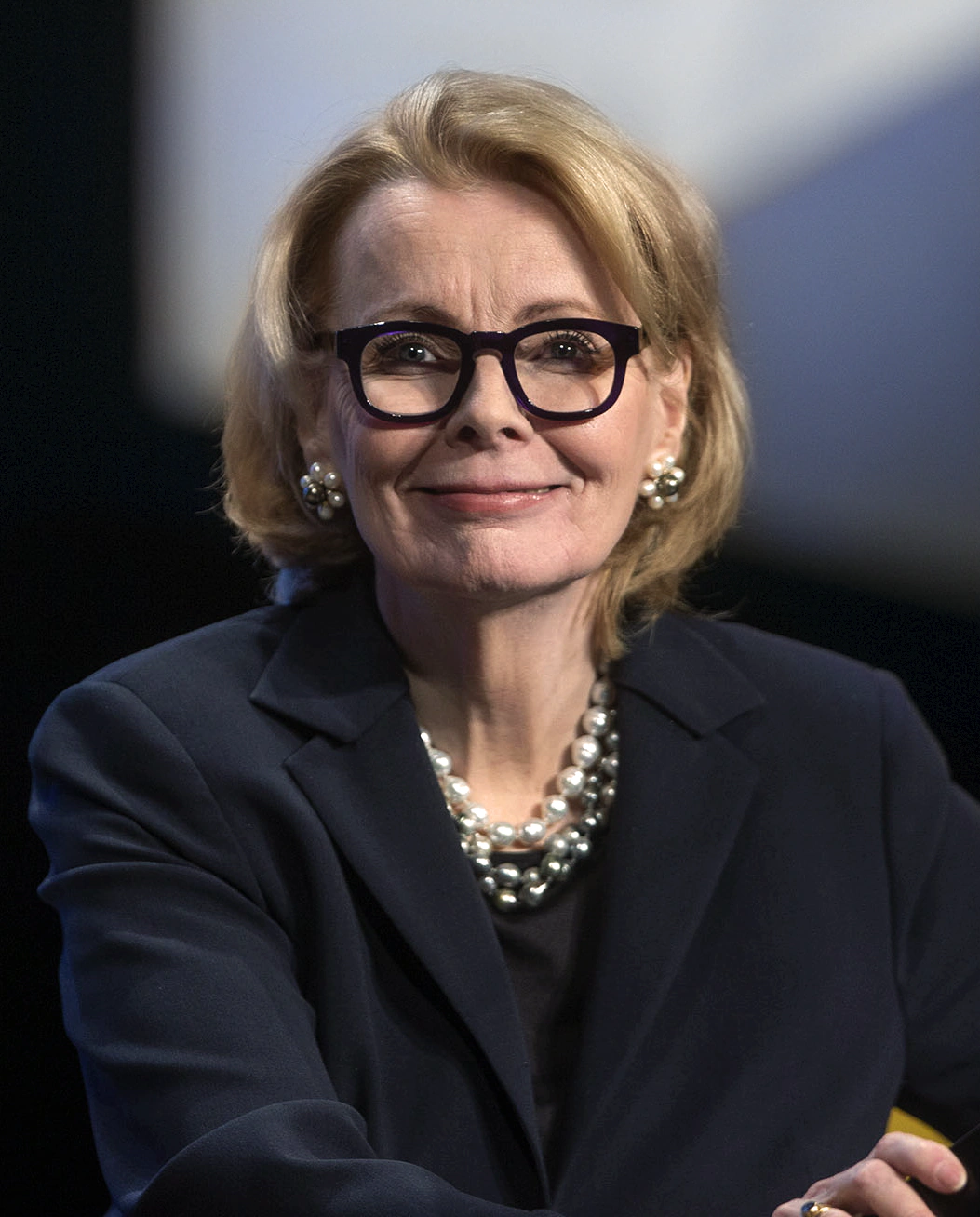
| 18 Quotes | |
| Born as | Margaret Ellen Noonan |
| Occup. | Writer |
| From | USA |
| Born | September 7, 1950 Brooklyn, New York, USA |
| Age | 75 years |
| Cite | |
Citation Formats
APA Style (7th ed.)
Peggy noonan biography, facts and quotes. (2026, February 11). FixQuotes. https://fixquotes.com/authors/peggy-noonan/
Chicago Style
"Peggy Noonan biography, facts and quotes." FixQuotes. February 11, 2026. https://fixquotes.com/authors/peggy-noonan/.
MLA Style (9th ed.)
"Peggy Noonan biography, facts and quotes." FixQuotes, 11 Feb. 2026, https://fixquotes.com/authors/peggy-noonan/. Accessed 5 Mar. 2026.
Early Life and Background
Peggy Noonan, born Margaret Ellen Noonan on September 7, 1950, came of age in a postwar America that was both confident and unsettled - suburban growth and Cold War consensus on one side, cultural fracture and institutional distrust on the other. Raised in New Jersey, she absorbed the cadences of Catholic family life, neighborhood talk, and local politics, an environment where public language still carried moral weight and where the evening news could feel like a civic ritual. That early mix of piety, pragmatism, and street-level skepticism became the emotional grain of her later work: affectionate toward America, wary of its elites, and attentive to the dignity of ordinary striving.The turbulence of the 1960s and 1970s formed the backdrop to her early adult years: Vietnam, Watergate, the energy crisis, and a growing sense that national stories were failing to cohere. Noonan did not present herself as a movement intellectual so much as a listener with strong judgments - someone drawn to the theater of politics yet resistant to its self-importance. Her gift, even before fame, was to hear the difference between rhetoric that merely performs and rhetoric that persuades, comforts, or summons.
Education and Formative Influences
Noonan attended Fairleigh Dickinson University, where she developed the habits that would define her craft: close attention to diction, an ear for spoken rhythm, and an instinct for narrative framing. Journalism and broadcasting sharpened her understanding of how mass media changes not only what people know but how they imagine - a sensibility that later helped her write for presidents while staying alert to the audience beyond the room, the citizens who needed public words to sound both elevated and true.Career, Major Works, and Turning Points
She began as a writer and producer in broadcast news, including work with CBS Radio, then moved into political speechwriting during the Reagan era, serving in the White House and contributing to the public voice of a presidency defined by ideological clarity and showman timing. Noonan is widely associated with major addresses for President Ronald Reagan, including the Challenger disaster speech (1986) and elements of Reagan's farewell rhetoric, and later served as a speechwriter for President George H.W. Bush, including the address to the nation after the death of Princess Diana (1997). After government, she became a prominent columnist and commentator, notably at The Wall Street Journal, and wrote influential books such as What I Saw at the Revolution (1990), an insider account of Reagan-Bush Washington, and When Character Was King (2001), a portrait of Reagan that doubles as an argument about moral authority in leadership. Across these phases, her turning point was not simply access to power, but a determination to translate power into language that could withstand history's audit.Philosophy, Style, and Themes
Noonan's writing rests on a paradox: she is both romantic about public life and fundamentally disenchanted with its actors. Her work treats politics as a serious arena - a place where tragedy, courage, vanity, and grace collide - yet she repeatedly warns against confusing officeholders with heroes. “Don't fall in love with politicians, they're all a disappointment. They can't help it, they just are”. The line is not mere cynicism; it is a protective ethic, a way of preserving moral judgment and emotional independence in a world that rewards attachment, tribalism, and excuses.Her style fuses homiletic clarity with newsroom timing: short declarative sentences, anecdotal evidence, and sudden lyrical lift. She has always argued that public words should aspire to art and accountability at once - “A great speech is literature”. That conviction explains her best-known speechwriting: moments of national rupture handled with restraint, metaphor, and a refusal to drown grief in policy talk. Even when she writes as a columnist, she returns to the idea that language reveals character and that character, in turn, governs outcomes. Underneath lies a spiritual streak - not doctrinal argument, but a sense that human experience exceeds the managerial frame. “I think miracles exist in part as gifts and in part as clues that there is something beyond the flat world we see”. It is a key to her inner life: a believer in mystery who nonetheless insists that leaders be competent, that institutions be steady, and that sentimentality not replace responsibility.
Legacy and Influence
Noonan endures as one of the most recognizable American political writers of the late 20th and early 21st centuries, a rare figure who shaped presidential language and then interpreted the culture that received it. Her influence is visible in how modern speechwriters talk about craft, moral tone, and the necessity of authenticity, and in how columnists blend political critique with meditations on faith, memory, and national character. Admired and contested in equal measure, she helped define a Reagan-era literary sensibility - earnest, dramatic, and skeptical of technocracy - while leaving a body of work that continues to be mined for its lessons about rhetoric, leadership, and the emotional obligations of public speech.Our collection contains 18 quotes written by Peggy, under the main topics: Witty One-Liners - Ethics & Morality - Wisdom - Art - Friendship.
Peggy Noonan Famous Works
- 2015 The Time of Our Lives (Book)
- 2008 Patriotic Grace: What It Is and Why We Need It Now (Book)
- 2005 John Paul The Great: Remembering a Spiritual Father (Book)
- 2001 When Character Was King: A Story of Ronald Reagan (Book)
- 2000 The Case Against Hillary Clinton (Book)
- 1998 Simply Speaking: How to Communicate Your Ideas With Style, Substance, and Clarity (Book)
- 1994 Life, Liberty and the Pursuit of Happiness (Book)
- 1990 What I Saw at the Revolution: A Political Life in the Reagan Era (Book)
Source / external links