
Percy Bysshe Shelley Biography Quotes 38 Report mistakes
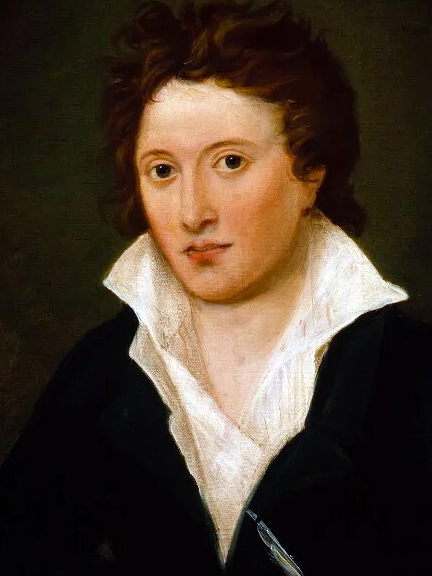
| 38 Quotes | |
| Occup. | Poet |
| From | England |
| Born | August 4, 1792 Horsham, Sussex, England |
| Died | July 8, 1822 Gulf of La Spezia, Italy |
| Cause | drowning |
| Aged | 29 years |
| Cite | |
Citation Formats
APA Style (7th ed.)
Percy bysshe shelley biography, facts and quotes. (2026, February 11). FixQuotes. https://fixquotes.com/authors/percy-bysshe-shelley/
Chicago Style
"Percy Bysshe Shelley biography, facts and quotes." FixQuotes. February 11, 2026. https://fixquotes.com/authors/percy-bysshe-shelley/.
MLA Style (9th ed.)
"Percy Bysshe Shelley biography, facts and quotes." FixQuotes, 11 Feb. 2026, https://fixquotes.com/authors/percy-bysshe-shelley/. Accessed 27 Mar. 2026.
Early Life and Background
Percy Bysshe Shelley was born on 1792-08-04 at Field Place near Horsham, Sussex, into the comfortable, status-conscious world of the landed gentry. His father, Sir Timothy Shelley, would become a Whig MP; his mother, Elizabeth Pilfold, managed a large household in a culture that prized inheritance, Anglican conformity, and good manners as a form of power. Shelley, delicate and quick-minded, grew up at the edge of two Englands - pastoral county life and the political nation in London - and he learned early how easily family affection could harden into coercion when reputation was at stake.From boyhood he carried a sense of being out of key with his surroundings. At school he was mocked and isolated, retreating into books, experiments, and a private theater of ideas where the imagination offered both refuge and provocation. That inwardness was not quietism but a temperamental insistence that life be answerable to conscience. The pattern of his life was set early: intense attachment, sudden rupture, flight into new communities, and the attempt to remake the world through language strong enough to shame tyranny and tender enough to redeem grief.
Education and Formative Influences
Shelley attended Syon House Academy and then Eton College, where bullying and institutional rigidity sharpened his hostility to authority; he absorbed Enlightenment freethought and the radical currents that followed the French Revolution, reading Godwin, Paine, and Voltaire alongside the Gothic and the classics. Entering University College, Oxford, in 1810, he pursued chemistry and metaphysics with equal fervor, but his refusal to separate thought from action brought crisis: in 1811 he and Thomas Jefferson Hogg circulated The Necessity of Atheism, and Oxford expelled him. His family demanded recantation; he refused, converting intellectual dissent into a defining moral identity and beginning a lifelong struggle between private need and public principle.Career, Major Works, and Turning Points
In 1811 Shelley married Harriet Westbrook in a headlong bid for independence, but his emotional restlessness and his hunger for a more rigorously "liberated" life drew him toward William Godwin's circle and Mary Wollstonecraft Godwin. In 1814 he eloped with Mary; the scandal and estrangement from his family were compounded by debt and wandering in Switzerland and Italy. Harriet's death in 1816 haunted him, and a bitter custody judgment denied him his children on moral grounds. Yet these years also yielded the work that fixed his stature: Alastor (1816), The Revolt of Islam (1817), the verse drama Prometheus Unbound (1820), political odes like "Ode to the West Wind" (1819), and the elegy Adonais (1821) for Keats. In Italy he found a paradoxical freedom - exile as permission - while illness, the deaths of children, and perpetual insecurity deepened his lyric intensity. He drowned on 1822-07-08 in the Gulf of Spezia when his boat, the Don Juan, went down in a storm; he was not yet 30.Philosophy, Style, and Themes
Shelley's inner life joined ethical urgency to a volatile, self-questioning sensibility. He distrusted institutions not from cynicism but from a near-religious belief in human perfectibility, arguing that coercive systems merely fossilize the vices they claim to restrain: “Government is an evil; it is only the thoughtlessness and vices of men that make it a necessary evil. When all men are good and wise, government will of itself decay”. This is not a naive program so much as a psychological diagnosis - he experienced authority as a demand to betray the best within himself, and he turned that recoil into a poetics of liberation.His style is famously aerial - rapid metaphor, elastic syntax, and elemental imagery (wind, fire, light) that converts politics into weather and desire into motion. The emotional engine is resilience under historical pressure, a conviction that renewal is built into the structure of time even when it is not visible: “If Winter comes, can Spring be far behind?” At the same time, his lyrics preserve what the world destroys, making memory a moral faculty: “Music, when soft voices die Vibrates in the memory”. Shelley wrote as if imagination were both the archive of love and the rehearsal space for a freer society, where personal tenderness and public justice could finally rhyme.
Legacy and Influence
Shelley became a touchstone for later radicals and poets precisely because his life dramatized the costs of dissent: exile, surveillance, scandal, and grief, set against a body of work that insists beauty can be politically consequential. The Victorians alternately sanitized and feared him; the Pre-Raphaelites, the Chartists, and later modernists and anti-imperial writers drew from his fusion of lyric rapture and revolutionary critique. Today he endures not as a marble saint but as a restless conscience of the Romantic era - a poet for whom freedom was not a slogan but a daily, intimate experiment, pursued to the point of catastrophe and transfigured into some of the most luminous English verse of the 19th century.Our collection contains 38 quotes written by Percy, under the main topics: Witty One-Liners - Ethics & Morality - Justice - Music - Love.
Other people related to Percy: Horace Smith (Poet), Gregory Corso (Poet), Edward Dowden (Critic)
Percy Bysshe Shelley Famous Works
- 1822 Hellas (Play)
- 1821 A Defence of Poetry (Essay)
- 1821 Epipsychidion (Poem)
- 1821 Adonais: An Elegy on the Death of John Keats (Poem)
- 1820 To a Skylark (Poem)
- 1820 The Cloud (Poem)
- 1820 The Sensitive Plant (Poem)
- 1820 Prometheus Unbound (Play)
- 1819 Ode to the West Wind (Poem)
- 1819 The Cenci (Play)
- 1819 The Masque of Anarchy (Poem)
- 1819 Song to the Men of England (Poem)
- 1818 Ozymandias (Poem)
- 1818 Julian and Maddalo (Poem)
- 1818 The Revolt of Islam (Poem)
- 1816 Hymn to Intellectual Beauty (Poem)
- 1816 Mont Blanc; Lines Written in the Vale of Chamouni (Poem)
- 1816 Alastor; or, The Spirit of Solitude (Poem)
- 1813 Queen Mab (Poem)
- 1811 St. Irvyne; or, The Rosicrucian (Novel)