
Pericles Biography Quotes 14 Report mistakes
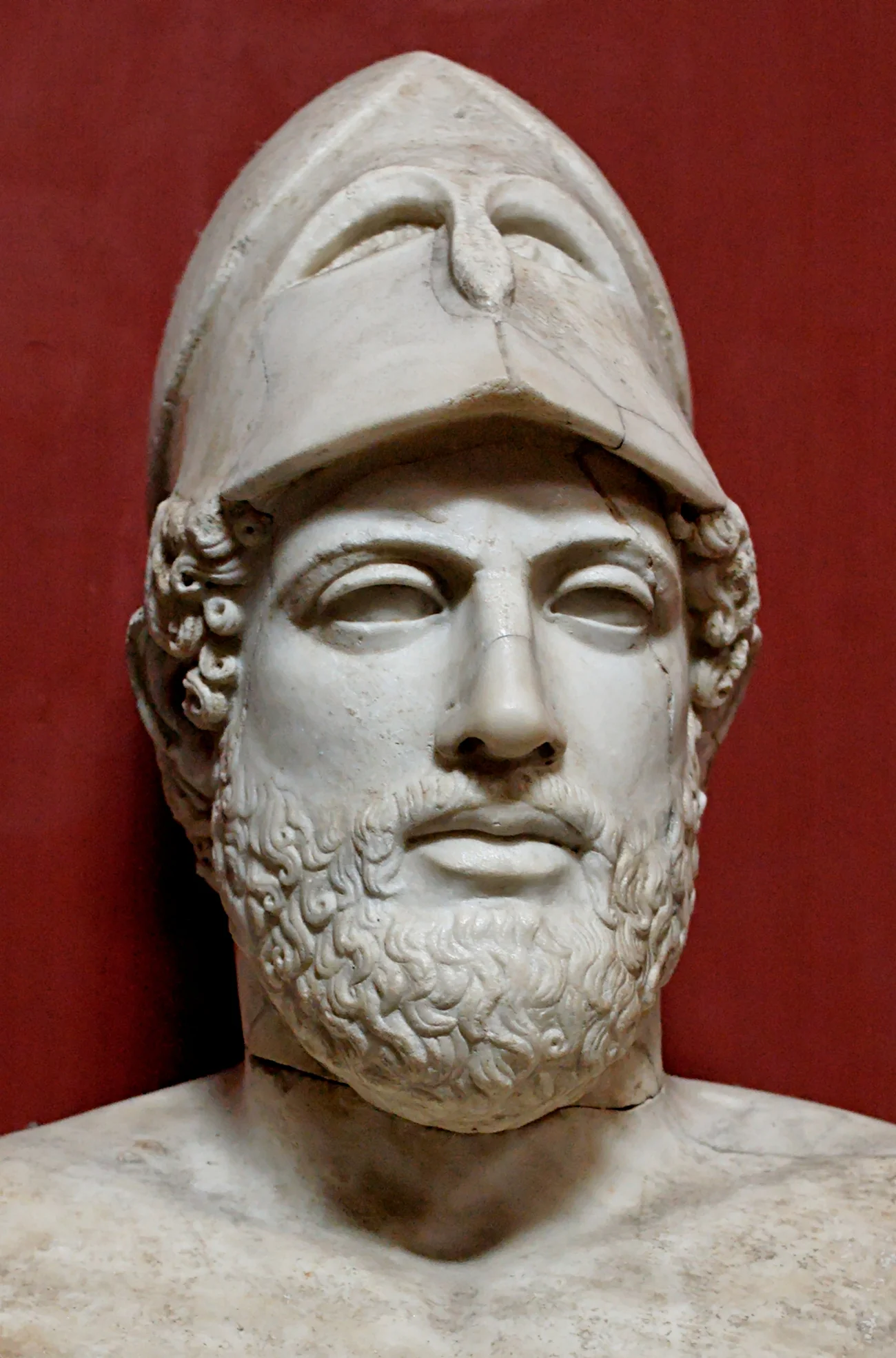
Attr: Vatican Museums
| 14 Quotes | |
| Occup. | Statesman |
| From | Greece |
| Born | 495 BC Athens, Greece |
| Died | 429 BC Athens, Greece |
| Cite | |
Citation Formats
APA Style (7th ed.)
Pericles biography, facts and quotes. (2026, February 11). FixQuotes. https://fixquotes.com/authors/pericles/
Chicago Style
"Pericles biography, facts and quotes." FixQuotes. February 11, 2026. https://fixquotes.com/authors/pericles/.
MLA Style (9th ed.)
"Pericles biography, facts and quotes." FixQuotes, 11 Feb. 2026, https://fixquotes.com/authors/pericles/. Accessed 30 Mar. 2026.
Early Life and Background
Pericles was born in Athens around 495 BCE into an aristocratic world that was learning to live with democracy. His father, Xanthippus, was a prominent commander who later helped defeat the Persians at Mycale (479), and his mother, Agariste, linked him to the powerful Alcmaeonid clan - a family both influential and frequently attacked in Athenian political memory. That lineage gave Pericles entrée into leadership, but it also forced him to master suspicion, faction, and the volatile moral theater of the Assembly.He grew up in the long shadow of the Persian Wars, when Athens rebuilt its walls, its fleet, and its confidence. The city was becoming an imperial democracy: citizen power at home, tribute and coercion abroad through the Delian League. Pericles learned early that public life in Athens was intimate and unforgiving - reputations were made in open debate, and rivals could turn private ties into public accusations. Even his famously controlled demeanor reads as a survival skill in a culture where charisma had to be disciplined into authority.
Education and Formative Influences
Ancient sources emphasize Pericles' careful training and selective friendships: he associated with intellectuals such as Anaxagoras, whose natural philosophy encouraged a cool, rational posture amid civic passion, and he reportedly learned from the musical theorist Damon, who understood how culture shapes behavior. This education did not make him a speculative thinker so much as a strategist of minds - attentive to language, timing, and the psychology of crowds, while aiming to project steadiness in a city addicted to argument.Career, Major Works, and Turning Points
Pericles rose in the mid-5th century BCE as the leading figure of democratic Athens, maneuvering through a political field shaped by Cimon's aristocratic prestige and by Ephialtes' radical reforms. After Ephialtes' assassination (462/1), Pericles became the durable center of power, supporting measures that broadened participation, including pay for jurors that made civic service feasible for poorer citizens, while guiding an imperial policy that moved Delian League finances to Athens (454) and financed vast building programs on the Acropolis. Under his influence the Parthenon rose, tragedy and public festivals flourished, and Athens projected itself as educator of Greece - yet that confidence carried costs: harsh treatment of allies, widening fear in Sparta, and a path toward the Peloponnesian War (431). Pericles argued for a defensive grand strategy, avoiding pitched battles while relying on walls and naval power, but the plague of 430-429 broke social trust and killed him in 429, leaving Athens with his institutions but not his authority.Philosophy, Style, and Themes
Pericles' inner life, as far as it can be reconstructed, seems defined by self-command - the ability to convert emotion into public reason. He favored a politics of inevitability: citizens could avert choices, but not consequences. “Just because you do not take an interest in politics doesn't mean politics won't take an interest in you”. The line captures a worldview shaped by a participatory democracy at war: withdrawal was not neutrality but surrender of agency, and he treated civic indifference as a strategic weakness.His public style fused audacity with restraint. He could flatter Athens without letting it dissolve into mere self-congratulation, insisting on exemplary discipline: “We do not imitate, but are a model to others”. That confidence was not only propaganda; it was psychological scaffolding for an empire whose citizens needed to believe their sacrifices were meaningful. At the same time, his most enduring theme was the transfer of greatness from stone to memory and conduct - the idea that the polis lives in people, not monuments. “What you leave behind is not what is engraved in stone monuments, but what is woven into the lives of others”. In that emphasis one hears a leader haunted by contingency: plague, war, and faction could topple any marble certainty, so he sought immortality in civic character and collective narrative.
Legacy and Influence
Pericles became the emblem of Athens' 5th-century apex - the statesman of the "Periclean Age" - and also a case study in democratic power at imperial scale. Later writers used him as a mirror for their own anxieties: Thucydides framed him as the rare leader who could steer mass politics without becoming its captive; Plutarch explored the moral cost of ambition and the vulnerability of public life to rumor and envy. His material legacy - the Acropolis program, above all - endures as a global shorthand for classical Greece, but his deeper influence lies in the perennial debate he embodied: whether democracy can be both free and strategically coherent, whether cultural brilliance can coexist with coercive empire, and whether a city can educate its citizens fast enough to match the responsibilities it claims.Our collection contains 14 quotes written by Pericles, under the main topics: Wisdom - Mortality - Leadership - Freedom - Knowledge.
Other people related to Pericles: Sophocles (Author), Citium Zeno (Philosopher)
Source / external links