
Pete Rose Biography Quotes 22 Report mistakes
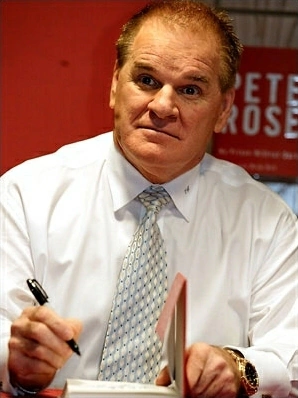
| 22 Quotes | |
| Born as | Peter Edward Rose |
| Known as | Charlie Hustle |
| Occup. | Athlete |
| From | USA |
| Born | April 14, 1941 Cincinnati, Ohio |
| Age | 84 years |
| Cite | |
Citation Formats
APA Style (7th ed.)
Pete rose biography, facts and quotes. (2026, February 12). FixQuotes. https://fixquotes.com/authors/pete-rose/
Chicago Style
"Pete Rose biography, facts and quotes." FixQuotes. February 12, 2026. https://fixquotes.com/authors/pete-rose/.
MLA Style (9th ed.)
"Pete Rose biography, facts and quotes." FixQuotes, 12 Feb. 2026, https://fixquotes.com/authors/pete-rose/. Accessed 12 Feb. 2026.
Early Life and Background
Peter Edward Rose was born on April 14, 1941, in Cincinnati, Ohio, a river-and-rail city where neighborhood identity and baseball loyalty were intertwined. He grew up on the west side in a working-class, sports-saturated household; his father, Harry "Pete" Rose, was a semipro player who passed down both instruction and expectation, and the nickname "Pete" followed the son into adulthood. In an era when the postwar Midwest still promised mobility through grit, Rose absorbed the idea that effort could substitute for elegance, and that the field was a place to prove it publicly.Cincinnati in the 1940s and 1950s offered Rose a clear template for ambition: the Reds as civic religion, the ballpark as theater, and the daily paper as the scoreboard of local worth. He was not built like an archetypal slugger, but he learned to make himself unavoidable - running hard on routine grounders, taking extra bases, treating every inning as a referendum on desire. The persona that later drew both admiration and fatigue began as a local survival skill: be louder, work longer, and never let the other guy rest.
Education and Formative Influences
Rose attended Western Hills High School, where he starred in baseball and football but encountered the limits of conventional approval, graduating into a baseball pathway rather than a college one. Signed by his hometown Reds in 1960, he entered professional baseball just as the sport was integrating more fully and expanding westward, with television increasing scrutiny and union consciousness beginning to change clubhouses. In the minors he refined the tools that would define him - a compact left-handed swing, an obsession with contact, and a gambler's feel for when pressure could be manufactured by speed - while learning the hard economics of roster spots and the thin line between "hustle" as virtue and hustle as performance.Career, Major Works, and Turning Points
Rose debuted with Cincinnati in 1963, won NL Rookie of the Year, and became the kinetic front edge of the Big Red Machine, helping the Reds to World Series titles in 1975 and 1976 alongside Johnny Bench, Joe Morgan, Tony Perez, and others under Sparky Anderson. He won the 1973 NL MVP, earned multiple batting titles and Gold Gloves at several positions, and later joined the Philadelphia Phillies, winning the 1980 World Series and the 1983 NL pennant, before returning to Cincinnati and adding a 1984 title with the Montreal Expos. In 1984 he broke Ty Cobb's all-time hit record and finished with 4, 256 hits, but the central turning point arrived after his transition to player-manager and then manager: an MLB investigation concluded he bet on baseball, leading to a 1989 lifetime ban and a permanent separation between his on-field achievements and the sport's highest honors, including Hall of Fame eligibility.Philosophy, Style, and Themes
Rose built his identity around labor made visible. The phrase he repeated like a credo - "I'd walk through hell in a gasoline suit to play baseball". - was not just bravado but a psychological map: fear of irrelevance converted into motion, and motion into reputation. His game was contact and abrasion, a refusal to accept the at-bat as a private duel. Even his famous headfirst slides were part competitive tactic, part self-mythmaking, admitting the media economy inside the sport: "Sliding headfirst is the safest way to get to the next base, I think, and the fastest... it gets my picture in the paper". He understood, earlier than many, that baseball was both contest and narrative, and he played to win both.Underneath the hustle was a relentlessly statistical honesty about failure. "When you play this game twenty years, go to bat ten-thousand times, and get three-thousand hits... You've gone zero for seven-thousand". That sentence reveals the inner engine of Rose's durability: he normalized humiliation as the entry fee for mastery, then tried to outlast it. The same mentality - the need to act, to press, to create advantage - also shadowed his later life. Baseball rewarded aggression within rules; the scandal suggested what happens when the same impulse seeks control beyond them. Rose's psychology was not subtle: he craved the game as structure, attention, and proof, and when the structure rejected him, he argued the proof should still count.
Legacy and Influence
Pete Rose remains baseball's most unresolved American parable - the all-time hits leader and an emblem of relentless professionalism, yet also the sport's most famous banned man, invoked whenever integrity collides with greatness. His on-field influence is everywhere in the vocabulary of "hustle", in contact hitting as a craft, and in the idea that versatility and urgency can compensate for physical limits; his records still set a standard for durability in a sport increasingly managed by rest and matchups. But his enduring cultural impact is the argument he forces: whether a career can be honored in parts, how much character should matter in commemoration, and why baseball, more than most institutions, insists that its legends also serve as moral signage.Our collection contains 22 quotes written by Pete, under the main topics: Witty One-Liners - Leadership - Victory - Sports - Training & Practice.
Other people related to Pete: Carlton Fisk (Athlete), Dave Bristol (Celebrity), Marge Schott (Businessman), Steve Carlton (Athlete), Ray Knight (Athlete)