
Pete Rozelle Biography Quotes 16 Report mistakes
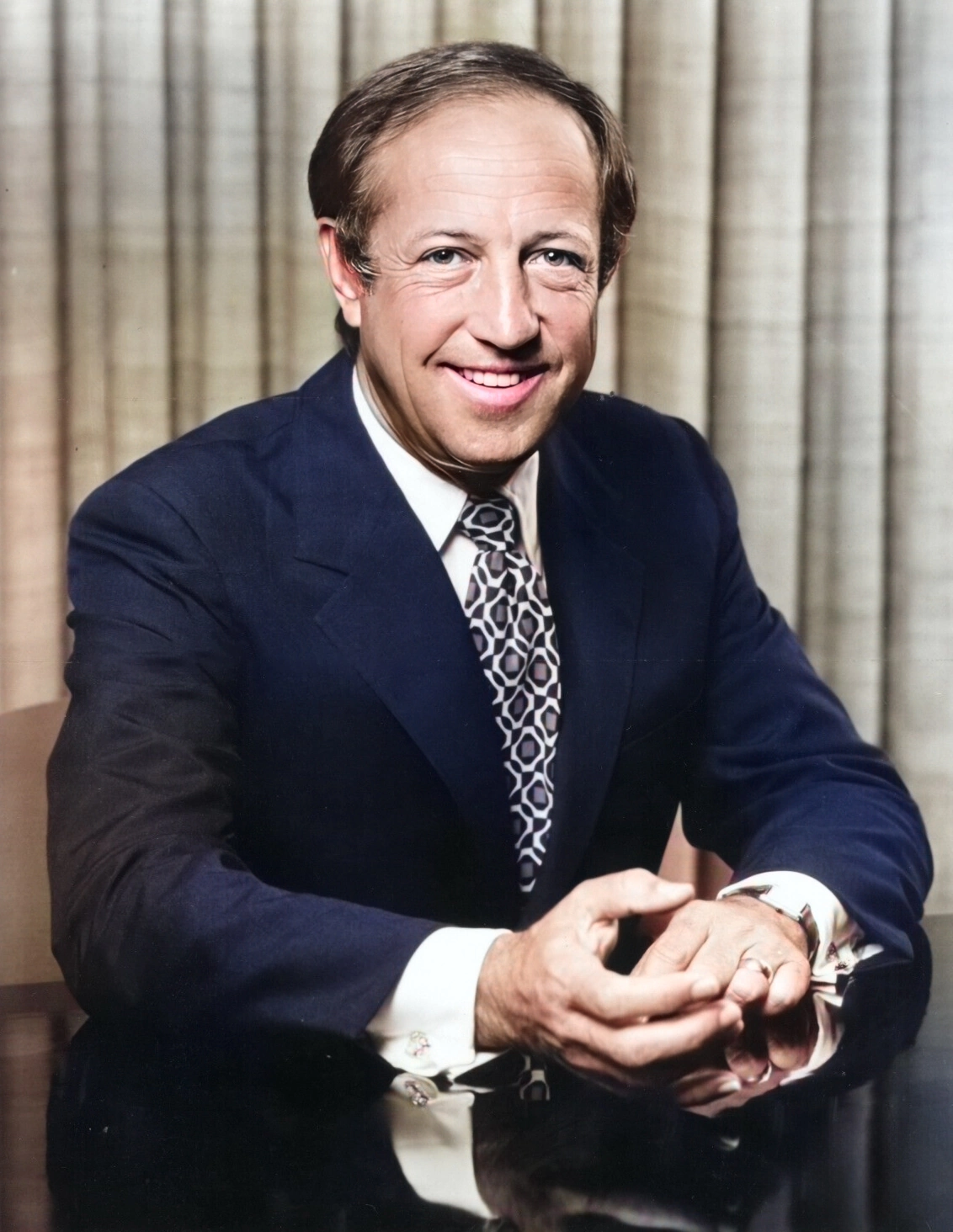
| 16 Quotes | |
| Born as | Alvin Ray Rozelle |
| Occup. | Celebrity |
| From | USA |
| Born | March 1, 1926 South Gate, California, United States |
| Died | December 6, 1996 Rancho Santa Fe, California |
| Aged | 70 years |
| Cite | |
Citation Formats
APA Style (7th ed.)
Pete rozelle biography, facts and quotes. (2026, February 11). FixQuotes. https://fixquotes.com/authors/pete-rozelle/
Chicago Style
"Pete Rozelle biography, facts and quotes." FixQuotes. February 11, 2026. https://fixquotes.com/authors/pete-rozelle/.
MLA Style (9th ed.)
"Pete Rozelle biography, facts and quotes." FixQuotes, 11 Feb. 2026, https://fixquotes.com/authors/pete-rozelle/. Accessed 27 Mar. 2026.
Early Life and Background
Alvin Ray "Pete" Rozelle was born on March 1, 1926, in South Gate, California, a working-class city on the industrial edge of Los Angeles. He came of age in the long shadow of the Depression and the disruptions of World War II, in a region where new suburbs, new media, and new leisure industries were reshaping American habits. That Southern California mix of civic boosterism and entertainment-savvy marketing would later feel native to him: sports as a public ritual, and publicity as a form of governance.After Navy service during World War II, Rozelle returned to a country entering the Cold War and a consumer boom, where television was beginning to fuse sport and national identity. His temperament - calm, procedural, and relentlessly collegial - formed in an era that rewarded administrators who could harmonize competing interests without seeming to dominate. Friends and colleagues would later describe him as courteous to the point of caution, but beneath that surface was a shrewd understanding that institutions survive by making conflict look manageable.
Education and Formative Influences
Rozelle studied at Compton Junior College and then at the University of San Francisco, graduating in 1950. USF in those years blended Catholic social teaching with a pragmatic, urban professionalism; Rozelle absorbed a respect for hierarchy while also learning how coalitions are built. He entered sports not as an ex-athlete chasing nostalgia but as a communicator and organizer, part of a postwar cohort that treated leagues as modern corporations whose product was attention as much as competition.Career, Major Works, and Turning Points
Rozelle joined the Los Angeles Rams in the 1950s, rising through publicity and business roles, then became general manager of the Rams in 1957 - unusually young, and already trusted as a negotiator. In January 1960, at 33, he was elected commissioner of the National Football League, inheriting a fragile compact of owners and a looming challenge from the upstart American Football League. His decisive achievement was to turn owner rivalry into a shared commercial strategy: aggressive national television contracts, revenue sharing that stabilized small markets, and a unified brand that made the NFL appear inevitable. The 1966 AFL-NFL merger agreement, Super Bowl creation, and the growth of NFL Films under Ed Sabol gave the league mythic stature. His tenure also included crises that tested the office: labor tensions, franchise relocations, and above all the 1963 assassination of President John F. Kennedy, when he chose to play games that weekend - a decision he later regretted as misreading national grief. In 1970 he faced Congress and the courts after the league suspended players for gambling ties in the Paul Hornung-Alex Karras case, an early demonstration that "integrity of the game" would be a commissioner weapon. By the time he stepped down in 1989, after the owners elected Paul Tagliabue, the NFL had become the central weekly drama of American television.Philosophy, Style, and Themes
Rozelle governed by consensus and optics: he treated the commissioner not as an autocrat but as the league's mediator-in-chief, enforcing unity by persuading owners that unity was profit. That psychological posture shows in his self-effacing realism about authority - “I think the big thing I've had going for me in that regard has been the success of the league. I don't have quite as much control over things as people believe, so I frequently receive more credit than I deserve, and occasionally more criticism as well”. The line is modest, but also strategic: by shrinking his ego, he made compliance easier for powerful owners who disliked being ordered around.His management style was also built on controlling narrative, because in a television age the league's image could be damaged as quickly as a season could be sold. “I'm not saying that the press is wrong to report any internal differences we have, but at the same time, I think it's our job to keep them from becoming public issues, for anything that detracts from the purely athletic aspects of the sport is bad for us”. That impulse - to keep labor fights, owner feuds, and moral scandals from contaminating the "purely athletic" product - explains both his reputation for smoothness and the critique that he sometimes prioritized institutional reputation over transparency. Yet he also grasped why football mattered beyond commerce, articulating the game as a civic pressure valve in an anxious era: “Considering what Americans have been confronted with in the last ten years, domestically and internationally, it's clear that we need emotional outlets; we have to have some peace from our problems”. It was not poetry, but it was a commissioner's anthropology - football as ritual relief, a weekly permission to feel uncomplicated stakes.
Legacy and Influence
Rozelle died on December 6, 1996, in Rancho Mirage, California, after years of declining health; by then the league he professionalized had already become an American calendar. His legacy is structural: the modern NFL's revenue-sharing model, centralized television strategy, and commissioner-centered discipline all bear his imprint, as does the idea that a sports league is a single national entertainment franchise rather than a loose association of local clubs. He also left a template - and a warning - for sports governance: unity can be engineered through contracts and messaging, but the moral authority of the office depends on reading the public mood and balancing privacy against accountability. In the end, Rozelle's most enduring achievement was to make professional football feel like common culture, and to build an institution strong enough that its controversies rarely shake its primacy.Our collection contains 16 quotes written by Pete, under the main topics: Leadership - Victory - Sports - Honesty & Integrity - Peace.
Other people related to Pete: Jim McMahon (Athlete)
Source / external links