
Peter Bichsel Biography Quotes 9 Report mistakes
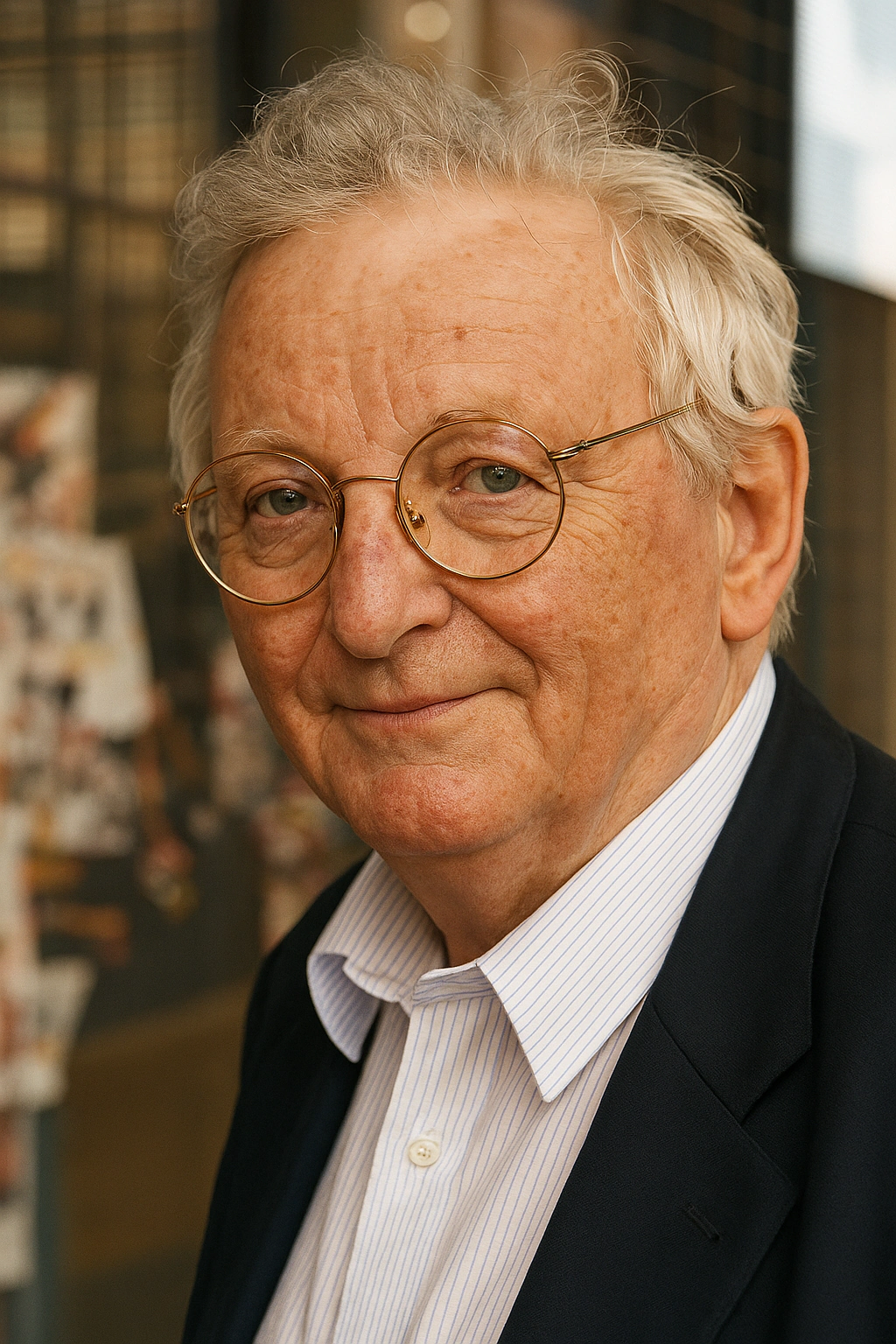
| 9 Quotes | |
| Occup. | Writer |
| From | Switzerland |
| Born | March 24, 1935 Lucerne, Switzerland |
| Died | March 15, 2025 Zuchwil, Switzerland |
| Aged | 89 years |
| Cite | |
Citation Formats
APA Style (7th ed.)
Peter bichsel biography, facts and quotes. (2026, February 11). FixQuotes. https://fixquotes.com/authors/peter-bichsel/
Chicago Style
"Peter Bichsel biography, facts and quotes." FixQuotes. February 11, 2026. https://fixquotes.com/authors/peter-bichsel/.
MLA Style (9th ed.)
"Peter Bichsel biography, facts and quotes." FixQuotes, 11 Feb. 2026, https://fixquotes.com/authors/peter-bichsel/. Accessed 5 Mar. 2026.
Early Life and Background
Peter Bichsel was born on March 24, 1935, in Lucerne and grew up in the Swiss Midlands, a landscape of small towns, rail lines, and cautious prosperity that later became the quiet stage for his fiction. He came of age in a Switzerland defined by wartime neutrality and postwar stability, where the public mood valued order, diligence, and consensus, and where the everyday could feel sealed off from the dramas that remade the rest of Europe. Bichsel absorbed that atmosphere early: the sense of an intact surface, and the faint unease beneath it.His earliest memories, as he later suggested in interviews and essays, were less of great events than of how people talked - the rhythms of Swiss German and standard German, the rules of politeness, the evasions and half-statements of ordinary conversation. That intimacy with speech became his lifelong material. The child and young man watching kitchen tables and classroom corridors would eventually become a writer who made the smallest social exchanges carry moral and political weight, without inflating them into melodrama.
Education and Formative Influences
Bichsel trained as a primary school teacher and worked in the canton of Solothurn, an experience that sharpened his ear for how language is learned, performed, and policed. He read widely in postwar German-language literature and followed the cultural debates of the 1960s, when writers argued about realism, responsibility, and the seductions of style; his temperament sided with clarity and skepticism. The discipline of teaching - explaining, repeating, noticing what students do not say - fed his later minimalism and his distrust of grand authorial poses.Career, Major Works, and Turning Points
Bichsel emerged in the 1960s as one of the most distinctive Swiss voices in German, publishing short prose that made him widely known: the breakthrough collection was "Eigentlich mochte Frau Blum den Milchmann" (often rendered in English as "And Really Frau Blum Would Very Much Like to Meet the Milkman"), followed by "Kindergeschichten" ("Children's Stories"), whose deceptively simple sentences exposed the fragility of identity and the violence of social categories. He became associated with the renewal of Swiss literature after Max Frisch and Friedrich Durrenmatt, yet his route was different - less theatrical, more intimate. From the mid-1970s he also worked close to politics, serving as a speechwriter for Swiss Social Democratic Federal Councillor Willy Ritschard, a role that deepened his sense of civic language: how nations narrate themselves, how compromises are framed, and how slogans flatten lived experience. Over decades he continued publishing short prose, essays, and columns, keeping the scale small while his influence grew large; he remained a public intellectual in Switzerland without turning into a moralizing monument. He died on March 15, 2025, closing a career that had made understatement a form of insistence.Philosophy, Style, and Themes
Bichsel often described his vocation as something decided early and carried privately, less chosen than recognized - “I wanted to write a novel. At 12 I knew, I am a writer. I said it to nobody”. That secrecy is telling: his work returns again and again to the hidden self inside socially acceptable roles, to people who do not quite fit the stories they are supposed to live. He distrusted the writer as a detached diagnostician of society, pushing back against a schoolroom notion of authorship - “That is a secondary teacher conception - the writer as an observer”. For him, writing was participation, a way of being implicated in the same language that traps his characters.His style is spare, conversational, and precise, built from repetitions and small shifts in phrasing that reveal how reality is made by words. He treated literature as both unnecessary and indispensable, refusing romantic mystique while defending the human need for form: “Literature is about as unnecessarily necessarily as tableware or ironed shirts”. The apparent modesty is a strategy: by lowering the volume, he makes the reader hear the coercion hidden in everyday talk - the way a community defines normality, the way a person is reduced to a function, the way a child learns what can be said. His short forms are not miniature novels but moral instruments, asking how freedom can exist inside habitual language and how a life can be revised by changing one sentence.
Legacy and Influence
Bichsel helped define a modern Swiss prose that neither mythologized the nation nor treated it as a quaint backdrop; instead he showed how Swiss democracy, comfort, and conformity shape inner life at the level of grammar and gesture. As a stylist he proved that brevity can be radical, and that political insight does not require polemic. Generations of German-language writers, journalists, and teachers have learned from his sentences how to listen for the unsaid, how to distrust ready-made narratives, and how to find, in the smallest story, a whole society negotiating with itself.Our collection contains 9 quotes written by Peter, under the main topics: Wisdom - Writing - Freedom - Poetry - Moving On.
Frequently Asked Questions
- Peter Bichsel: books in English: Some of Peter Bichsel’s works are available in English, notably *Children’s Stories* (translated from *Kindergeschichten*) and selections from his early story collections in various anthologies.
- Peter Bichsel short stories: Peter Bichsel is known for concise, everyday-focused short stories, especially in collections like *Eigentlich möchte Frau Blum den Milchmann kennenlernen* and *Kindergeschichten*.
- Peter Bichsel books: Key books by Peter Bichsel include *Eigentlich möchte Frau Blum den Milchmann kennenlernen*, *Kindergeschichten*, *Die Jahreszeiten*, *Der Busant*, and *Zur Stadt Paris*.
- How old was Peter Bichsel? He became 89 years old
Source / external links