
Peter Drucker Biography Quotes 39 Report mistakes
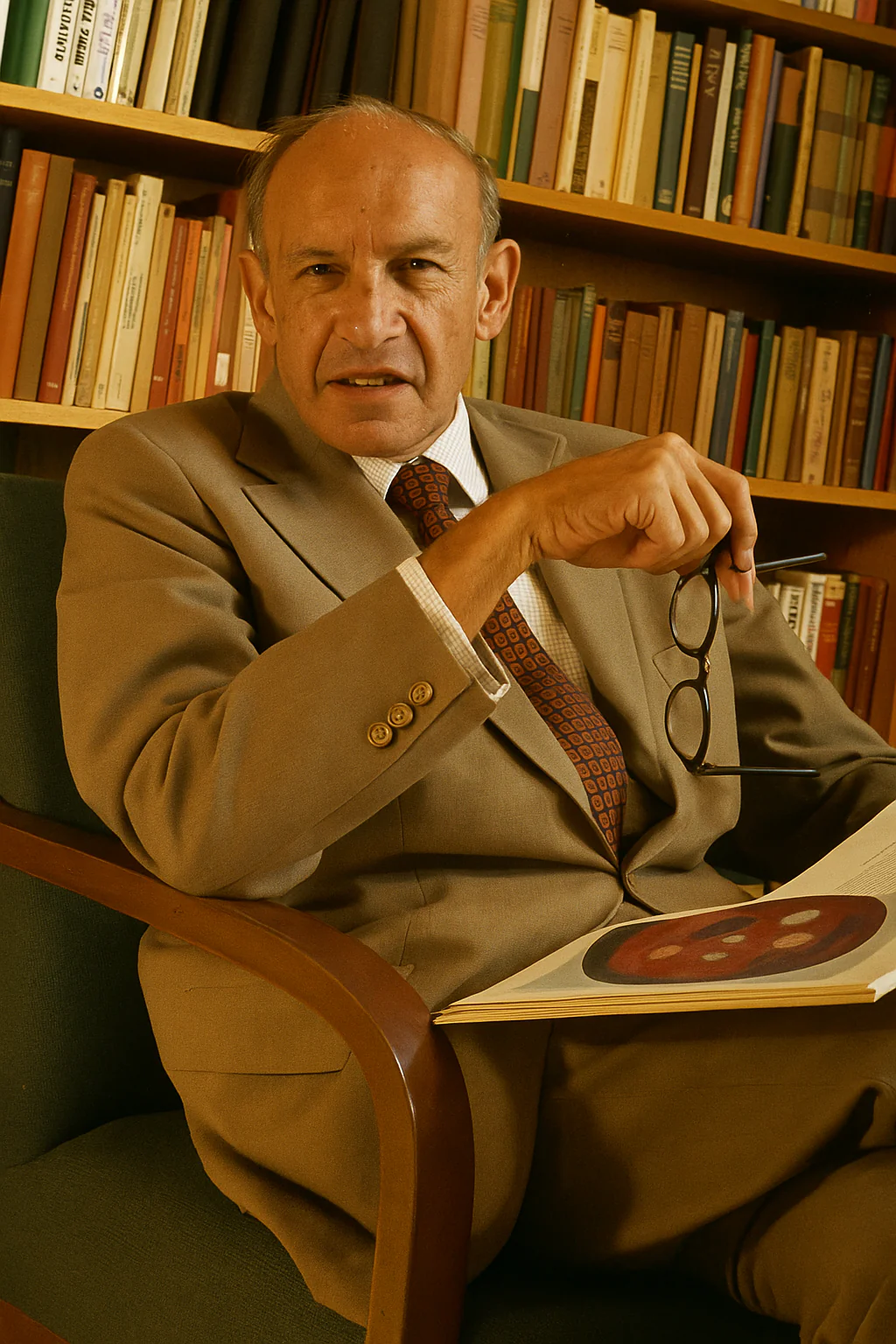
Attr: Jeff McNeill
| 39 Quotes | |
| Born as | Peter Ferdinand Drucker |
| Known as | Peter F. Drucker |
| Occup. | Businessman |
| From | USA |
| Born | November 19, 1909 Vienna, Austria-Hungary |
| Died | November 11, 2005 Claremont, California, USA |
| Aged | 95 years |
| Cite | |
Citation Formats
APA Style (7th ed.)
Peter drucker biography, facts and quotes. (2026, February 2). FixQuotes. https://fixquotes.com/authors/peter-drucker/
Chicago Style
"Peter Drucker biography, facts and quotes." FixQuotes. February 2, 2026. https://fixquotes.com/authors/peter-drucker/.
MLA Style (9th ed.)
"Peter Drucker biography, facts and quotes." FixQuotes, 2 Feb. 2026, https://fixquotes.com/authors/peter-drucker/. Accessed 5 Mar. 2026.
Early Life and Background
Peter Ferdinand Drucker was born on November 19, 1909, in Vienna, then the capital of the Austro-Hungarian Empire and, after World War I, a city of cultural brilliance and political fracture. His home was a salon of sorts: his father, Adolf Drucker, was a senior civil servant and lawyer; his mother, Caroline Bondi Drucker, was medically trained; and the family moved in circles where economists, musicians, and public intellectuals debated the fate of modern society. That atmosphere gave the young Drucker an early sense that ideas were not ornaments but forces that could stabilize institutions or bring them down.Vienna in Drucker's youth was also a laboratory of anxiety: inflation, class conflict, and the widening gap between democratic aspiration and authoritarian temptation. Watching institutions buckle under mass politics and economic shock sharpened his lifelong preoccupation with organizations as moral as well as technical systems. Before he ever wrote about managers, he learned to distrust romantic politics and to look instead for the quiet mechanisms by which human beings coordinate work, authority, and meaning.
Education and Formative Influences
Drucker left Austria for Germany in the late 1920s, studied law and international affairs (earning a doctorate in law in 1931), and apprenticed himself to modern life as a journalist and analyst in Frankfurt. He absorbed the contrasting lessons of Weimar dynamism and Nazi consolidation, then in 1933 left for England and, in 1937, emigrated to the United States, marrying Doris Schmitz and building a new life as an observer of democratic capitalism. The displacement mattered: exile turned him into a comparative thinker, attentive to how culture shapes institutions, and wary of any system - corporate or political - that demanded conformity over responsibility.Career, Major Works, and Turning Points
In America Drucker became, in effect, management's biographer: explaining what large organizations were becoming and what they required from the people inside them. His early warning shot, The End of Economic Man (1939), treated totalitarianism as a spiritual and social failure, not merely a political one; The Future of Industrial Man (1942) broadened the inquiry to legitimacy in modern institutions. A decisive turning point came when General Motors opened its doors to him, resulting in Concept of the Corporation (1946), a landmark portrait of the modern enterprise as a social organism whose health depends on decentralization, clear aims, and accountable leadership. From there he produced an unusually long arc of influence through The Practice of Management (1954), The Effective Executive (1967), Management: Tasks, Responsibilities, Practices (1973), Innovation and Entrepreneurship (1985), and Post-Capitalist Society (1993), while teaching for decades at New York University and later at Claremont Graduate University, where his seminars fused history, ethics, and practical discipline.Philosophy, Style, and Themes
Drucker's central claim was that management is a liberal art: a practice grounded in economics and psychology, but finally judged by human consequences. He wrote in plain, compressed sentences, resisting jargon and the cult of charisma; his method was to define the purpose of an institution, identify its governing assumptions, then translate those into tasks that could be performed and tested. His most enduring managerial distinction - that output matters more than bustle - appears in his maxim, “Efficiency is doing things right; effectiveness is doing the right things”. The line reveals his psychology: a refugee from ideological certainty who trusted results, feedback, and the humility of correction over rhetorical confidence.He was equally alert to the unseen life of organizations: motives, silences, and informal power. “The most important thing in communication is hearing what isn't said”. For Drucker, that was not a soft sentiment but a diagnostic tool - a reminder that managers must read the gap between charts and lived experience, between a mission statement and the fears people will not confess. And behind his emphasis on customers and innovation was an insistence that capitalism earns legitimacy only when it serves society through value creation rather than extraction. “The purpose of a business is to create a customer”. In that sentence, one hears his moral ballast: the firm is justified by service, and leadership by responsibility, not entitlement.
Legacy and Influence
Drucker died on November 11, 2005, in California, having helped define what the late-20th-century organization thought it was. His influence runs through MBA curricula, executive practice, and the everyday language of "knowledge work", decentralization, objectives, and innovation; it also persists in nonprofits and public administration, where he argued that mission clarity and accountability matter as much as funding. If he sometimes sanitized conflict by trusting institutional design, his larger gift was to give managers an ethical vocabulary and a historical perspective - to treat the corporation as a social institution that must earn authority anew, generation by generation.Our collection contains 39 quotes written by Peter, under the main topics: Witty One-Liners - Leadership - Learning - Work Ethic - Change.
Other people related to Peter: Lance Secretan (Businessman)
Frequently Asked Questions
- Peter Drucker 5 principles of management: Five basic operations: set objectives; organize work; motivate and communicate; measure performance; develop people.
- Peter Drucker management definition: Management is the practice of converting resources into results by setting objectives, organizing work, and enabling people to perform.
- Peter Drucker 7 principles: Often cited as his seven sources of innovation: the unexpected; incongruities; process needs; industry/market structure changes; demographics; changes in perception/meaning; new knowledge.
- Peter Drucker books: The Practice of Management; The Effective Executive; Management: Tasks, Responsibilities, Practices; Innovation and Entrepreneurship; Managing for Results; Managing Oneself.
- How old was Peter Drucker? He became 95 years old
Peter Drucker Famous Works
- 1999 Management Challenges for the 21st Century (Book)
- 1993 Post-Capitalist Society (Book)
- 1990 Managing the Non-Profit Organization: Practices and Principles (Book)
- 1989 The New Realities (Non-fiction)
- 1986 The Frontiers of Management (Essay)
- 1985 Innovation and Entrepreneurship (Book)
- 1980 Managing in Turbulent Times (Book)
- 1973 Management: Tasks, Responsibilities, Practices (Book)
- 1969 The Age of Discontinuity: Guidelines to Our Changing Society (Book)
- 1967 The Effective Executive (Book)
- 1964 Managing for Results (Book)
- 1954 The Practice of Management (Book)
- 1946 Concept of the Corporation (Non-fiction)
- 1942 The Future of Industrial Man (Non-fiction)
- 1939 The End of Economic Man (Non-fiction)
Source / external links