
Peter Oliver Biography Quotes 3 Report mistakes
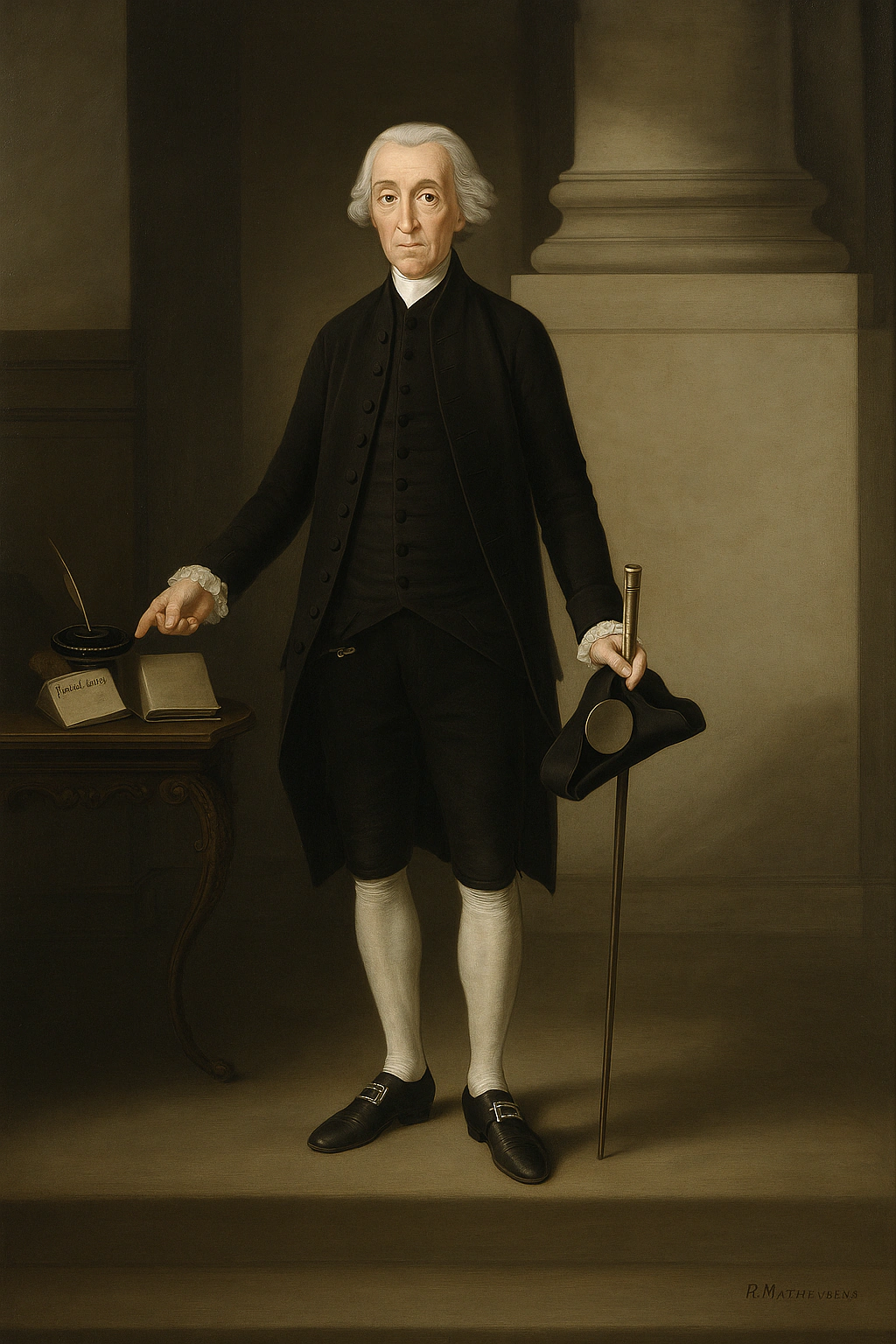
Attr: Richard Wilson
| 3 Quotes | |
| Occup. | Artist |
| From | England |
| Born | March 26, 1713 Boston, Massachusetts |
| Died | October 12, 1791 |
| Aged | 78 years |
| Cite | |
Citation Formats
APA Style (7th ed.)
Peter oliver biography, facts and quotes. (2026, February 11). FixQuotes. https://fixquotes.com/authors/peter-oliver/
Chicago Style
"Peter Oliver biography, facts and quotes." FixQuotes. February 11, 2026. https://fixquotes.com/authors/peter-oliver/.
MLA Style (9th ed.)
"Peter Oliver biography, facts and quotes." FixQuotes, 11 Feb. 2026, https://fixquotes.com/authors/peter-oliver/. Accessed 7 Mar. 2026.
Early Life and Uncertain Origins
Peter Oliver, identified by scattered historical references as having been born around 1713 and dying sometime around 1791, remains an obscure figure whose life cannot be reconstructed with confidence. The fragmentary nature of the record, combined with the relatively common name "Peter Oliver", makes it difficult to distinguish him reliably from several other men of the same or similar name active in the eighteenth century. Surviving documentation does not clearly establish his parentage, place of birth, training, or professional career, and even the suggestion that he was English and possibly an artist rests on inference rather than firm archival proof.Several strands of historical evidence complicate matters. There was a well‑known family of miniature painters named Oliver active in England in the late sixteenth and early seventeenth centuries, including Isaac Oliver and his son Peter Oliver, both celebrated artists working for courtly patrons. However, this earlier Peter Oliver died in the 1640s, many decades before the 1713 birth year associated with the subject of this biography. No reliable genealogical bridge has been established between that celebrated artistic family and any later eighteenth‑century individual named Peter Oliver. Consequently, any claim that the eighteenth‑century Peter Oliver was related to, or artistically descended from, the famous Oliver miniaturists is speculative.
The Ambiguous Label of "Artist"
The characterization of Peter Oliver as "maybe an artist" further underscores the uncertainty surrounding his life. In the eighteenth century the term "artist" could encompass a wide range of occupations, from portrait and landscape painters to engravers, printmakers, decorative artisans, drawing masters, or even skilled amateurs who practiced the arts without earning their primary livelihood from them. Given the lack of precise documentation tying this Peter Oliver to any specific body of artistic work, it is not possible to identify him securely with known paintings, engravings, or other works of visual art.Period sources that mention a "Peter Oliver" in connection with artistic activity have not been conclusively matched to a person with the approximate lifespan of 1713 to 1791. Common reference tools for British artists and artisans of the eighteenth century provide entries for several Olivers, but none that can be definitively assigned to this individual with the approximate dates given. Auction records, exhibition catalogs, and known collections of eighteenth‑century British art likewise do not yield an unambiguous trail linking works to him. As a result, while it is plausible that a man of this name and period could have been active in some artistic capacity, the present state of evidence does not allow historians to describe his style, his medium, his patrons, or his influence.
Context: Other Men Named Peter Oliver
One reason for the confusion is the presence, in the same broad era, of other more clearly documented individuals named Peter Oliver whose activities have left a trace in the historical record but who do not match the sketch given here. The most prominent of these is Peter Oliver, the American Loyalist jurist and Chief Justice of the Superior Court of Judicature in colonial Massachusetts. Born in 1713 in Boston and dying in 1791 in exile in England, this Peter Oliver is well documented as a legal and political figure, not as an artist. He was the son of the wealthy Boston merchant and politician Nathaniel Oliver and the brother of Andrew Oliver, who became Lieutenant Governor of Massachusetts. During the turbulent years preceding the American Revolution, he came into conflict with leading Patriot figures such as Samuel Adams and John Hancock, and his name appears frequently in narratives of the imperial crisis.Yet despite the chronological overlap, the American Loyalist Peter Oliver was not English by birth, was trained in law and business rather than the visual arts, and is remembered for his political and judicial roles rather than for any artistic production. His life is thoroughly enough documented that an artistic career could not have existed without notice, and none of his surviving writings or contemporary descriptions present him as an artist. Thus, while his dates and name match the approximate 1713, 1791 frame, he cannot reasonably be identified as an English artist.
The existence of this prominent New England Loyalist, along with the earlier miniaturist of the same name, has led to repeated conflation in secondary discussions. It is possible that the approximate dates and nationality given for the subject of this biography reflect an attempt to reconcile or merge disparate references to these different Peter Olivers. Without independent corroborating sources, however, this merging of identities remains conjectural and should not be treated as established fact.
Professional Life and Associates
Because the career of the eighteenth‑century English Peter Oliver described here cannot be clearly traced, the "most important people around him" cannot be reliably identified. For artists active in Britain during the middle and later eighteenth century, one would normally expect connections to patrons, art dealers, and fellow artists recorded in catalogs of institutions such as the Royal Academy of Arts, in city directories for London or provincial centers, or in surviving correspondence. In the case of this Peter Oliver, no such corroborated network has been brought to light.If he indeed practiced as an artist in England, he would have worked at a time when figures such as William Hogarth, Joshua Reynolds, Thomas Gainsborough, and Allan Ramsay helped to define the artistic culture of the British Isles. Art collectors, patrons, and connoisseurs such as Horace Walpole or members of the aristocracy were actively commissioning and discussing works of art. Printsellers, engravers, and drawing masters contributed to an expanding market for images. Yet those individuals, whose names are central to any history of eighteenth‑century British art, cannot be specifically linked to the Peter Oliver sketched here. No documentary chain ties him to Hogarths circle in London, to the early exhibitions that preceded the Royal Academy, or to any identifiable group of craftsmen or patrons.
In the absence of concrete evidence, it would be speculative to assign him a role in particular workshops or to place him within a specific artistic school. Some later reference works occasionally mention minor or obscure artists known only by name, but even among these more shadowy figures, a Peter Oliver born around 1713 and dying around 1791 in England does not appear with sufficient clarity to allow historians to reconstruct his relationships or collaborations. Therefore, any attempt to describe colleagues, patrons, or students as "the most important people around him" would require inventing connections, which responsible scholarship must avoid.
Later Life and Death
The approximate death year of 1791 is itself uncertain and appears to be derived from the broad chronological window associated with other, better documented men called Peter Oliver, rather than from a clear death notice, will, burial record, or obituary of an English artist. Parish records and probate documents in England for the late eighteenth century do contain entries for individuals bearing the surname Oliver, including men named Peter, but without additional identifying details such as profession, address, or family relations, it is not possible to attach those records to this particular figure with confidence.If he did live into the 1790s, he would have witnessed a period of change in the British art world, including the establishment and consolidation of the Royal Academy, the growing prestige of history painting and portraiture, and the flourishing of print culture. Yet, again, there is no documented participation by a Peter Oliver in these developments that would match the profile of an English artist with the indicated dates.
Assessment of the Historical Record
The biography of this Peter Oliver, born around 1713 and dying around 1791, probably from England and perhaps an artist, is therefore largely a record of what cannot be firmly known. While two other individuals bearing the same name loom clearly in the historical background the early seventeenth‑century miniaturist who served elite patrons in Stuart England, and the eighteenth‑century American Loyalist judge active in Massachusetts the man described here remains elusive. The noted miniaturist belonged to an earlier century and died long before 1713, while the Loyalist jurist, though almost exactly matching the given dates, was not an English artist but a colonial American legal figure.Because critical details of this Peter Olivers origins, training, works, and relationships cannot be corroborated, historians must treat every aspect of his supposed biography with caution. At present, the surviving evidence does not allow for a reliable account of his life, nor for the identification of the people who shaped it. Any richer narrative would require the discovery of new primary sources such as signed works of art, documented commissions, or personal papers that could securely be tied to a man named Peter Oliver active in England during the eighteenth century. Until such evidence comes to light, he remains a shadowy presence in the historical record, known more for the ambiguity surrounding his identity than for any securely documented artistic achievements or personal associations.
Our collection contains 3 quotes written by Peter, under the main topics: Knowledge - Tough Times - War.
Source / external links