
Peter Sagan Biography Quotes 4 Report mistakes
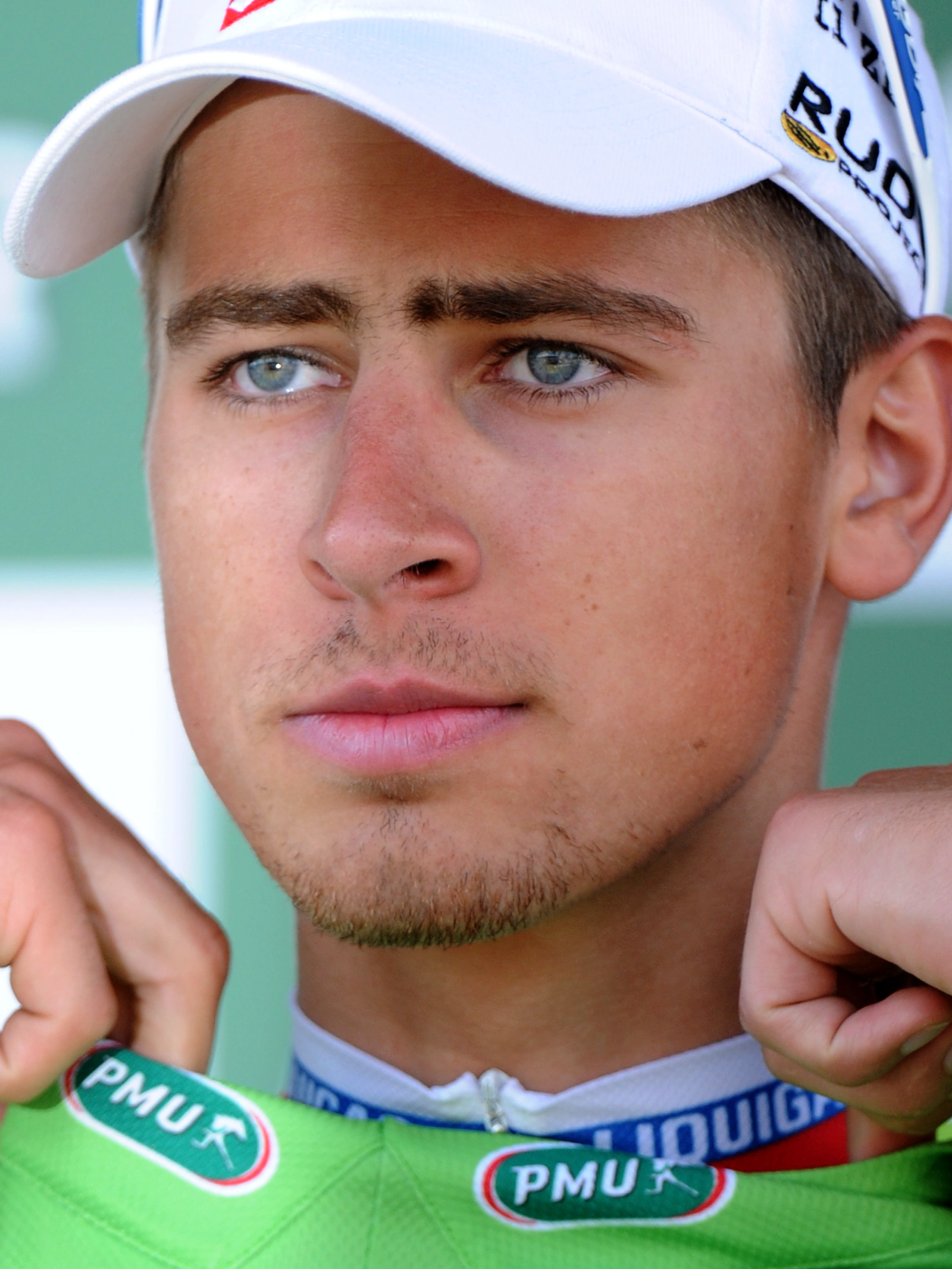
Attr: Cycling Weekly
| 4 Quotes | |
| Occup. | Athlete |
| From | Slovakia |
| Spouse | Katarína Smolková |
| Born | January 26, 1990 Žilina, Žilina Region, Czechoslovakia |
| Age | 36 years |
| Cite | |
Citation Formats
APA Style (7th ed.)
Peter sagan biography, facts and quotes. (2026, March 8). FixQuotes. https://fixquotes.com/authors/peter-sagan/
Chicago Style
"Peter Sagan biography, facts and quotes." FixQuotes. March 8, 2026. https://fixquotes.com/authors/peter-sagan/.
MLA Style (9th ed.)
"Peter Sagan biography, facts and quotes." FixQuotes, 8 Mar. 2026, https://fixquotes.com/authors/peter-sagan/. Accessed 30 Mar. 2026.
Early Life and Background
Peter Sagan was born on January 26, 1990, in Zilina, in what was then Czechoslovakia and soon became independent Slovakia after the peaceful 1993 split. He grew up in a country still defining its post-Communist identity, where sporting success could carry unusual symbolic weight. The youngest of three children in a working family, he was raised in a practical environment that valued effort over spectacle, yet from childhood he radiated spectacle of his own - restless, funny, and physically fearless. His brother Juraj would also become a professional cyclist, and that sibling closeness mattered: Peter's rise was never entirely solitary, but rooted in family routines, local roads, and the modest club structures of a small nation.As a boy he tried many sports, including soccer and mountain biking, and this breadth shaped the athletic improvisation that later made him look unlike any conventional road champion. He was not formed in the aristocratic mythology of European cycling heartlands; he came from the edge of that map, and that outsider position became part of his identity. Early on, he showed a rare combination of balance, acceleration, and competitive instinct. Stories from his junior years already hinted at a performer as much as a racer: he could win, entertain, and disarm authority at once. That blend - hard ambition hidden inside ease and mischief - became the central paradox of his career.
Education and Formative Influences
Sagan's real education was athletic rather than academic. He developed first through mountain biking, where handling, line choice, and explosive changes of rhythm were daily lessons rather than specialist extras. He attended sports-oriented schooling in Slovakia, but his deeper training came from racing across disciplines at a young age, learning to trust instinct under pressure. A key formative milestone was his junior world title in mountain biking in 2008, which confirmed that his gifts were not provincial. Soon after, he was recruited into the professional road system by Liquigas, one of the major Italian teams, and his move west exposed him to cycling's full tactical and commercial machinery. Italy sharpened him: language barriers, team hierarchy, and the ritualized discipline of grand-tour culture forced the naturally improvisational Slovak prodigy to become a professional without losing the spontaneity that made him exceptional.Career, Major Works, and Turning Points
Sagan turned professional in 2010 with Liquigas and was immediately startling - winning stages in Paris-Nice and the Tour of California while still a teenager, not through one specialty but through repeated displays of acceleration, bike handling, and tactical nerve. He became one of the defining riders of the 2010s: a points-classification master at the Tour de France, winner of the green jersey a record seven times, and champion of races that reward both power and invention, including the Tour of Flanders in 2016 and Paris-Roubaix in 2018. His greatest concentrated achievement came in the world championships, where he won three consecutive elite road race titles in 2015, 2016, and 2017 - an unprecedented modern feat. Along the way he rode for Liquigas, then Cannondale, then Tinkoff, where celebrity and scrutiny intensified, and later Bora-Hansgrohe, where he matured into an elder statesman of the peloton. His career also had fractures: disqualification from the 2017 Tour after the Mark Cavendish crash, recurring illness and injuries, and the gradual erosion of the explosive dominance of his peak years. Yet even in decline he remained central because he had changed what a superstar cyclist could look like - less ascetic monument, more instinctive all-terrain artist.Philosophy, Style, and Themes
Sagan's psychology was built on a tension between freedom and discipline. Outwardly he projected irony, dancing celebrations, wheelies, and a refusal to adopt the solemn face of suffering that cycling often prefers. Inwardly he was far harder than the showman mask suggested. “You've got to suffer and stay focused every day to get through the Tour and do as well as you can”. That sentence is a useful key to him: not because it is surprising, but because it reveals how consciously he separated public play from private endurance. He understood the repetitive brutality of elite cycling, yet resisted letting that brutality colonize his entire personality. His charisma was not frivolity; it was a method of psychic survival inside a sport that can reduce riders to watts, diets, and pain thresholds.His best remarks also show a deep instinct for authenticity. “I think it's important to be yourself. We've all got a personality. I think we've got to believe in ourselves”. That was not branding language alone. It reflected a rider who sensed early that imitation would diminish him. Equally revealing was his resistance to over-engineering: "Every coach I've ever met asks me: "Do you want to be a better climber? A better sprinter? A better time trialer?“ I say, why mess with nature? I am what I am. I go OK. If it's not broken, don't fix it”. In a hyper-specialized era, Sagan defended gifted versatility as an identity, not a flaw. He was strongest when racing by feel - surfing chaos, reading body language, trusting timing over formulas. His style joined mountain-bike reflexes, sprinter's speed, classics rider resilience, and a performer's grasp of audience, making him not just a winner but a rebuttal to the idea that modern excellence must look mechanical.
Legacy and Influence
Sagan's legacy reaches beyond palmares. He gave Slovakia one of its most visible global athletes and made cycling legible to audiences who did not usually care about breakaways, lead-outs, or cobbled sectors. For younger riders, he widened the acceptable template of greatness: one could be multidimensional, media-savvy, humorous, technically brilliant, and still relentlessly competitive. He also helped preserve the value of flair in a data-driven age, proving that instinct and personality could survive inside high-performance sport. Even after his peak, his image remained powerful because he embodied something rare in modern athletics - a champion who seemed to enjoy the game without hiding its cost. That combination of authenticity, versatility, and showmanship is why Peter Sagan endures not only as a winner of jerseys and monuments, but as one of cycling's most recognizable modern selves.Our collection contains 4 quotes written by Peter, under the main topics: Sports - Training & Practice - Confidence - Coaching.
Source / external links