
Peter Shaffer Biography Quotes 25 Report mistakes
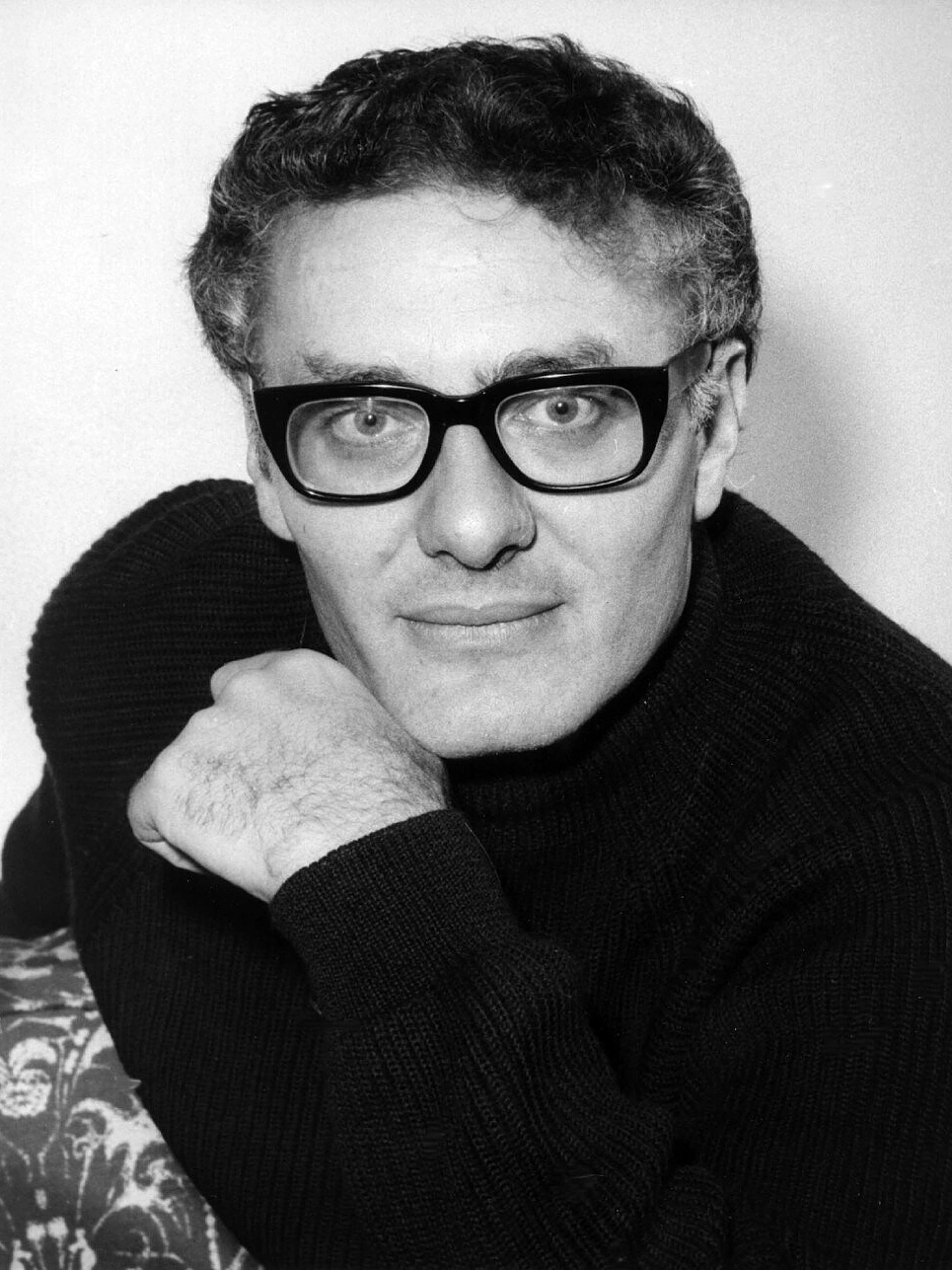
| 25 Quotes | |
| Born as | Peter Levin Shaffer |
| Known as | Sir Peter Levin Shaffer |
| Occup. | Playwright |
| From | England |
| Born | May 15, 1926 Liverpool, England |
| Died | June 6, 2016 Curraheen, County Cork, Ireland |
| Aged | 90 years |
| Cite | |
Citation Formats
APA Style (7th ed.)
Peter shaffer biography, facts and quotes. (2026, February 12). FixQuotes. https://fixquotes.com/authors/peter-shaffer/
Chicago Style
"Peter Shaffer biography, facts and quotes." FixQuotes. February 12, 2026. https://fixquotes.com/authors/peter-shaffer/.
MLA Style (9th ed.)
"Peter Shaffer biography, facts and quotes." FixQuotes, 12 Feb. 2026, https://fixquotes.com/authors/peter-shaffer/. Accessed 5 Mar. 2026.
Early Life and Background
Peter Levin Shaffer was born on May 15, 1926, in Liverpool, England, a port city whose cosmopolitan traffic and hard-edged working life sat beside a strong tradition of popular entertainment. He arrived as one of a twin pair - his brother Anthony Shaffer would also become a writer - and the doubleness of that family fact shadowed his imagination: rivalry and intimacy, the split self, the idea that identity is performed as much as possessed.Shaffer's childhood was cut through by war and dislocation. In interviews he returned to the evacuation of children and the sustained fear of aerial bombardment, a national drama that made private life feel provisional and staged. That early sense of history pressing into the household - of ordinary rooms suddenly becoming shelters, queues, and listening posts - helped form the tension in his later plays between domestic surfaces and the abyss beneath them, and his recurring fascination with ritual as a way to survive chaos.
Education and Formative Influences
After wartime years that fostered both discipline and unease, Shaffer was educated at St Paul's School in London and then at Trinity College, Cambridge, where he read history. Cambridge sharpened his taste for argument and for the long view - how a civilization explains itself through art, faith, and power - while London offered the practical counterweight of theatre as a living craft. In the postwar period he also spent time in New York, an encounter that widened his sense of cultural scale and theatrical tempo, and deepened his interest in the way place changes what an audience will accept as "true".Career, Major Works, and Turning Points
Shaffer worked variously as a music critic and in publishing before the stage claimed him. He broke through with the one-act pieces later paired as The Private Ear and The Public Eye (1962), then announced his virtuosity in farce with Black Comedy (1965). The major turning point was Equus (1973), a psychological and religious duel between psychiatrist and patient that became an international phenomenon, earning Shaffer a Tony Award and confirming his ability to make ideas theatrical without losing suspense. Amadeus (1979) extended that power into historical mythmaking - Mozart and Salieri as embodiments of grace and envy - winning both Tony and Olivier recognition and later becoming a landmark 1984 film adaptation. Subsequent plays, including Yonadab (1985) and The Royal Hunt of the Sun (1964, a sustained success in Britain and abroad), showed a writer drawn to extremity: empire, sacrifice, and the costs of belief.Philosophy, Style, and Themes
Shaffer wrote for the stage as if it were a laboratory for metaphysical emotions - awe, jealousy, devotion, blasphemy - and he built his scenes around formal constraints that reveal character the way pressure reveals a fault line. His craft is visible in how he treats rehearsal, performance, and publication as distinct modes of embodiment: “Rehearsing a play is making the word flesh. Publishing a play is reversing the process”. The line is more than a technical quip; it exposes his belief that theatre is where language becomes risk, breath, and exposure, and that the page alone cannot contain the moral temperature he wanted.His themes repeatedly circle the shame of spectatorship and the violence of comparison - the feeling of being locked outside another person's authentic intensity. In Amadeus he turned music into a character that judges the living, and his lifelong Mozart obsession was not merely aesthetic but psychological, a confrontation with effortless genius: “It's an extraordinary thing about Mozart is that you never tire of him... he never bores me, and he doesn't... not only bore me, that's too strong a word”. Even in his comedy, Shaffer used technique as philosophy, converting stage mechanics into moral confusion and social panic; his explanation of Black Comedy makes the point with crystalline pragmatism: “Black Comedy is a farce that is played in the dark, as you know, with the lights full on. It's the Chinese convention of reversing light and dark, and exactly where anybody is at any given moment is the play”. That reversal is a Shaffer signature - illumination that misleads, darkness that reveals, and characters forced to admit what they most want to conceal.
Legacy and Influence
Shaffer died on June 6, 2016, leaving a body of work that proved idea-driven theatre could still feel sensual, suspenseful, and popular. Equus remains a benchmark for actors and directors because it demands moral nakedness without offering tidy diagnosis, while Amadeus helped modern audiences imagine classical music as psychological drama and made theatrical historiography newly urgent. His influence persists in playwrights and screenwriters who fuse spectacle with inquiry, and in the continuing appetite for plays that treat belief - religious, artistic, erotic - as the central human obsession rather than a decorative subplot.Our collection contains 25 quotes written by Peter, under the main topics: Ethics & Morality - Art - Friendship - Music - Dark Humor.
Other people related to Peter: Paul Scofield (Actor), F. Murray Abraham (Actor), Jenny Agutter (Actress), Simon Callow (Actor), Diane Cilento (Actress), Peter Hall (Director)
Frequently Asked Questions
- Peter Shaffer Equus: “Equus” is a play by him that premiered in 1973. It won the Tony Award for Best Play in 1975 and was adapted into a 1977 film.
- Plays by Peter Shaffer: Notable plays include “The Royal Hunt of the Sun” (1964), “Equus” (1973), and “Amadeus” (1979). Other works include “Five Finger Exercise” (1958) and “Black Comedy” (1965).
- Peter Shaffer Amadeus: “Amadeus” is a stage play by him that premiered in 1979. It was adapted into the 1984 film “Amadeus”, for which he won the Academy Award for Best Adapted Screenplay.
- Peter Shaffer movies: His plays were adapted into films, including “Equus” (1977) and “Amadeus” (1984). He won the Academy Award for Best Adapted Screenplay for “Amadeus”.
- How old was Peter Shaffer? He became 90 years old
Peter Shaffer Famous Works
- 1987 Lettice and Lovage (Play)
- 1984 Amadeus (screenplay) (Screenplay)
- 1979 Amadeus (play) (Play)
- 1977 Equus (screenplay) (Screenplay)
- 1973 Equus (Play)
- 1965 Black Comedy (Play)
- 1964 The Royal Hunt of the Sun (Play)
- 1962 The Private Ear (Play)
- 1959 The Public Eye (Play)
- 1958 Five Finger Exercise (Play)
Source / external links