
Peter Snell Biography Quotes 2 Report mistakes
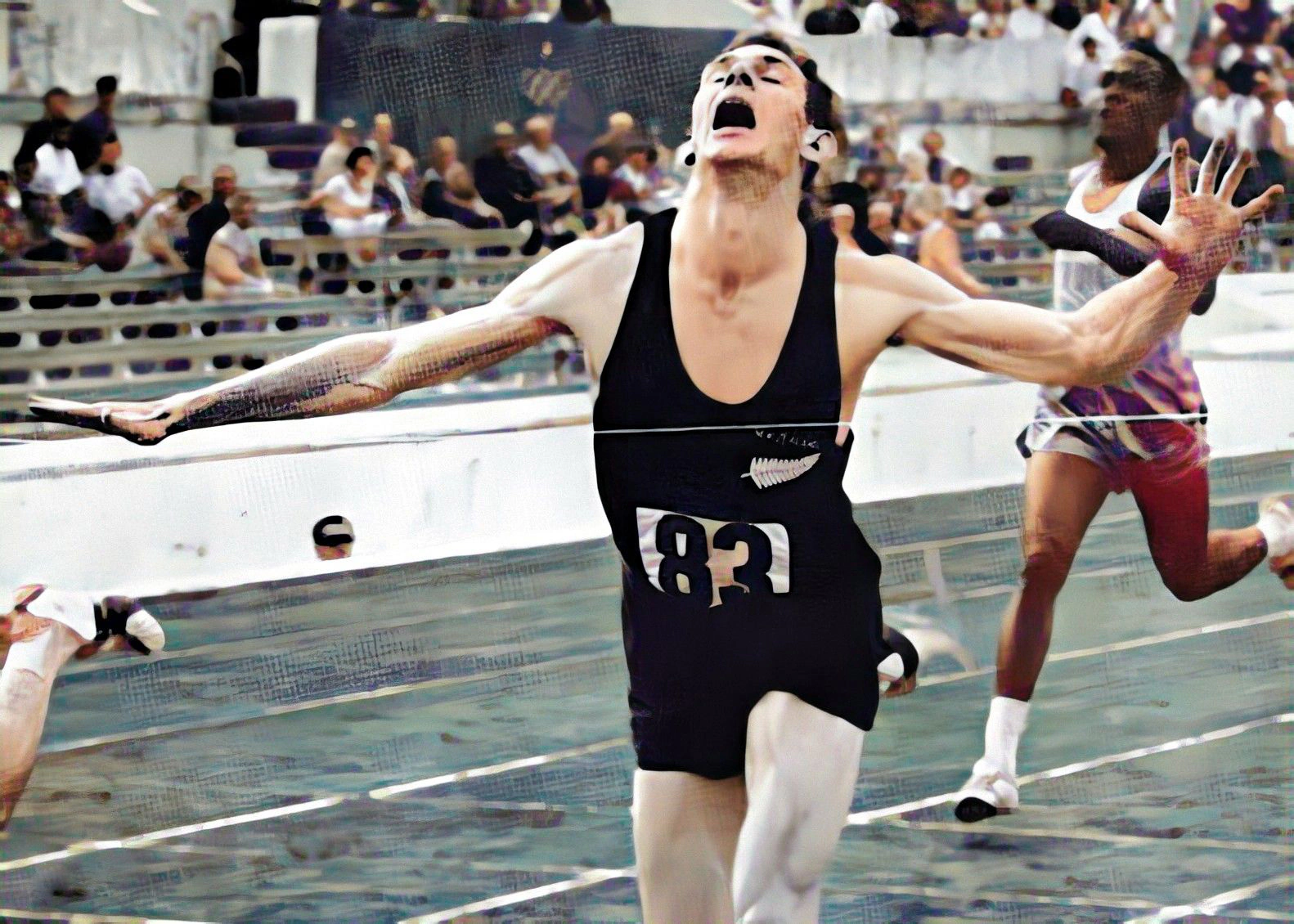
| 2 Quotes | |
| Born as | Peter George Snell |
| Occup. | Athlete |
| From | New Zealand |
| Spouse | Miki Snell |
| Born | December 17, 1938 Opunake, Taranaki |
| Died | December 12, 2019 Dallas, Texas, United States |
| Cause | Heart attack |
| Aged | 80 years |
| Cite | |
Citation Formats
APA Style (7th ed.)
Peter snell biography, facts and quotes. (2026, February 11). FixQuotes. https://fixquotes.com/authors/peter-snell/
Chicago Style
"Peter Snell biography, facts and quotes." FixQuotes. February 11, 2026. https://fixquotes.com/authors/peter-snell/.
MLA Style (9th ed.)
"Peter Snell biography, facts and quotes." FixQuotes, 11 Feb. 2026, https://fixquotes.com/authors/peter-snell/. Accessed 5 Mar. 2026.
Early Life and Background
Peter George Snell was born on December 17, 1938, in Opunake, Taranaki, New Zealand, and grew up in a country where amateur sport carried national pride disproportionate to its population. Postwar New Zealand celebrated toughness, self-reliance, and the ideal of the gifted all-rounder, and Snell came of age in a culture that expected young men to work, play hard, and not advertise ambition. The provincial rhythms of dairy country and small-town schools also meant that talent was often discovered late, through chance mentors rather than early specialization.Snell's earliest identity was not as a future middle-distance star but as a capable, robust youth with broad athletic ability and an appetite for competition. His father, also named Peter Snell, had been a distance runner and set a quiet example of discipline rather than celebrity. That inheritance mattered less as a blueprint than as a permission structure: it made running thinkable, but it did not make greatness inevitable. For Snell, the emotional tone of his beginnings was practical and unshowy, a temperament that later helped him absorb pressure without theatricality.
Education and Formative Influences
Snell attended Mount Albert Grammar School in Auckland, a setting that combined strong sport tradition with the expanding opportunities of an urbanizing New Zealand. The decisive formative influence was coach Arthur Lydiard, whose training philosophy of high-mileage aerobic conditioning, hill work, and periodization reshaped distance running worldwide. Under Lydiard, Snell learned that apparent "talent" could be manufactured into dominance through patience and controlled suffering - long runs on Auckland's roads and trails, repetition that built not only physiology but a private confidence: if you did the work no one saw, you could win when everyone watched.Career, Major Works, and Turning Points
Snell emerged in the late 1950s and early 1960s as the leading figure of New Zealand middle-distance running, peaking at the Rome 1960 and Tokyo 1964 Olympics. In Rome he won gold in the 800 meters in a dramatic finish that announced both his speed and composure under maximal fatigue. In Tokyo, he achieved the rare double of Olympic gold in the 800 meters and 1500 meters, confirming him as not merely a fast kicker but a complete middle-distance runner. Across these years he set world records and helped validate Lydiard's methods on the largest stage, then stepped away relatively early, choosing life beyond the track rather than stretching fame into diminishing returns.Philosophy, Style, and Themes
Snell's inner life was marked by a tension between romantic accident and ruthless control. He often framed his rise as contingency rather than destiny, insisting, “As a teenager I had no idea that I had the potential to win an Olympic gold medal and my athletic career developed only by lucky circumstances”. That self-description reveals a psychology wary of mythmaking - he resisted the idea that champions are born with a fixed script. Yet the very modesty of the claim sharpened his edge: if success was not guaranteed, preparation had to be, and the only dependable refuge was work. His confidence, in other words, was built from repeatable behaviors rather than inspirational self-talk.On the track, Snell's style fused Lydiard endurance with the ability to change gears brutally late. He could tolerate discomfort and still think tactically, waiting, reading, then committing with a sprinter's force. Over time, dominance brought a different emotional challenge: predictability. “Running became boring because it's so predictable. I got to a point where I knew what my competition could do”. The line is not arrogance so much as an admission that mastery can drain mystery. When an athlete learns the sport's limits - rivals' patterns, one's own range - the contest can feel like rehearsal, and the psychological hunger that once powered risk must be found elsewhere.
Legacy and Influence
Snell died on December 12, 2019, remembered as a defining New Zealand athlete of the 20th century and one of the great Olympic middle-distance runners. His influence is inseparable from the Lydiard revolution he embodied: the proof that aerobic strength could underpin speed, and that a small nation could produce a global standard through method rather than scale. He also left a quieter template - the champion as craftsman, suspicious of hype, attentive to the mundane - a figure whose greatest victories came from making the extraordinary feel, by the time it arrived, almost inevitable.Our collection contains 2 quotes written by Peter, under the main topics: Sports - Training & Practice.