
Petrarch Biography Quotes 22 Report mistakes
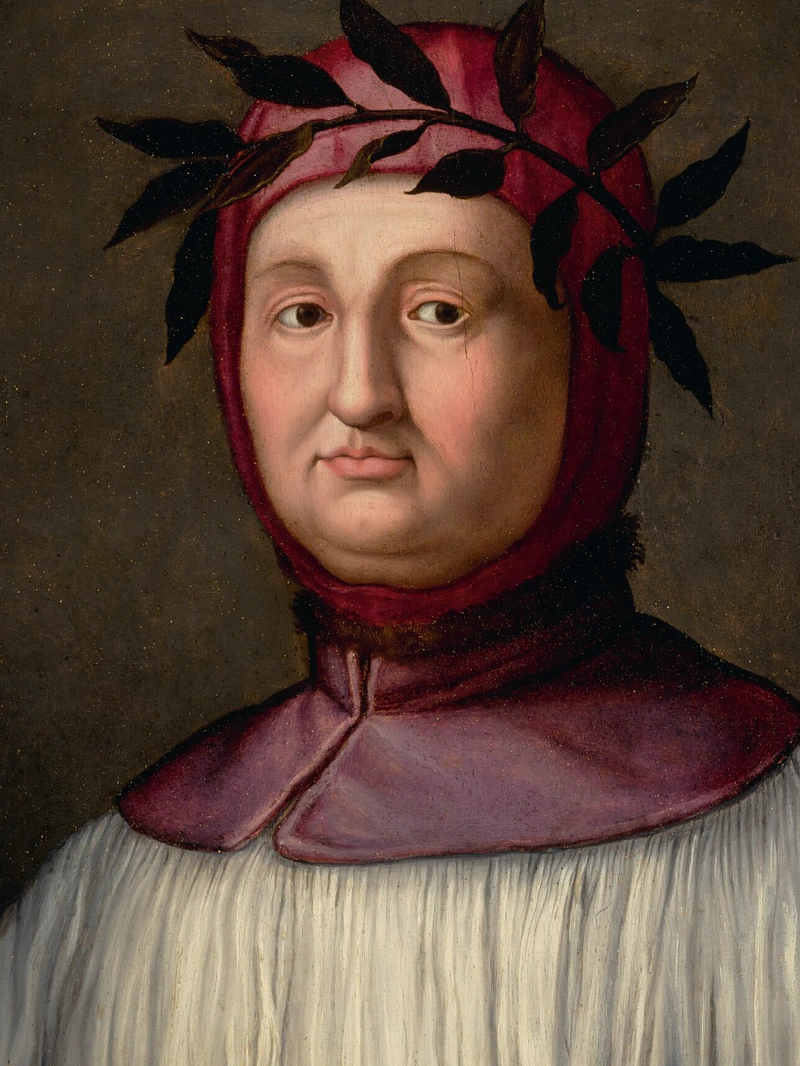
| 22 Quotes | |
| Born as | Francesco Petrarca |
| Occup. | Poet |
| From | Italy |
| Born | July 20, 1304 Arezzo, Italy |
| Died | July 19, 1374 Arqua Petrarca, Italy |
| Aged | 69 years |
| Cite | |
Citation Formats
APA Style (7th ed.)
Petrarch biography, facts and quotes. (2026, February 11). FixQuotes. https://fixquotes.com/authors/petrarch/
Chicago Style
"Petrarch biography, facts and quotes." FixQuotes. February 11, 2026. https://fixquotes.com/authors/petrarch/.
MLA Style (9th ed.)
"Petrarch biography, facts and quotes." FixQuotes, 11 Feb. 2026, https://fixquotes.com/authors/petrarch/. Accessed 27 Mar. 2026.
Early Life and Background
Francesco Petrarca, known in English as Petrarch, was born on 1304-07-20 in Arezzo, in a Italy still fractured into communes, papal territories, and rival factions. His family belonged to the educated class of notaries, and his father, Ser Petracco, was tied to the White Guelf cause that lost in Florence. Exile - with its mixture of grievance, mobility, and hunger for reputation - became Petrarch's first political education and an emotional template: longing for a civic home, and suspicion that the world rewards noise more than virtue.The Petrarca household followed opportunity south and west, eventually settling near Avignon as the papacy relocated there. The boy grew up on the edge of the curia's wealth and intrigues, absorbing both its administrative sophistication and its moral ambiguities. That environment sharpened his lifelong double vision: the desire for public distinction and the fear that public life corrodes integrity. Even his earliest self-portraits show an inward man trying to govern ambition, not extinguish it.
Education and Formative Influences
Petrarch studied law at Montpellier and later Bologna, as his father intended, but the discipline never captured him; he stole hours for Latin authors, especially Cicero, Virgil, Livy, and Seneca, whose voices taught him a more intimate, ethical kind of eloquence. After his father's death, he returned to Avignon and took minor clerical orders, a practical choice that provided income without demanding monastic withdrawal. The shock of discovering Cicero's letters helped form his central conviction that antiquity was not a museum but a living school of self-scrutiny, style, and civic responsibility - and that the writer could become a moral actor through the careful shaping of words.Career, Major Works, and Turning Points
On 1327-04-06 (Good Friday, by his later claim) Petrarch saw Laura in the church of Sainte-Claire in Avignon, an encounter he transmuted into the lyric sequence later known as the Canzoniere (Rerum vulgarium fragmenta), whose sonnets mapped desire, shame, devotion, and time with unprecedented psychological precision. His Latin ambitions were equally decisive: Africa, the epic on Scipio, signaled his wish to revive Roman grandeur; his letters - especially the Familiarium rerum libri and Seniles - made the private epistle a literary form for the public age. In 1341 he was crowned poet laureate in Rome on the Capitoline, a symbolic restoration of classical honor that he used to argue for learning as a civic force. Turning points followed in manuscript discoveries (including new letters of Cicero), in friendships with figures like Giovanni Boccaccio, and in political hopes invested in Cola di Rienzo, hopes that curdled into disappointment. The Black Death of 1348, which he associated with Laura's death, deepened his meditation on loss; in later years he moved between Milan, Venice, and finally ArquA in the Euganean Hills, where he died on 1374-07-19, the eve of his seventieth birthday.Philosophy, Style, and Themes
Petrarch's inner life was a battleground between Christian conscience and classical aspiration, staged with unusual candor in the Secretum, a fictional dialogue with Saint Augustine. He treated the self not as a stable identity but as an argument unfolding over time - a mind capable of diagnosing its own evasions. His blunt maxim, “Man has no greater enemy than himself”. , is less a proverb than a confession: he repeatedly portrays desire as self-division, where the will invents delays, rationalizations, and flattering myths. Even his most public acts - laureation, diplomacy, patronage - are reframed as tests of interior freedom.His style joined musical Italian lyric to a new, Ciceronian clarity in Latin prose, and his themes circle around mutability: the body aging, fame decaying, cities rising and falling, love transfiguring into memory. In the Canzoniere, the beloved is both real and allegorical - a moral mirror that forces the poet to measure the distance between what dazzles and what endures. “Sameness is the mother of disgust, variety the cure”. fits his restless form: he varies images of light, stone, laurel, and wind to keep emotion from hardening into doctrine, insisting that the heart changes by subtle degrees. Yet he also defended tenderness as a humanizing force, as in the sentence “Love is the crowning grace of humanity”. , which underwrites his most daring claim - that lyric feeling, honestly examined, can be an ethical discipline rather than a private indulgence.
Legacy and Influence
Petrarch became a hinge figure between medieval scholastic culture and Renaissance humanism: he did not merely admire antiquity, he rebuilt methods of reading, collecting, and imitating that shaped European education for centuries. His Latin letters modeled a new authorial persona - learned, self-aware, historically conscious - while his Italian sonnets set patterns of diction, argument, and emotional staging that spread through "Petrarchism" into French, Spanish, and English poetry, from the courtly lyric to Shakespearean sonnet craft. His insistence on interior examination helped define early modern subjectivity, and his recovery of classical texts helped define the humanist project itself - a faith that language, memory, and moral attention can remake both the writer and the world.Our collection contains 22 quotes written by Petrarch, under the main topics: Ethics & Morality - Truth - Wisdom - Love - Writing.
Other people related to Petrarch: Ludovico Ariosto (Poet), John Florio (Writer), Joachim du Bellay (Poet), Giacomo Leopardi (Poet)
Petrarch Famous Works
- 1343 Africa (Poetry)