
Phil Heath Biography Quotes 15 Report mistakes
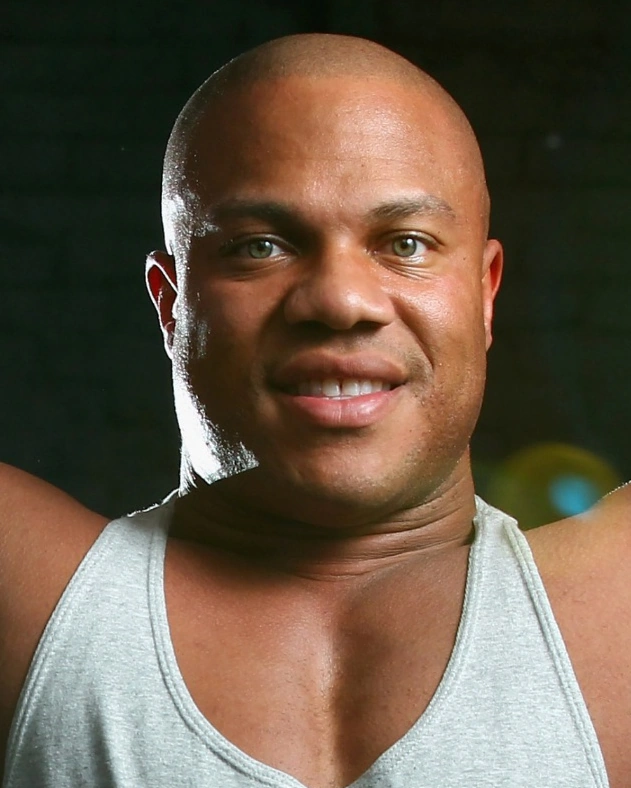
| 15 Quotes | |
| Born as | Phillip Jerrod Heath |
| Occup. | Athlete |
| From | USA |
| Born | December 18, 1979 Seattle, Washington, USA |
| Age | 46 years |
| Cite | |
Citation Formats
APA Style (7th ed.)
Phil heath biography, facts and quotes. (2026, February 11). FixQuotes. https://fixquotes.com/authors/phil-heath/
Chicago Style
"Phil Heath biography, facts and quotes." FixQuotes. February 11, 2026. https://fixquotes.com/authors/phil-heath/.
MLA Style (9th ed.)
"Phil Heath biography, facts and quotes." FixQuotes, 11 Feb. 2026, https://fixquotes.com/authors/phil-heath/. Accessed 12 Feb. 2026.
Early Life and Background
Phillip Jerrod Heath was born on December 18, 1979, in Seattle, Washington, and grew up in an America newly obsessed with televised sports heroes, glossy fitness magazines, and the promise that self-reinvention was a purchase and a discipline. He was not raised as a destined bodybuilder. He was raised as a competitor, the kind shaped by school gyms, city courts, and the social currency of being dependable under pressure. Those early environments rewarded quick learning, consistency, and the ability to stay composed when the room turned loud - traits that later translated into an unusually controlled presence on bodybuilding stages.Seattle in the 1980s and 1990s offered two intertwined lessons: opportunities were real, and they were not evenly distributed. Heath learned to read rooms - coaches, teammates, and audiences - and to build identity through performance rather than proclamation. That instinct for calibration saw him through the adolescence of many athletes: bursts of confidence, stretches of doubt, and the realization that talent without structure leaves you stranded. The future "Gift" would become, in private, a meticulous craftsman.
Education and Formative Influences
Heath attended Rainier Beach High School, then earned a scholarship to the University of Denver, where he played NCAA Division II basketball and graduated with a degree in business administration. College sports did more than train his body; it installed a professional rhythm: film study, repetition, recovery, accountability. As his basketball path narrowed, he carried forward the athlete's instinct to quantify improvement, and he absorbed the modern fitness ecosystem that surrounded campuses at the time - supplements, training splits, and a growing online culture that rewarded visible transformation.Career, Major Works, and Turning Points
After college, Heath pivoted from basketball to bodybuilding with startling speed, moving from serious trainee to elite contender and earning IFBB pro status in 2005. He became a breakout star by winning the 2008 IFBB Iron Man and placing third at the Mr. Olympia that same year, signaling a new aesthetic standard: dense muscle paired with small-joint symmetry and stage polish. Heath then dominated the sport's flagship title, winning Mr. Olympia seven consecutive times from 2011 to 2017, a run that placed him among the most decorated champions of the modern era. Rivalries - notably with Kai Greene - intensified the spotlight, while injuries and wear accumulated behind the scenes. In 2018 he finished second, and his later competitive appearances were marked by the realities of longevity in an extreme sport: managing inflammation, preserving presentation, and deciding when a legacy is better defended through select battles than constant war.Philosophy, Style, and Themes
Heath's public persona often mixed swagger with the pragmatism of a former team athlete. Psychologically, he seemed driven less by abstract "destiny" than by the daily arithmetic of advantage: sleep, timing, recovery, practice, presentation. His own language reveals a mind trained to convert motivation into systems: "Actually to be a champion your goal is to be a little bit better each day, making sure that every day is an opportunity to be at your best". That sentence reads like a coping mechanism as much as a credo - a way to shrink an overwhelming ambition into manageable tasks, and to protect confidence by anchoring it in behavior rather than mood.His style in bodybuilding was a study in controlled excess: full round muscle bellies, crisp conditioning, and a stage demeanor that projected ease while hiding the labor required to look effortless. He resisted the romantic myth of genius by elevating teachability and discipline: "There's no way in hell I could have achieved what I have without being a good student and listening to the wisdom of others". That admission points to an inner humility beneath the champion's armor - a recognition that elite performance is collaborative even when trophies are solitary. He also framed mentality as hygiene, treating defeatism like a contagion: "Being Negative and Lazy is a disease that leads to pain, hardship, depression, poor health and failure. Be pro active, and give a damn to achieve success!" In Heath's psychological world, negativity is not an opinion but a risk factor, and the antidote is purposeful action repeated until it becomes identity.
Legacy and Influence
Phil Heath helped define the 2010s bodybuilding ideal: not merely mass, but balance, detail, and a polished, media-ready professionalism suited to the sport's social-media era. His seven Mr. Olympia titles anchored a generation, while his rivalries, interviews, and training content broadened bodybuilding's audience beyond hardcore fans. Just as importantly, he modeled a modern champion's toolkit - strategic self-management, public narrative control, and the insistence that greatness is built through learnable habits. For later competitors, Heath remains both a benchmark physique and a case study in how to sustain excellence when the margins are brutal and the spotlight never stops measuring you.Our collection contains 15 quotes written by Phil, under the main topics: Motivational - Funny - Victory - Learning - Work Ethic.
Other people related to Phil: William Bonac (Athlete)
Source / external links