
Phil McGraw Biography Quotes 26 Report mistakes
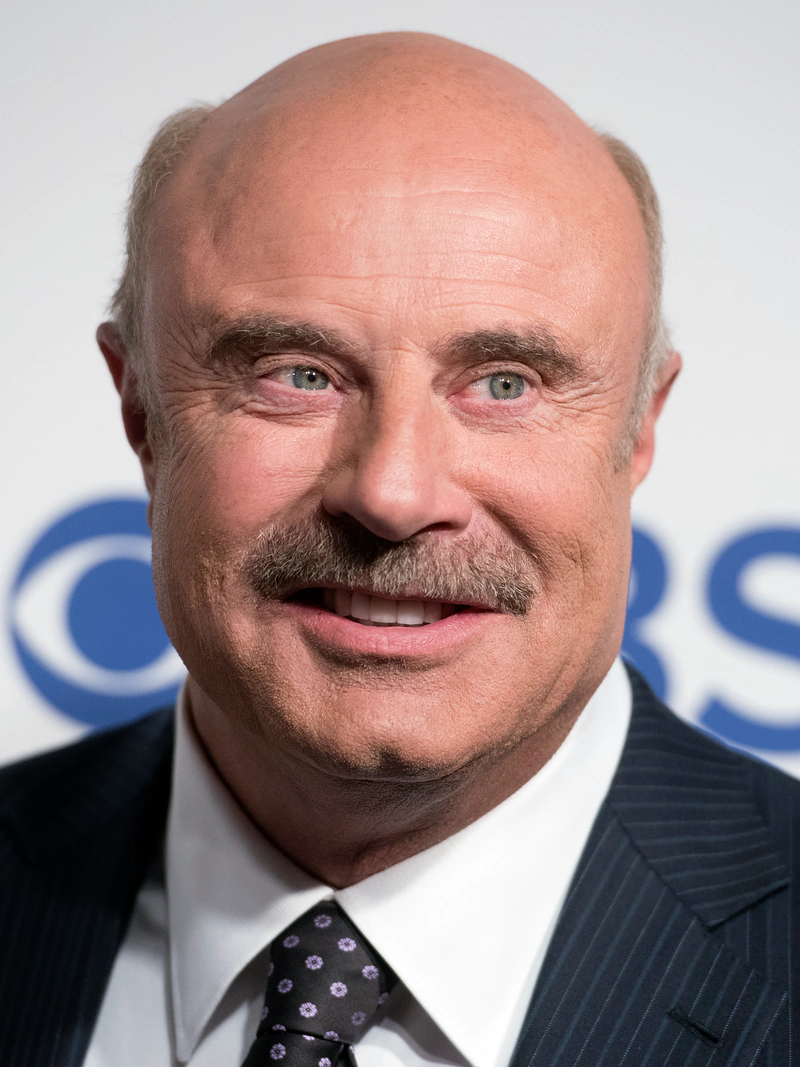
Attr: wusa9.com
| 26 Quotes | |
| Born as | Phillip Calvin McGraw |
| Known as | Dr. Phil |
| Occup. | Psychologist |
| From | USA |
| Born | September 1, 1950 Vinita, Oklahoma, USA |
| Age | 75 years |
| Cite | |
Citation Formats
APA Style (7th ed.)
Phil mcgraw biography, facts and quotes. (2026, February 11). FixQuotes. https://fixquotes.com/authors/phil-mcgraw/
Chicago Style
"Phil McGraw biography, facts and quotes." FixQuotes. February 11, 2026. https://fixquotes.com/authors/phil-mcgraw/.
MLA Style (9th ed.)
"Phil McGraw biography, facts and quotes." FixQuotes, 11 Feb. 2026, https://fixquotes.com/authors/phil-mcgraw/. Accessed 24 Mar. 2026.
Early Life and Background
Phillip Calvin McGraw was born on September 1, 1950, in Vinita, Oklahoma, and grew up in the culture of small-town pragmatism and evangelical-inflected self-reliance that shaped much of the midcentury American Southwest. His father, Joseph J. McGraw Jr., worked as an equipment supplier, and the family moved with his work through Oklahoma and Texas, giving McGraw early familiarity with the social codes of tight communities where reputation, authority, and public performance mattered.In the late 1960s and early 1970s, as the United States absorbed the aftershocks of Vietnam, civil rights, and a rapidly commercializing media landscape, McGraw came of age with a dual sensitivity to aspiration and scrutiny. That tension - wanting to improve oneself while being watched by peers, coaches, employers, and later cameras - became a throughline in his public persona: a moralizing helper who also understood the power of confrontation, narrative, and the promise of transformation.
Education and Formative Influences
McGraw attended the University of Tulsa on a football scholarship before transferring and earning a BA in psychology from Midwestern State University in Wichita Falls, Texas. He completed an MA in experimental psychology and a PhD in clinical psychology at the University of North Texas (then North Texas State University) in 1979, training in an era when American psychology was increasingly behavioral and outcomes-oriented, with therapy competing against pharmaceuticals, self-help movements, and television talk culture for influence. He later obtained a license in Texas (eventually lapsing), but his formative imprint came less from a single theoretical school than from an applied, systems-and-results mindset that fit the late-20th-century managerial turn in American professional life.Career, Major Works, and Turning Points
After early clinical work and private practice, McGraw co-founded Courtroom Sciences, Inc. (CSI) in the late 1980s with attorney Gary Dobbs, developing trial consulting and jury research services that translated psychological principles into strategy, persuasion, and message discipline. A pivotal turn came in the late 1990s when he began appearing as an expert on "The Oprah Winfrey Show", where his blunt, directive style proved telegenic; the exposure led to the syndicated daytime program "Dr. Phil", launched in 2002 under Harpo Productions and later McGraw's own ventures. He expanded into books such as "Life Strategies" (1999), "Relationship Rescue" (2000), and "Self Matters" (2001), and built a brand that blended counseling language with a courtroom cross-examination cadence. His career also attracted sustained criticism: from mental health professionals concerned about televising vulnerable guests, from observers challenging the clinical framing of entertainment, and from debates about credentials and the ethics of public therapy - controversies that, for supporters and skeptics alike, sharpened his identity as a mass-media psychologist rather than a traditional clinician.Philosophy, Style, and Themes
McGraw's core psychological posture is consequentialist and behavioral: he is less interested in the elegance of explanation than in what a person will do next. His on-air method typically compresses assessment into a moralized action plan - confront the payoff of dysfunction, name the enabling system, and demand a measurable change. That compression is also his signature: a belief that insight is common, while follow-through is rare, and that people often need a social mirror more than a private excavation. “Awareness without action is worthless”. In McGraw's universe, the self is not simply discovered; it is engineered under pressure.A second theme is boundaries as self-respect, especially in family and romantic systems where caretaking becomes complicity. “We teach people how to treat us”. The line functions as both diagnosis and indictment: if patterns persist, someone is rewarding them. From that premise, he argues for choosing solitude over corrosive attachment, a stance that resonates with viewers navigating divorce, addiction, and intergenerational conflict. “It's better to be healthy alone than sick with someone else”. Psychologically, these aphorisms reveal an inner ethic of control - not domination of others, but containment of chaos by converting messy emotion into rules, consequences, and contracts. His style is paternal and prosecutorial, and it assumes that dignity can be restored through structure, even when tenderness is in short supply.
Legacy and Influence
McGraw helped normalize therapeutic vocabulary in mainstream entertainment, accelerating a culture where boundaries, enabling, trauma, and accountability are dinner-table terms and where mental health advice is consumed like lifestyle content. He also embodies the unresolved contradiction of the era that made him famous: television as both public service and spectacle. For millions, "Dr. Phil" offered a script for self-advocacy and a sense that change is possible now, not after years of analysis; for critics, it marked the commodification of suffering and the blurring of clinical ethics with ratings. Whatever one's verdict, McGraw's enduring influence lies in how he translated psychology into a mass-market moral language - simple, forceful, and built for an attention economy.Our collection contains 26 quotes written by Phil, under the main topics: Witty One-Liners - Motivational - Funny - Parenting - Honesty & Integrity.
Other people related to Phil: Trisha Goddard (Entertainer), Meredith Brooks (Musician)