
Philip III Biography Quotes 7 Report mistakes
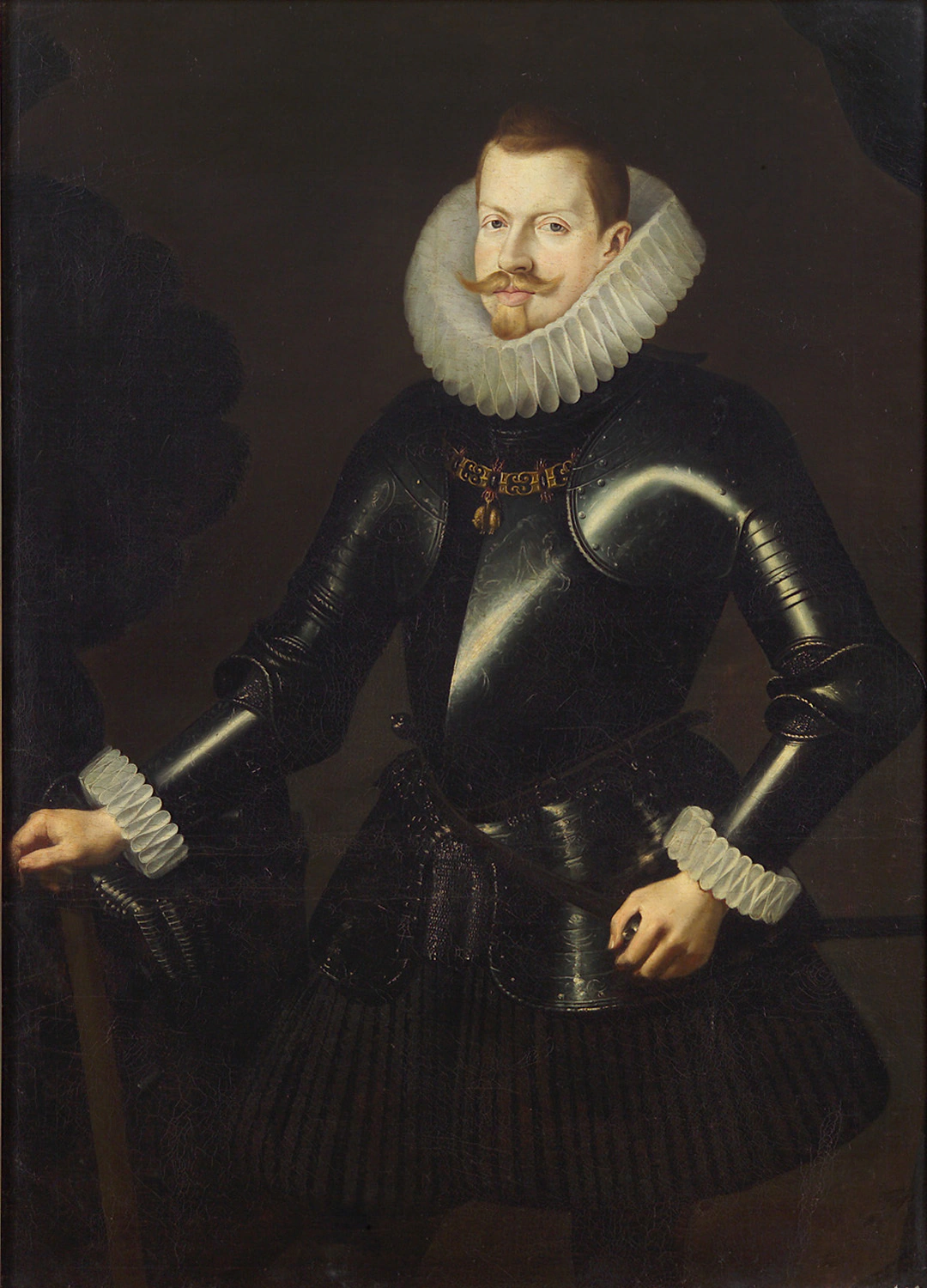
Attr: Andrés López Polanco
| 7 Quotes | |
| Known as | Felipe III |
| Occup. | Royalty |
| From | Spain |
| Born | April 14, 1578 Madrid, Spain |
| Died | March 31, 1621 |
| Aged | 42 years |
| Cite | |
Citation Formats
APA Style (7th ed.)
Philip iii biography, facts and quotes. (2026, February 11). FixQuotes. https://fixquotes.com/authors/philip-iii/
Chicago Style
"Philip III biography, facts and quotes." FixQuotes. February 11, 2026. https://fixquotes.com/authors/philip-iii/.
MLA Style (9th ed.)
"Philip III biography, facts and quotes." FixQuotes, 11 Feb. 2026, https://fixquotes.com/authors/philip-iii/. Accessed 6 Mar. 2026.
Early Life and Background
Philip III of Spain was born on April 14, 1578, in Madrid, the son of Philip II and his fourth wife, Anna of Austria. He arrived into a court already hardened by decades of confessional war, Atlantic empire, and relentless paperwork - a monarchy that called itself Catholic above all else, yet was sustained by silver from the Indies and by soldiers posted from Flanders to Milan. His childhood unfolded in the shadow of the Escorial, where a king-father ruled through councils and dispatches, training Spain to believe that order, orthodoxy, and obedience were the price of survival.The boy who would inherit that system was not fashioned to dominate it. Contemporary observers repeatedly judged him pious, courteous, and personally gentle - qualities prized in a Christian prince, yet risky in a regime that demanded constant, often brutal choices. He grew up amid rituals of devotion and the theatrical language of Habsburg majesty, but also amid fear: fear of heresy, of Ottoman and Protestant advance, of fiscal collapse, and of dishonor. From the start, his inner world seems to have leaned toward conscience and private rectitude rather than the abrasive genius of command.
Education and Formative Influences
Philip received the standard education of a Habsburg heir: religious formation, etiquette, languages, dynastic history, and training in government through exposure to councils and secretaries. The deeper influence, however, was cultural and devotional. Spain at the turn of the seventeenth century mixed Counter-Reformation intensity with Baroque splendor, and court life revolved around confessors, the rhetoric of sacred monarchy, and a code of honor that treated reputation as political capital. Just as important were the personalities around him: clerics who framed policy as moral accounting, and nobles who presented favoritism as efficient governance - setting the stage for a reign defined by delegation.Career, Major Works, and Turning Points
Philip became king in 1598 at age twenty, inheriting a globe-spanning empire at the moment its costs began to outrun its revenues. His reign is inseparable from the rise of the valido, Francisco Gomez de Sandoval y Rojas, Duke of Lerma, who dominated appointments and patronage while the king concentrated on piety, family, hunting, and ceremonial kingship. Early policy sought respite: peace with France (Treaty of Vervins, 1598) and with England (Treaty of London, 1604) and, most famously, the Twelve Years' Truce with the Dutch (1609), which bought time but did not resolve the revolt. The court moved from Madrid to Valladolid (1601) and back (1606), a decision widely read as a Lerma-style maneuver that monetized real estate and offices. The great moral and demographic rupture was the expulsion of the Moriscos (1609-1614), applauded by many as a victory for religious unity but devastating in regions such as Valencia and Aragon, where skilled labor and tax base vanished. In the 1610s, as Lerma fell and his faction frayed, Spain drifted back toward wider war, edging into the conflicts that would explode into the Thirty Years' War - leaving Philip to die in 1621 with peace exhausted and burdens deferred to his son, Philip IV.Philosophy, Style, and Themes
Philip III ruled as a devotional monarch who understood kingship as a moral office before it was a strategic craft. His public posture emphasized humility and obligation, a psychology that sought safety in righteousness and procedure rather than in improvisation. In that spirit, the ideal that “To govern is to serve”. captures how he wished authority to feel - not as personal appetite, but as a charged stewardship under God. Yet that self-conception also made it easier to let others carry the hard edge of rule, turning service into delegation and delegation into dependence on favorites.The tension of his reign lay between conscience and consequence. The maxim “There are three things which we should never sacrifice: our honor, our conscience, and our duty”. aligns with the court culture that treated moral stain as a political wound, and it helps explain why measures like the Morisco expulsion could be framed as necessary purification even when economically ruinous. At the same time, a king who believed that “The greatest glory of a king is to leave behind a kingdom that is prosperous, peaceful, and just”. faced an empire whose prosperity was mortgaged, whose peace was episodic, and whose justice was filtered through faction. His style was not the sharp, solitary labor of Philip II, but a softer kingship that invested legitimacy in faith, ceremony, and the hope that correct intention might redeem flawed outcomes.
Legacy and Influence
Philip III is remembered less for personal brilliance than for what his reign revealed about Habsburg Spain at midlife: wealthy in appearance, strained in structure, and increasingly governed through intermediaries. The valido system he normalized shaped the politics of Philip IV and the Count-Duke of Olivares, while the Morisco expulsion became a defining case study in how confessional policy could hollow out a society. Yet his era also coincided with Spain's cultural flowering - the early seventeenth-century world of Cervantes, Lope de Vega, and a court aesthetic that turned empire into spectacle. In biography, Philip emerges as a conscientious man caught between prayer and power: a king who sought virtue as method, and whose reign shows how virtue, without administrative grip and fiscal realism, can still preside over irreversible loss.Our collection contains 7 quotes written by Philip, under the main topics: Ethics & Morality - Justice - Leadership - Servant Leadership.
Source / external links