
Philip IV Biography Quotes 7 Report mistakes
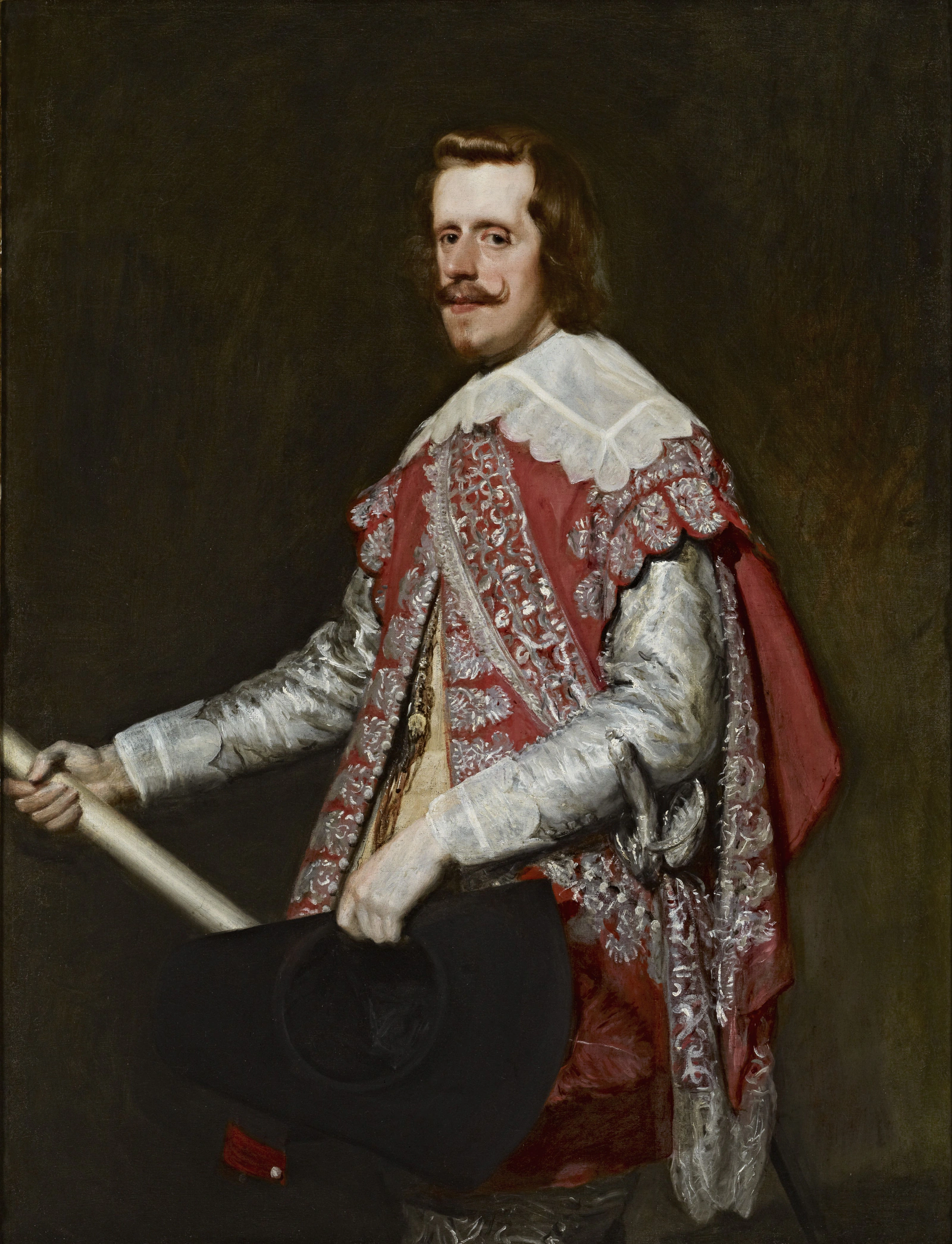
Attr: Diego Velázquez
| 7 Quotes | |
| Occup. | Royalty |
| From | Spain |
| Born | April 8, 1605 Valladolid, Spain |
| Died | September 17, 1665 |
| Aged | 60 years |
| Cite | |
Citation Formats
APA Style (7th ed.)
Philip iv biography, facts and quotes. (2026, February 11). FixQuotes. https://fixquotes.com/authors/philip-iv/
Chicago Style
"Philip IV biography, facts and quotes." FixQuotes. February 11, 2026. https://fixquotes.com/authors/philip-iv/.
MLA Style (9th ed.)
"Philip IV biography, facts and quotes." FixQuotes, 11 Feb. 2026, https://fixquotes.com/authors/philip-iv/. Accessed 5 Mar. 2026.
Early Life and Background
Philip IV was born in Valladolid on 1605-04-08, heir to an empire that still styled itself universal but was already straining under the cost of hegemony. His father, Philip III, governed through favorites and ceremony, while Spain's composite monarchy stretched from Castile and Aragon to Naples, Milan, the Spanish Netherlands, and a vast American dominion. The court moved back to Madrid in 1606, and the young prince grew up in the Alcazar amid rigid etiquette, Catholic devotion, and a culture that treated royal presence as a form of government.When Philip III died in 1621, the sixteen-year-old king inherited not only the trappings of majesty but also unresolved wars and fiscal fragility. The resumption of conflict with the Dutch Republic and Spain's deepening entanglement in the Thirty Years' War set his reign on a martial footing from the outset. Behind the public confidence of a Habsburg monarch, Philip's early kingship was marked by a need for guidance - and an impulse to find it in a single commanding minister.
Education and Formative Influences
Philip's education was shaped by the late Habsburg ideal: piety, dynastic duty, and the disciplines thought suitable for a ruler who must appear effortless. He read widely, developed a serious interest in painting and theater, and learned courtly skills - riding, hunting, and the controlled self-presentation that Spanish ritual demanded. His formation also steeped him in the concept of a "Christian king" responsible before God for justice and order, a belief that later collided with the realities of credit markets, provincial privileges, and a multinational empire that could not be ruled by Castilian will alone.Career, Major Works, and Turning Points
Philip IV's reign (1621-1665) is inseparable from the long ascendancy and eventual fall of his favorite and chief minister, Gaspar de Guzman, Count-Duke of Olivares. Together they pursued "reputation" abroad and administrative renewal at home, attempting to spread the burdens of war across the monarchy through the Union of Arms. The effort provoked backlash, and in 1640 Spain faced simultaneous crises: the Catalan Revolt and the Portuguese Restoration, the latter ending Habsburg rule in Lisbon. Military fortunes turned after Rocroi (1643), Olivares was dismissed, and Philip spent the next two decades managing decline - negotiating the Peace of Westphalia (1648) that recognized Dutch independence, and the Peace of the Pyrenees (1659) that ceded territory to France and sealed a dynastic bargain through the marriage of his daughter Maria Theresa to Louis XIV. Personal loss ran alongside state erosion: his first wife, Elisabeth of France, died in 1644; he married Mariana of Austria in 1649; the death of his heir Baltasar Carlos in 1646 left the succession precarious, and his final years were dominated by war exhaustion and the anxious grooming of the sickly Charles II.Philosophy, Style, and Themes
Philip cultivated an image of gravity and restraint, yet his inner life often reads as a struggle between conscientiousness and dependence - on ministers, on ritual, on the consolations of art. He could work hard at paperwork and councils, but repeatedly allowed delegation to become abdication, especially under Olivares. The tension between the king as solitary moral agent and the king as symbol of a system produced a distinctive psychology: duty expressed through distance. He sought legitimacy not by intimacy with subjects but by the projection of an ordered Catholic monarchy, even as that order frayed under inflation, bankruptcy cycles, and the ungovernable logistics of European war.His court culture was not mere ornament; it was a language through which he tried to master contingency. Philip's patronage of Diego Velazquez - from early royal portraits to the searching complexity of "Las Meninas" (1656) - suggests a monarch fascinated by representation itself, by the thin line between authority and performance. In that light, aphorisms attributed to him carry the tone of aspiration, sometimes bordering on self-reproach: “To rule is to serve”. “The welfare of the people is the ultimate law”. “Justice is the foundation of all good government”. These ideals illuminate a reign in which the king repeatedly framed power as moral stewardship, yet was forced by circumstance - and by his own reliance on favorites - to enact policies that devastated provinces, deepened resentment, and narrowed the distance between princely conscience and the harsh arithmetic of empire.
Legacy and Influence
Philip IV died in Madrid on 1665-09-17, leaving a weakened monarchy to a child king and a regency, and bequeathing to Spain both the landmarks of political decline and the summit of the Siglo de Oro. His era produced enduring masterpieces in painting, theater, and court culture, and his collection-building and support for artists helped define the Prado's foundations. Politically, his reign stands as a case study in early modern state stress: the limits of fiscal-military monarchy, the volatility of governing through favorites, and the long afterlife of dynastic strategy. In memory, he remains a paradox - a king who spoke the language of justice and service, yet presided over the fragmentation of Habsburg Spain, and whose most lasting authority is often found in the art that captured his haunted composure.Our collection contains 7 quotes written by Philip, under the main topics: Wisdom - Justice - Leadership - Servant Leadership.
Other people related to Philip: Pedro Calderon de la Barca (Dramatist)
Source / external links