
Philip Johnson Biography Quotes 6 Report mistakes
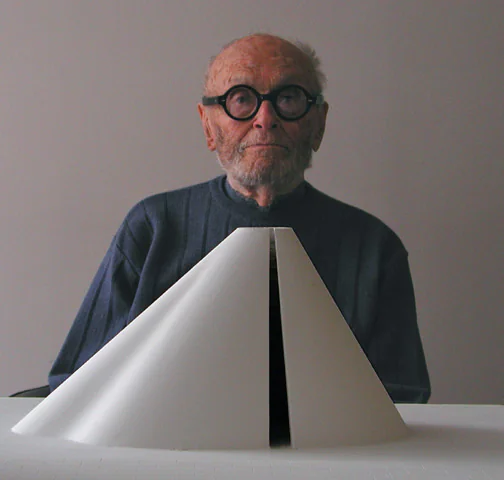
| 6 Quotes | |
| Born as | Philip Cortelyou Johnson |
| Occup. | Architect |
| From | USA |
| Born | July 8, 1906 Cleveland, Ohio, U.S. |
| Died | January 25, 2005 New Canaan, Connecticut, USA |
| Cause | Natural Causes |
| Aged | 98 years |
| Cite | |
Citation Formats
APA Style (7th ed.)
Philip johnson biography, facts and quotes. (2026, February 11). FixQuotes. https://fixquotes.com/authors/philip-johnson/
Chicago Style
"Philip Johnson biography, facts and quotes." FixQuotes. February 11, 2026. https://fixquotes.com/authors/philip-johnson/.
MLA Style (9th ed.)
"Philip Johnson biography, facts and quotes." FixQuotes, 11 Feb. 2026, https://fixquotes.com/authors/philip-johnson/. Accessed 12 Feb. 2026.
Early Life and Background
Philip Cortelyou Johnson was born July 8, 1906, in Cleveland, Ohio, and raised in a prosperous Midwestern household whose security gave him the rare luxury of turning taste into destiny. He came of age as American cities hardened into steel-frame skylines and as new media made style a public spectacle. From the beginning he moved easily among money, travel, and cosmopolitan conversation, learning that culture could be collected, curated, and displayed - a lesson that later shaped both his architecture and his role as architecture's most effective impresario.His early adulthood also carried a darker, cautionary thread. In the 1930s he flirted with authoritarian politics and, for a time, admired fascist pageantry, a moral failure that has never stopped shadowing his later achievements. The episode matters not only as biography but as psychological key: Johnson was intensely susceptible to form, ceremony, and power, and he spent the rest of his life trying to convert that susceptibility into aesthetic discipline while distancing himself from its political consequences.
Education and Formative Influences
Johnson entered Harvard University, where he gravitated toward philosophy and history rather than technical building, then educated himself through travel and close looking. A decisive early alliance with Henry-Russell Hitchcock and contact with European modernists helped crystallize his eye for the new machine-age language. At the Museum of Modern Art in New York, he became a curator and evangelist, helping define and popularize the "International Style" in the early 1930s - a formative act of naming that taught him how ideas gain authority when framed, exhibited, and repeated.Career, Major Works, and Turning Points
After World War II he pivoted from critic-curator to practicing architect, studying at Harvard's Graduate School of Design under Marcel Breuer and then building a career that repeatedly reinvented itself. His Glass House in New Canaan, Connecticut (completed 1949), announced a mind capable of making rigorous modernism feel like a lived-in philosophical proposition, while the adjacent Brick House and later pavilions showed his taste for controlled contrasts. With Ludwig Mies van der Rohe he helped realize the Seagram Building in New York (1958), a corporate monument that turned structural clarity into urban prestige. In the 1970s and 1980s he became a central figure in American postmodernism: the AT&T Building (now 550 Madison Avenue, 1984) made the "Chippendale" top a widely debated symbol of architecture's return to image, irony, and historical quotation. Late work ranged from the theatrical to the corporate and the monumental, including collaborations with John Burgee and the sculptural Chapel of St. Basil at the University of St. Thomas in Houston (1997), even as public reassessment intensified around his earlier politics and his cultural power.Philosophy, Style, and Themes
Johnson's inner life was marked by performance and appetite: the appetite to belong to the avant-garde, to be near authority, and to keep the conversation turning around him. He believed architecture was inseparable from patronage and compromise, and his blunt self-diagnosis - "Architects are pretty much high-class whores. We can turn down projects the way they can turn down some clients, but we've both got to say yes to someone if we want to stay in business". That candor helps explain his shifting stylistic loyalties: the changes were not simply opportunism but a temperament that treated architecture as a high-stakes social art, where access, persuasion, and visibility were part of the medium.Yet Johnson also held a serious, almost tender spatial ideal beneath the pose. He could be a cynic about fashion, but he was not indifferent to experience; he insisted that "All architecture is shelter, all great architecture is the design of space that contains, cuddles, exalts, or stimulates the persons in that space". The Glass House embodies that duality: a radical transparency that is simultaneously exposing and protective, turning landscape into interior and making the occupant conscious of being seen. His lifelong preoccupation with reputation - "All architects want to live beyond their deaths". - was not mere vanity so much as a disciplined fear of irrelevance, driving him to stay close to whatever seemed historically consequential, from modernism's moral rigor to postmodernism's rhetorical games.
Legacy and Influence
Johnson died January 25, 2005, in New Canaan, leaving behind not one stylistic "school" but a template for how architecture circulates through institutions, media, and elite networks. As a curator, critic, and patron-making figure, he helped shape the 20th century's architectural canon; as a designer, he produced icons that continue to provoke arguments about transparency, corporate monumentality, and historical quotation. His influence is inseparable from controversy: the brilliance of his eye and the durability of his buildings coexist with enduring scrutiny of his early political actions. The result is a legacy that forces a harder question than taste alone - how charisma and culture-making power can both elevate a field and distort its moral memory.Our collection contains 6 quotes written by Philip, under the main topics: Witty One-Liners - Art - Work Ethic - Legacy & Remembrance - Business.
Other people related to Philip: Walter Gropius (Architect), Russell Lynes (Critic), Mark Rothko (Artist), Ada Louise Huxtable (Critic)
Source / external links