
Philippe Halsman Biography Quotes 2 Report mistakes
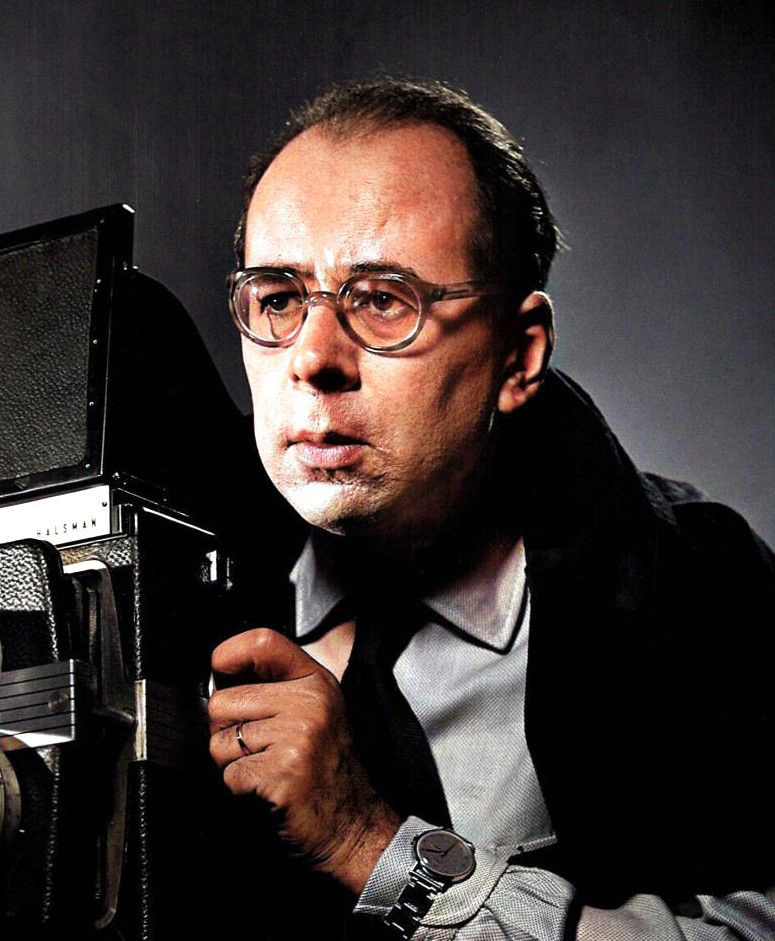
| 2 Quotes | |
| Occup. | Photographer |
| From | Latvia |
| Born | May 2, 1906 |
| Died | June 25, 1979 |
| Aged | 73 years |
| Cite | |
Citation Formats
APA Style (7th ed.)
Philippe halsman biography, facts and quotes. (2026, February 11). FixQuotes. https://fixquotes.com/authors/philippe-halsman/
Chicago Style
"Philippe Halsman biography, facts and quotes." FixQuotes. February 11, 2026. https://fixquotes.com/authors/philippe-halsman/.
MLA Style (9th ed.)
"Philippe Halsman biography, facts and quotes." FixQuotes, 11 Feb. 2026, https://fixquotes.com/authors/philippe-halsman/. Accessed 6 Mar. 2026.
Early Life and Background
Philippe Halsman was born on May 2, 1906, in Riga, then in the Russian Empire (later Latvia), into a Jewish family shaped by the citys cosmopolitan Baltic culture and the pressures of early-20th-century nationalism. Riga offered him languages, newspapers, and a modernizing urban rhythm, but also a sense that identity could be precarious - an intuition that later surfaced in his insistence that a portrait should record both appearance and character.His early adulthood was punctured by the 1928 Tyrol incident in Austria, when he and his father went hiking and his father died in a fall; Halsman was arrested and convicted amid an atmosphere widely criticized as anti-Semitic. The case drew international attention and advocacy from figures such as Albert Einstein and Thomas Mann, and Halsman ultimately received a pardon. The ordeal left a durable mark: he learned how quickly public narratives can harden around a person, and he developed a lifelong drive to control the story through images that felt incontrovertibly alive.
Education and Formative Influences
Halsman studied engineering in Dresden, an education that trained his eye for structure, mechanics, and the logic of light, and he carried that precision into photography. After moving to Paris in the early 1930s, he absorbed the citys interwar visual ferment - fashion, Surrealism, and the emerging magazine culture - while building technical mastery in studio lighting and sharp, high-contrast portraiture that could read instantly on the printed page.Career, Major Works, and Turning Points
By the mid-1930s Halsman was established in Paris as a portrait and fashion photographer, but the Nazi advance forced a decisive turn: he fled occupied Europe in 1940, reaching the United States with help from supporters including Einstein. In New York he became one of the defining photographers of the magazine era, producing a stream of iconic covers and assignments for LIFE and other publications, photographing politicians, actors, artists, and scientists with an immediacy that suited postwar celebrity culture. His long collaboration with Salvador Dali generated some of his most famous images, including the meticulously staged, airborne "Dali Atomicus" (1948), where bodies, water, and objects appear suspended in mid-explosion - a technical feat that fused engineering patience with Surrealist play. Across decades he also refined his signature "jump" portraits, a method that used motion to strip away posed social masks, later consolidated in the book Jump Book (1959). Recognition followed: leadership within professional organizations, widespread publication, and a role in setting mid-century standards for editorial portraiture.Philosophy, Style, and Themes
Halsman treated the portrait as both evidence and encounter. “A true portrait should, today and a hundred years from today, the Testimony of how this person looked and what kind of human being he was”. That statement is less a slogan than a psychological vow made after witnessing how institutions could misread a life: the camera, for him, had to resist simplification by delivering a persuasive, time-resistant human presence. His studio method - hard clarity, controlled backgrounds, and a disciplined lighting geometry - aimed to make the sitter feel legible without making them feel safe.Yet he distrusted the idea that one image could summarize a person, because he knew intimacy accumulates through repeated attempts. “Of the thousands of people, celebrated and unknown, who have sat before my camera, I am often asked who was the most difficult subject, or the easiest, or which picture is my favorite. This last question is like asking a mother which child she likes the most”. The remark reveals a craftsman who measured success not by a single masterpiece but by a relational archive - each sitting a negotiation between performance and revelation. His jump pictures, and his work with Dali, show how he used disruption - laughter, suspension, physical imbalance - to momentarily outrun self-consciousness and let personality break through.
Legacy and Influence
Halsman died on June 25, 1979, after helping define the look of 20th-century American editorial portraiture: crisp, psychologically assertive, and engineered for mass reproduction. His influence persists in the way contemporary photographers treat celebrity as a collaborative performance that can still yield truth, and in the continuing appeal of portraits that feel simultaneously constructed and candid. By insisting on technical rigor while courting spontaneity, he left a template for images that function as cultural memory - not only of famous faces, but of the eras that needed them.Our collection contains 2 quotes written by Philippe, under the main topics: Art.
Philippe Halsman Famous Works
- 1998 Halsman: A Retrospective (Book)
- 1961 Halsman on the Creation of Photographic Ideas (Book)
- 1959 Philippe Halsman's Jump Book (Book)
- 1954 Dali's Mustache (Book)
Source / external links