
Philippe Perrin Biography Quotes 21 Report mistakes
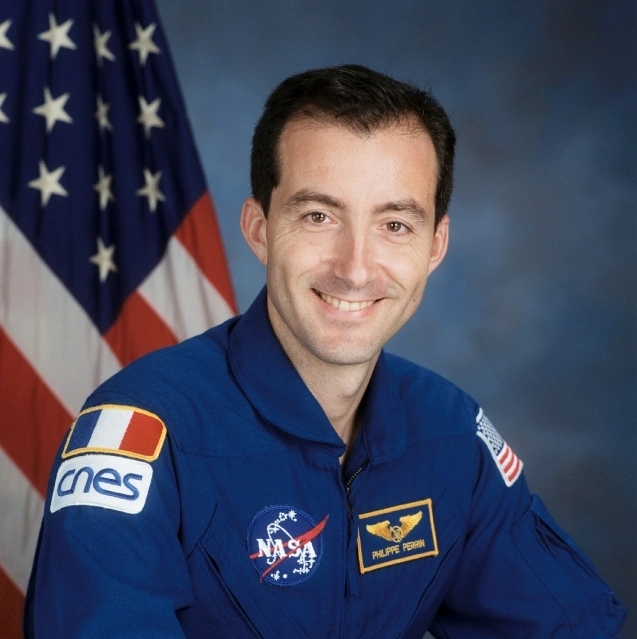
| 21 Quotes | |
| Occup. | Astronaut |
| From | France |
| Born | January 6, 1963 |
| Age | 63 years |
| Cite | |
Citation Formats
APA Style (7th ed.)
Philippe perrin biography, facts and quotes. (2026, February 11). FixQuotes. https://fixquotes.com/authors/philippe-perrin/
Chicago Style
"Philippe Perrin biography, facts and quotes." FixQuotes. February 11, 2026. https://fixquotes.com/authors/philippe-perrin/.
MLA Style (9th ed.)
"Philippe Perrin biography, facts and quotes." FixQuotes, 11 Feb. 2026, https://fixquotes.com/authors/philippe-perrin/. Accessed 11 Mar. 2026.
Early Life and Background
Philippe Perrin was born on January 6, 1963, in France, into a country that in his childhood was renegotiating its identity between postwar modernity and an accelerating technological future. The France of the 1960s and 1970s offered him a particular mix of civil aviation prestige, state-backed engineering excellence, and a national space ambition embodied by CNES - a context that made the astronaut an imaginable figure rather than a distant fantasy.He has described his earliest drive less as escapism than as an inherited ethic of purpose: “And, I think, as a kid, I had a strong motivation to do something of my life. And, I think that's the strongest motivation I really got. And, that came obviously from my parents and my grandparents”. That emphasis on lineage and obligation is a key to Perrin's inner life - an achiever formed by family expectation and personal discipline, with the sky serving as a proving ground rather than an abstract dream.
Education and Formative Influences
Perrin followed one of the most demanding French routes into high technical service, studying at Ecole Polytechnique before further aeronautical training that placed him in the lineage of engineer-officers who bridged theory and high-risk operations; he later underlined why that foundation mattered: “Polytechnique is a school whose multidisciplinary, very high scientific level curriculum is invaluable”. In an era when spaceflight was shifting from heroic firsts to system-heavy station building, this blend of mathematics, physics, and organizational rigor prepared him for the slow, procedural reality of human spaceflight.Career, Major Works, and Turning Points
He became a test pilot and then a CNES astronaut, ultimately flying to space as a mission specialist on NASA's Space Shuttle during the International Space Station construction phase - a period when astronauts were as much orbital technicians as explorers. His signature contribution was extravehicular work on the station's robotic infrastructure, including a spacewalk to help repair the Canadarm2 system - an operation that demanded calm under time pressure, strict tool choreography, and trust in ground control and crewmates, and that placed him directly inside the logistical engine of a permanently crewed outpost.Philosophy, Style, and Themes
Perrin's outlook is anchored in a paradox typical of late-20th-century astronauts: the more engineered the mission, the more spiritual the view becomes. He spoke plainly about the psychological jolt of perspective: “It's only when you're flying above it that you realize how incredible the Earth really is”. The line is not mere awe - it signals how orbit compresses political borders and personal anxieties into something smaller, producing in many astronauts a sharpened sense of stewardship and an almost guilty gratitude at being allowed to witness it.From that vantage, Perrin framed astronautics as a civic role, not just a technical one: “I think that witnessing ecological problems visible from space is one of the new and essential roles of astronauts”. This theme fits his temperament - purposeful, duty-centered, and uncomfortable with spectacle for its own sake. Even his descriptions of life-and-death moments emphasize collective discipline over individual heroism, such as his insistence that ascent is shared risk and shared responsibility: “It's, I mean, for me, it's the same as training with my crewmembers. We share the same first part of the flight. We all go together. It's the most critical part of the flight, the ascent”. The psychology underneath is revealing: Perrin narrates danger through teamwork, as if intimacy with procedure is the only honest language for fear.
Legacy and Influence
Perrin belongs to the cohort that normalized multinational, construction-era spaceflight, helping shift public understanding from flags-and-footprints to maintenance, robotics, and long-term habitation. In France and across Europe, his path reinforced a model of the astronaut as engineer and public servant - someone whose credibility comes from competence more than charisma - while his ecological framing of orbital observation anticipated the growing moral dimension of space careers in the 21st century. His legacy is therefore less about singular fame than about exemplifying what the ISS age demanded: technical excellence, cross-cultural trust, and a widened conscience made sharper by seeing Earth whole.Our collection contains 21 quotes written by Philippe, under the main topics: Motivational - Never Give Up - Nature - Learning - Equality.
Source / external links