
Phillips Brooks Biography Quotes 29 Report mistakes
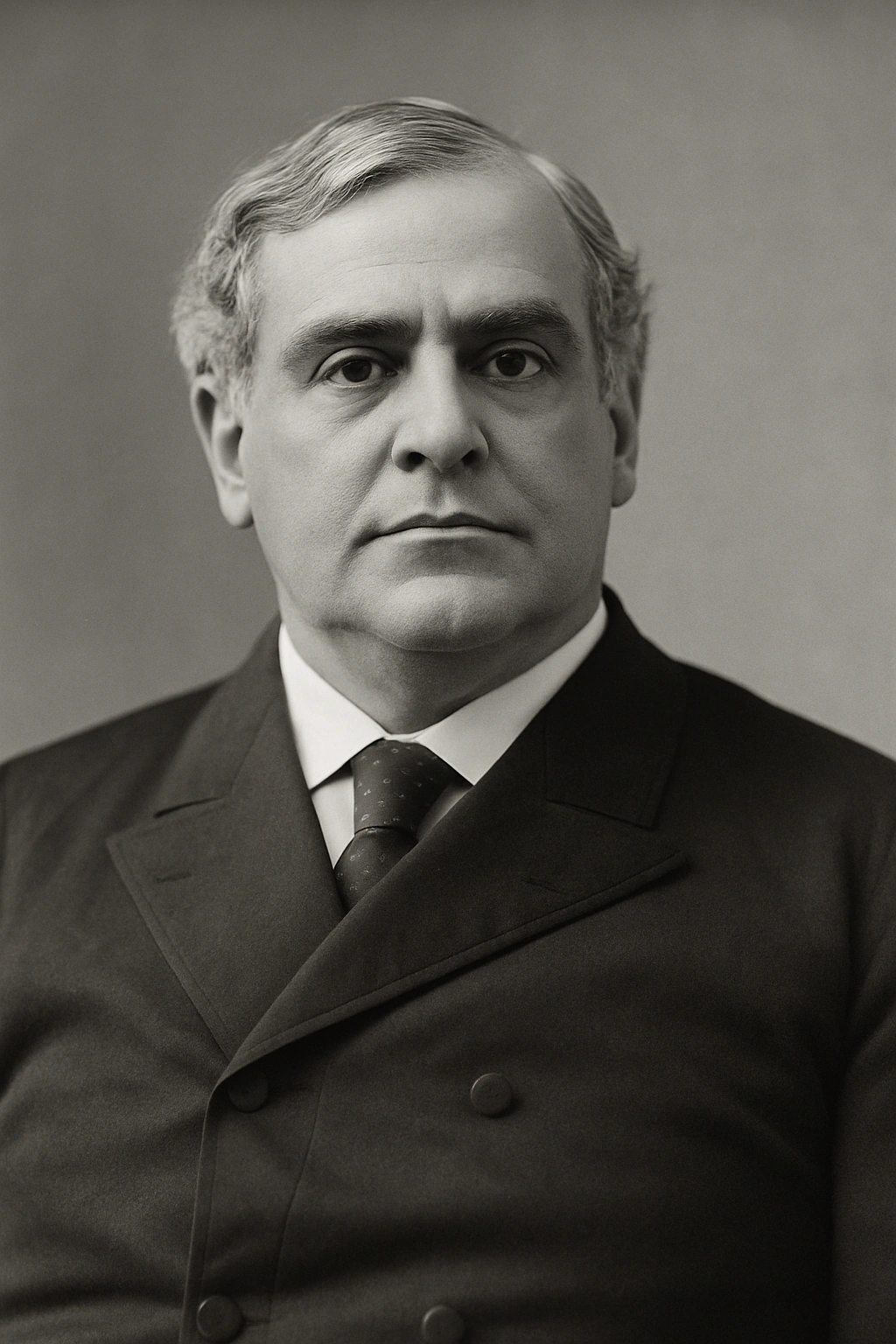
Attr: Kentucky Digital Library, Public Domain
| 29 Quotes | |
| Occup. | Clergyman |
| From | USA |
| Born | December 13, 1835 |
| Died | January 23, 1893 |
| Aged | 57 years |
| Cite | |
Citation Formats
APA Style (7th ed.)
Phillips brooks biography, facts and quotes. (2026, February 11). FixQuotes. https://fixquotes.com/authors/phillips-brooks/
Chicago Style
"Phillips Brooks biography, facts and quotes." FixQuotes. February 11, 2026. https://fixquotes.com/authors/phillips-brooks/.
MLA Style (9th ed.)
"Phillips Brooks biography, facts and quotes." FixQuotes, 11 Feb. 2026, https://fixquotes.com/authors/phillips-brooks/. Accessed 12 Feb. 2026.
Early Life and Background
Phillips Brooks was born on December 13, 1835, in Boston, Massachusetts, into an old New England merchant family shaped by Unitarian and Episcopal currents and by the civic self-confidence of a port city remaking itself in the age of railroads, reform, and expanding print culture. Tall, conspicuously vigorous, and temperamentally intense, he grew up in a household where moral seriousness was assumed, but where the route to faith was not pre-determined - a subtle tension that later helped him speak to doubters without courting cynicism.The Boston of his youth was also a Boston of argument: abolitionist agitation, the aftershocks of the Second Great Awakening, and the hardening sectional crisis that would become the Civil War. Brooks absorbed the citys mixture of cultivated restraint and moral urgency, learning early how public conscience could be both lofty and provincial. That mixture - deep ethical aspiration plus impatience with narrowness - became part of his inner life: a desire to make religion capacious enough for modern minds without draining it of awe.
Education and Formative Influences
Brooks entered Harvard College and graduated in 1855, formed by the broad liberal curriculum and the intellectual confidence of mid-century Cambridge, then tried teaching at the Boston Latin School - a brief, unhappy experiment that clarified his vocation. He turned toward ordained ministry and studied at the Virginia Theological Seminary in Alexandria (1856-1859), where the Episcopal tradition, patristic reading, and liturgical discipline met the realities of a slave society on the brink of rupture; the contrast sharpened his moral perception and gave him a lifelong interest in holding together spiritual depth and social responsibility.Career, Major Works, and Turning Points
Ordained in 1859, Brooks served first at the Church of the Advent in Philadelphia, then became rector of Holy Trinity Church (1869-1891) in Bostons Back Bay, where his preaching made him a national figure - less for ecclesiastical maneuvering than for the force of a personality that seemed to make Christian faith emotionally credible to educated listeners. During and after the Civil War he emerged as a leading voice of postwar moral reconstruction, and his public moment peaked with his preaching and civic role around national mourning and reconciliation, including sermons connected to the death of Abraham Lincoln. A journey to the Holy Land in 1865 inspired his most famous hymn, "O Little Town of Bethlehem" (1868), a work whose calm wonder counterbalanced the eras violence. In 1891 he was elected Bishop of Massachusetts, but he held the office briefly; he died suddenly on January 23, 1893, with much of his authority still rooted in the pulpit rather than in administration.Philosophy, Style, and Themes
Brooks belonged to what later generations called "Broad Church" Anglicanism: orthodox enough to keep the creeds, modern enough to speak in the idiom of conscience, experience, and moral aspiration. He distrusted religious quarrels that replaced holiness with partisanship, and he sought a Christianity that could stand in the open air of modern life. His psychology leaned toward strenuous hope: pressure did not disprove faith; it tested whether faith was real. That is why his spirituality often sounds like disciplined courage rather than sentiment, as in the inwardly braced petition, "I do not pray for a lighter load, but for a stronger back". Prayer, for him, was not magic but directed desire, a re-education of the will toward God: "A prayer in its simplest definition is merely a wish turned Godward". His preaching style was famously alive - sweeping, image-rich, and physically animated - yet its center was moral formation, the slow architecture of character beneath dramatic conversions. He insisted that greatness is assembled out of overlooked choices, not staged heroics: "Character may be manifested in the great moments, but it is made in the small ones". This attention to daily integrity helped him speak to ordinary parishioners and to Bostons elite alike, making virtue feel both demanding and possible. Even when he soared into poetic reverie - as in the Christmas vision that keeps the world young again - he used beauty to press toward obligation, asking what kind of person the Incarnation required one to become.Legacy and Influence
Brooks enduring influence rests on the rare combination of rhetorical power and moral sanity: a preacher who could move crowds without manipulating them, and a churchman who could honor tradition while acknowledging modern complexity. "O Little Town of Bethlehem" became a staple of American Christmas, but his larger bequest is a model of earnest, generous Christianity in public life - one that treats doubt as a pastoral fact, insists on character as the true evidence of faith, and links private prayer to civic responsibility. In American religious history he stands as a quintessential voice of post-Civil War liberal Protestant aspiration, still cited for a spirituality that asks not for escape from burden but for strength to carry it well.Our collection contains 29 quotes written by Phillips, under the main topics: Motivational - Wisdom - Writing - Meaning of Life - Life.
Frequently Asked Questions
- Phillips Brooks theology: Broad-church Episcopal; emphasized the Incarnation, moral action, and personal spiritual growth over dogma.
- Reverend Phillips Brooks do not pray for easy lives: Quote attributed to him: “Do not pray for easy lives. Pray to be stronger men.”
- Phillips Brooks school: Independent elementary school in Menlo Park, California, named after him.
- Philip Brooks singer: Different person, a contemporary singer-songwriter, not the 19th-century clergyman Phillips Brooks.
- Phillips Brooks statue: Bronze statue outside Trinity Church, Boston, by Augustus Saint-Gaudens.
- Phillips Brooks sermons: Renowned Episcopal preacher at Trinity Church, Boston; sermons collected in volumes, including The Candle of the Lord.
- Phillips Brooks books: Notable works include Sermons (multi-volume), The Influence of Jesus (1879), and Letters of Travel (1893).
- How old was Phillips Brooks? He became 57 years old
Source / external links