
Philo Biography Quotes 3 Report mistakes
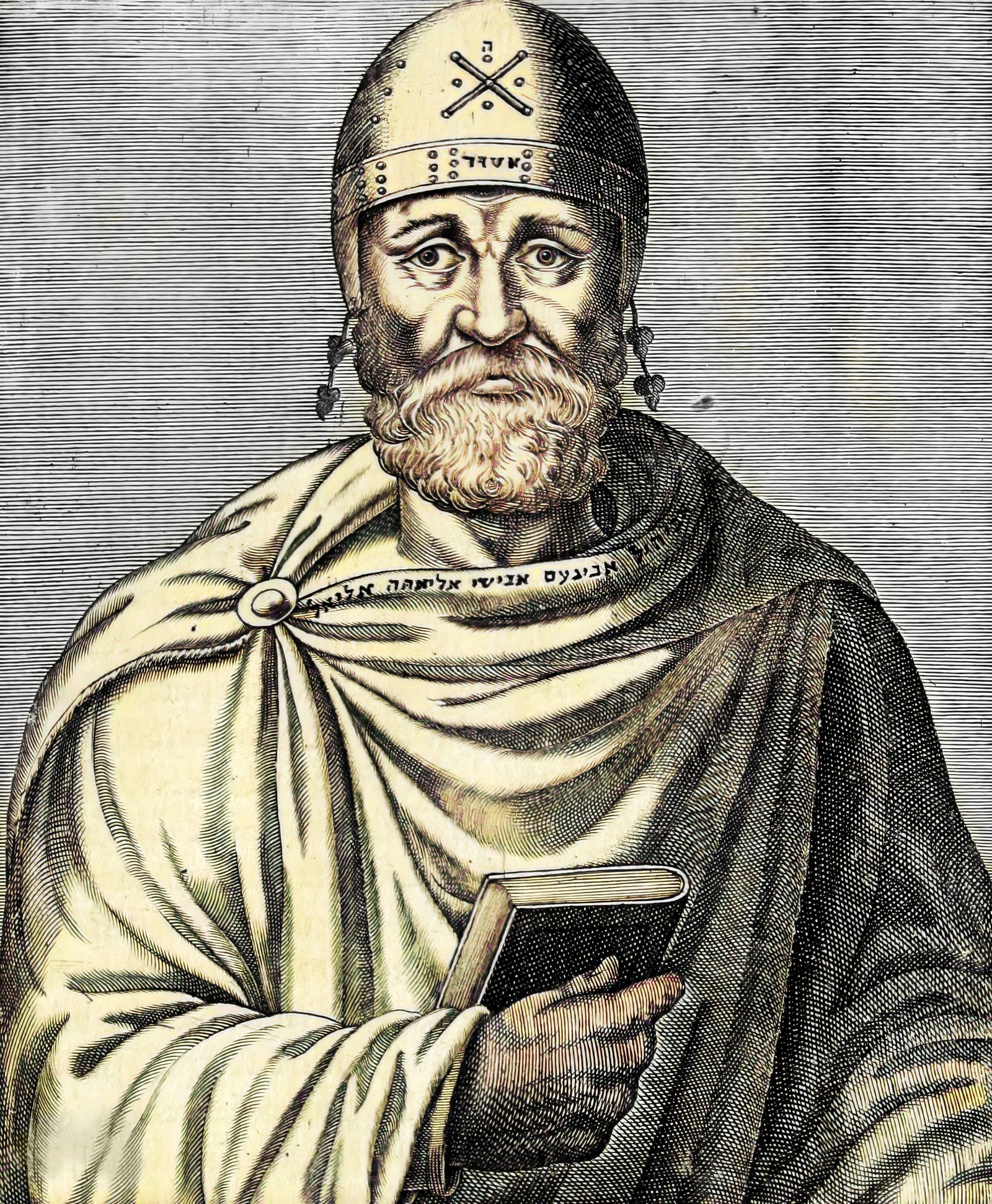
Attr: André Thévet, Public domain
| 3 Quotes | |
| Known as | Philo of Alexandria |
| Occup. | Philosopher |
| From | Egypt |
| Born | 20 BC Alexandria, Egypt |
| Died | 50 AC |
| Cite | |
Citation Formats
APA Style (7th ed.)
Philo biography, facts and quotes. (2026, February 11). FixQuotes. https://fixquotes.com/authors/philo/
Chicago Style
"Philo biography, facts and quotes." FixQuotes. February 11, 2026. https://fixquotes.com/authors/philo/.
MLA Style (9th ed.)
"Philo biography, facts and quotes." FixQuotes, 11 Feb. 2026, https://fixquotes.com/authors/philo/. Accessed 18 Feb. 2026.
Early Life and Background
Philo of Alexandria (c. 20 BCE-c. 50 CE) was born into a prominent Jewish family in Roman Egypt, in the Hellenized port city of Alexandria. The metropolis was a crossroads of Greek philosophy, Egyptian cults, and Jewish Scripture, where the Septuagint had long made Hebrew tradition readable in Greek. That multilingual environment formed Philo's earliest inner tension: loyalty to ancestral law and liturgy, and fascination with the intellectual prestige of Plato and the Stoics.His household belonged to Alexandria's civic elite and likely participated in municipal life under Roman rule. Philo grew up during the hardening of ethnic and political rivalries in the city, as imperial administration and local demagogues turned difference into faction. By adulthood he had witnessed how quickly a cosmopolitan ideal could collapse into violence, a lesson that later sharpened his conviction that moral formation is not private decoration but the only durable basis for public peace.
Education and Formative Influences
Philo received an advanced Greek education: rhetoric, grammar, and the philosophical canon, alongside deep immersion in the Torah as interpreted in the Alexandrian diaspora. He absorbed Plato's metaphysics and ethics, Stoic moral psychology, and elements of Aristotelian terminology, but he read them as tools rather than masters. His formative method was allegory, already used in Greek literary criticism and in Jewish interpretation, which allowed him to treat Scripture as a philosophical text without dissolving its authority. The result was a mind trained to translate: biblical figures became images of the soul, commandments became therapies, and Israel's history became a map of interior ascent.Career, Major Works, and Turning Points
Philo wrote extensively in Greek, producing two broad bodies of work: philosophical commentaries on Genesis and the Mosaic law, and historical-apologetic writings defending the Jewish community under Roman pressure. Among the most important are the Allegorical Commentary (including works often titled Allegorical Interpretation and On the Cherubim), the Exposition of the Law (including On the Creation, On Abraham, On Moses, and On the Special Laws), and the treatises On the Contemplative Life and On the Embassy to Gaius. The decisive turning point was the Alexandrian crisis under Emperor Caligula (Gaius) in 38-41 CE, when anti-Jewish violence and the imperial cult collided; Philo led a delegation to Rome to petition for protection. The experience gave his theology a sharper political edge: a vision of divine kingship that relativized emperors, and an ethics meant to fortify a minority community without retreating into bitterness.Philosophy, Style, and Themes
Philo's central achievement was to articulate a Judaism conversant with the best philosophical language of his age while remaining anchored in Scripture. He described the transcendent God as beyond naming, yet active through the Logos - God's rational word and ordering principle - which mediates between the infinite and the world of change. His writing moves by patient accumulation: etymologies, close readings, and a cascade of analogies that can feel like courtroom rhetoric turned inward. The style mirrors the psychology: a mind suspicious of raw impulse, seeking to discipline desire with interpretation, so that reading becomes a form of moral training.Under that method lies a distinctive spiritual anthropology. Philo portrays the good life as liberation from inner slavery to passions and status, and he is unusually attentive to the social consequences of inward freedom. “Households, cities, countries, and nations have enjoyed great happiness when a single individual has taken heed of the Good and Beautiful. Such people not only liberate themselves; they fill those they meet with a free mind”. That sentence distills his belief that ethics radiates outward: the healed soul becomes a civic medicine. His emphasis on mercy likewise resists the triumphalism of the educated elite: “Be kind, for everyone you meet is fighting a hard battle”. Even when he praises asceticism and contemplation, he frames virtue as generosity rather than performance, warning against piety used as a social investment: “Those who give hoping to be rewarded with honor are not giving, they are bargaining”. In Philo, the inner life is never merely private; it is the invisible cause of visible justice.
Legacy and Influence
Philo left no school in Alexandria that we can trace with certainty, but his ideas traveled far beyond his community. Later Jewish tradition drew on some of his themes while often distrusting his allegory; his more direct heirs were early Christian intellectuals who found in his Logos theology, biblical Platonism, and allegorical method a ready-made bridge between Scripture and Greek thought. Church writers such as Clement and Origen in Alexandria developed approaches that echo Philonic exegesis, while his political testimony in On the Embassy to Gaius remains a primary window into diaspora life under the early empire. Across centuries, Philo endures as a model of cultural translation under pressure - a thinker who tried to protect a threatened people by refining the soul, and to refine the soul by reading the world through the lens of the Good.Our collection contains 3 quotes written by Philo, under the main topics: Wisdom - Kindness.
Other people related to Philo: Stella McCartney (Designer)
Philo Famous Works
- -20 On the Migration of Abraham (Book)
- -20 On the Unchangeableness of God (Book)
- -20 On the Cherubim (Book)
- -20 Allegorical Interpretation (Book)
- -20 On the Creation (Book)
Source / external links