
Picabo Street Biography Quotes 27 Report mistakes
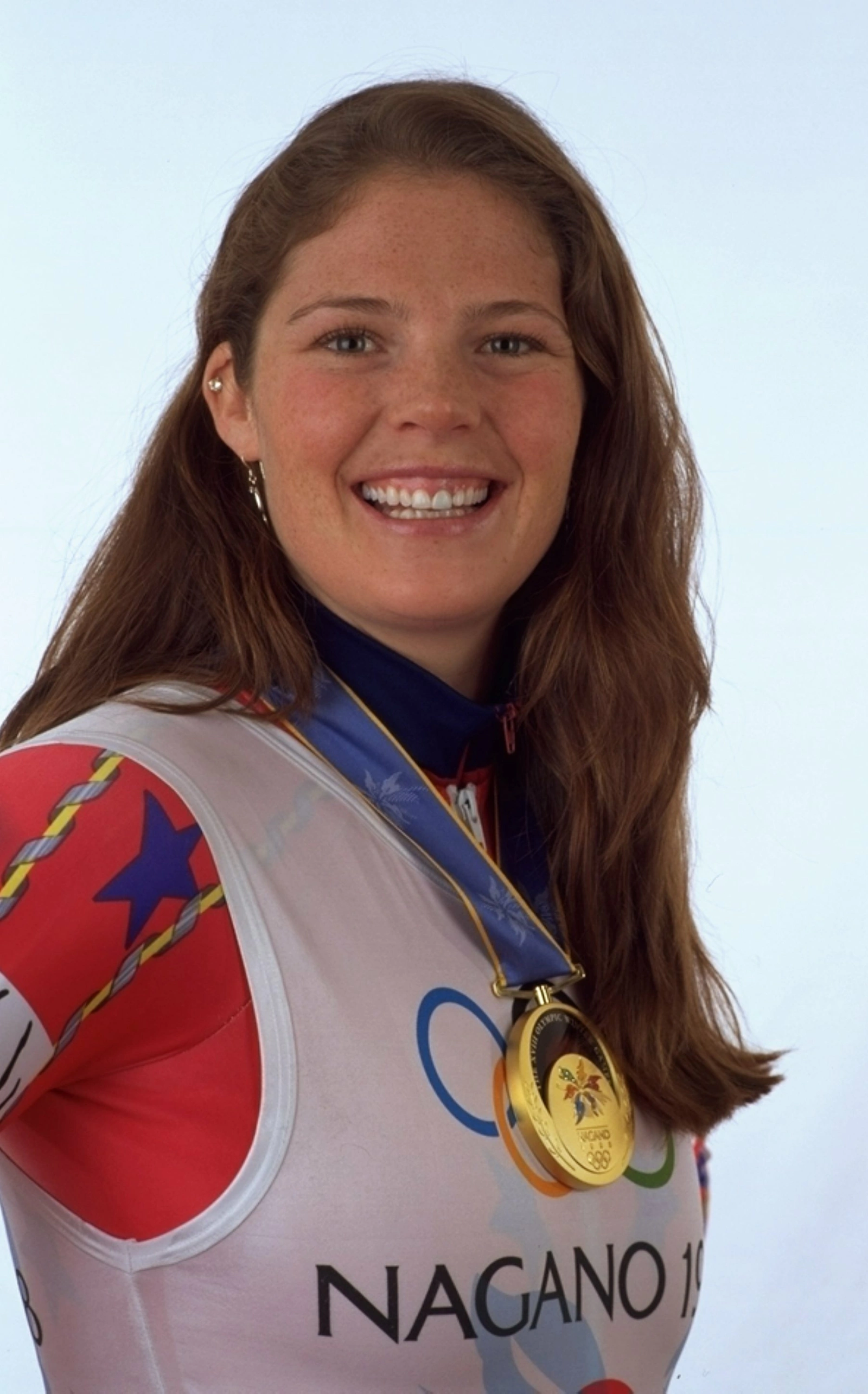
| 27 Quotes | |
| Occup. | Athlete |
| From | USA |
| Born | April 3, 1971 Triumph, Idaho, U.S. |
| Age | 54 years |
| Cite | |
Citation Formats
APA Style (7th ed.)
Picabo street biography, facts and quotes. (2026, February 11). FixQuotes. https://fixquotes.com/authors/picabo-street/
Chicago Style
"Picabo Street biography, facts and quotes." FixQuotes. February 11, 2026. https://fixquotes.com/authors/picabo-street/.
MLA Style (9th ed.)
"Picabo Street biography, facts and quotes." FixQuotes, 11 Feb. 2026, https://fixquotes.com/authors/picabo-street/. Accessed 12 Feb. 2026.
Early Life and Background
Picabo Street was born April 3, 1971, in the tiny farming community of Triumph, Idaho, and grew up in the Wood River Valley orbiting Sun Valley - a place where celebrity and wilderness share the same skyline. Her very name carried the stamp of local idiosyncrasy: "Picabo" (pronounced "Peek-a-boo") was said to come from a family joke and a childlike pun, but it matured into a brand that would be chanted at finish lines worldwide. In an era when American alpine skiing was still searching for a new post-1980s identity, Street came up amid barn chores, rough weather, and the practical toughness of rural life.That toughness had an inner component: a stubborn need to define herself against expectations. From early on she was drawn to speed, risk, and the clean, measurable honesty of a stopwatch, yet she also learned how quickly a small-town athlete could be pulled into a larger story by coaches, sponsors, and media. Sun Valley offered a paradoxical upbringing - intimate community ties alongside a constant reminder that performance could become public property.
Education and Formative Influences
Street attended local schools in Idaho and trained in the Sun Valley ski pipeline, where the discipline of gates and timing coexisted with the freer, more instinctive skiing culture of the Rockies. Her formative influences were less academic than environmental: steep terrain, a competitive local program, and the example of earlier American women who had to win not only races but also attention and funding in a Europe-centered sport. By her teens she was racing internationally, learning languages of pressure - travel fatigue, injury management, and the quiet mental arithmetic of how much fear to admit and how much to convert into focus.Career, Major Works, and Turning Points
Turning professional, Street rose through the U.S. Ski Team to become one of the defining American alpine racers of the 1990s, especially in speed events. She won multiple World Cup races and a World Cup downhill title, and her peak included a world championship gold medal in downhill (1996) that confirmed she was not only fast but historically significant for U.S. skiing. Her Olympic arc was dramatic: a crash in downhill at the 1994 Lillehammer Games intensified her reputation for fearless commitment, while a silver medal in super-G at the 1998 Nagano Games validated her comeback resilience. Injuries - including knee problems common to speed skiers - punctuated her career, and retirement led to a second public life: television analysis, appearances that kept her tied to the sport, and later involvement in youth-focused skiing initiatives.Philosophy, Style, and Themes
Street raced with a style that blended raw aggression with an unusually personal sense of authorship. She did not present herself as a polished European technician; she sold a distinctly American idea of downhill - direct lines, late braking, and a willingness to live on the edge of control. That self-conception was explicit: "I'm not following anybody's tracks, I'm making my own baby". The statement reads like swagger, but psychologically it signals something more vulnerable - a refusal to be absorbed by institutions that can turn athletes into repeatable products. It also framed her as an archetype of the 1990s sports celebrity: authentic, outspoken, and sometimes at odds with the very machinery that amplified her.Her relationship to fame was similarly double-edged. "The whole image thing gets in the way. Then there are the guys that it excites them and it's what draws them to me. But I don't know whether they would care for me if I didn't have this image". That ambivalence reveals an athlete who understood the transaction of visibility and still feared being misseen - valued for aura rather than character. Beneath the bravado was a moral insistence on internal rather than external judgment: "Nobody needs to prove to anybody what they're worthy of, just the person that they look at in the mirror. That's the only person you need to answer to". Read alongside her career, it becomes a coping philosophy for high-risk sport: when outcomes can be decided by ice, wind, or a millimeter at a gate, self-respect must be anchored somewhere steadier than applause.
Legacy and Influence
Street endures as a hinge figure for American alpine skiing - a bridge between the sport's earlier U.S. breakthroughs and the modern era of media-savvy, sponsor-dependent stars. Her results gave American fans proof that a racer from rural Idaho could dominate the most intimidating discipline on the calendar, while her candor broadened what female athletic celebrity could sound like in the 1990s: not decorative, not deferential, and not easily packaged. In coaching, broadcasting, and youth-oriented work, she helped keep the sport culturally legible at home, leaving a legacy defined as much by self-definition and resilience as by podiums.Our collection contains 27 quotes written by Picabo, under the main topics: Motivational - Love - Victory - Sports - Parenting.
Source / external links