
Pierre Corneille Biography Quotes 66 Report mistakes
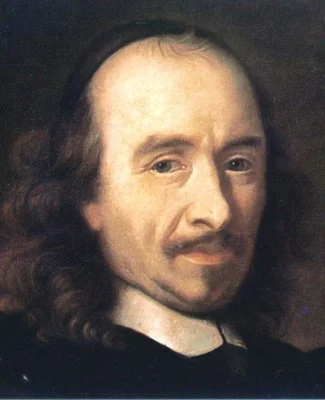
| 66 Quotes | |
| Occup. | Dramatist |
| From | France |
| Born | June 6, 1606 |
| Died | October 1, 1684 |
| Aged | 78 years |
| Cite | |
Citation Formats
APA Style (7th ed.)
Pierre corneille biography, facts and quotes. (2026, February 11). FixQuotes. https://fixquotes.com/authors/pierre-corneille/
Chicago Style
"Pierre Corneille biography, facts and quotes." FixQuotes. February 11, 2026. https://fixquotes.com/authors/pierre-corneille/.
MLA Style (9th ed.)
"Pierre Corneille biography, facts and quotes." FixQuotes, 11 Feb. 2026, https://fixquotes.com/authors/pierre-corneille/. Accessed 20 Mar. 2026.
Early Life and Background
Pierre Corneille was born on June 6, 1606, in Rouen, Normandy, a provincial city whose courts, guilds, and clerical institutions offered an early education in rhetoric and rule-bound public life. His father, Pierre Corneille the elder, served as a master of waters and forests and later as an advocate at the parlement of Normandy, placing the family within the robe nobility - respectable, legalistic, and keenly aware of honor as a social currency. His mother, Marthe Le Pesant, came from a similarly established milieu. The young Corneille grew up where civic duty and religious observance framed daily conduct, and where a reputation could be made or ruined by speech.The France of Corneille's childhood moved from the assassination of Henri IV (1610) into the regency and then the long consolidation under Louis XIII and Cardinal Richelieu. Violence at the kingdom's edges and faction inside it made "order" a political obsession, while baroque Catholic culture made spectacle and conscience equally vivid. Corneille absorbed a world in which obedience was praised, yet great souls were expected to choose - sometimes against family, love, or even the state. That tension between submission and self-command would become the engine of his theater.
Education and Formative Influences
He studied with the Jesuits at the College de Bourbon in Rouen, training that prized classical imitation, argument, and moral casuistry - a schooling made for dramatists. He then read law and was admitted as an avocat, but the habits of pleading - weighing motives, framing dilemmas, and building a case for an action's "rightness" - migrated into his plots. Seneca's grandeur, Roman exempla, and the contemporary Spanish theater (notably Guillén de Castro) fed his imagination, while French salon culture and the emerging norms of classical decorum gave him a public to persuade.Career, Major Works, and Turning Points
Corneille began in Paris with comedies like Melite (1629) and quickly entered the orbit of Richelieu, writing for the cardinal's circle while learning the costs of patronage. His breakthrough, Le Cid (1637), electrified audiences with its collision of love and honor, then triggered the "Querelle du Cid" when the Académie française, under Richelieu's pressure, criticized its liberties with time, probability, and moral clarity. Corneille responded not by retreating but by refining: Horace (1640), Cinna (1641), and Polyeucte (1642) forged the model of the "Cornelian hero" - a will tested by public duty, private passion, and transcendence. Elected to the Académie in 1647, he later faced shifting taste: the later tragedies and his long, ultimately unfinished rivalry with Racine revealed how the court's appetite moved toward psychological intimacy over stoic grandeur. Corneille died in Paris on October 1, 1684, honored but no longer dominant, his reputation secured by the mid-career masterpieces that had already redefined French tragedy.Philosophy, Style, and Themes
Corneille's theater is an anatomy of the will. His characters speak as if they are both advocate and accused, turning inward to interrogate motive, then outward to persuade a tribunal of peers, lovers, and sovereigns. “Master of the universe but not of myself, I am the only rebel against my absolute power”. The line crystallizes his psychological insight: authority is never merely external; the hardest conquest is self-rule, and the most dramatic battlefield is the conscience where desire, pride, and duty dispute sovereignty. Hence the frequent scenes of deliberation that feel like ethical trials staged in verse.Honor, in Corneille, is not ornament but an instrument that can ennoble or destroy, and love is rarely a refuge. “Love is a tyrant sparing none”. This is not sentimentalism but diagnosis - affection becomes a force that threatens civic identity, exposing the fault lines of character. Victory, likewise, is morally graded by risk and sacrifice: “To vanquish without peril is to triumph without glory”. Corneille elevates danger into the very measure of greatness, so his heroes seek not comfort but a chance to be worthy of themselves, even when virtue resembles cruelty. His style - elevated Alexandrines, argumentative symmetry, and concentrated antithesis - makes inner conflict audible, as if the mind were thinking in public.
Legacy and Influence
Corneille helped fix the architecture of French classical tragedy while also stretching it toward metaphysical stakes: the theater as a place where political obedience, personal honor, and spiritual aspiration collide. He shaped the language of "gloire" and "devoir" that would echo through the reign of Louis XIV and beyond, offering France a dramatic ideal of character as chosen action. Later playwrights - from Racine in counterpoint to the romantics in revival, and modern directors seeking ethical theater - return to Corneille for his stern proposition: freedom is not the absence of constraint but the disciplined act of choosing a higher law, under the gaze of society and the judgment of the self.Our collection contains 66 quotes written by Pierre, under the main topics: Motivational - Ethics & Morality - Truth - Wisdom - Justice.
Source / external links