
Pierre de Coubertin Biography Quotes 29 Report mistakes
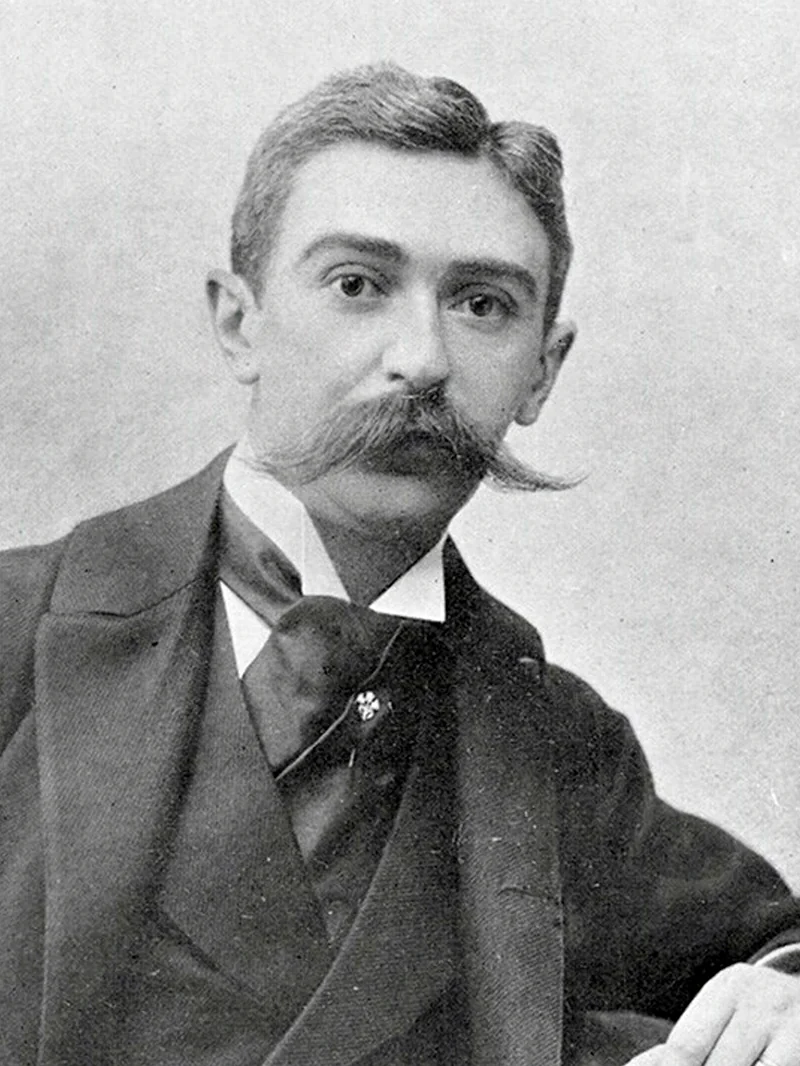
| 29 Quotes | |
| Occup. | Leader |
| From | France |
| Born | January 1, 1863 Paris, France |
| Died | September 2, 1937 Geneva, Switzerland |
| Aged | 74 years |
| Cite | |
Citation Formats
APA Style (7th ed.)
Pierre de coubertin biography, facts and quotes. (2026, February 11). FixQuotes. https://fixquotes.com/authors/pierre-de-coubertin/
Chicago Style
"Pierre de Coubertin biography, facts and quotes." FixQuotes. February 11, 2026. https://fixquotes.com/authors/pierre-de-coubertin/.
MLA Style (9th ed.)
"Pierre de Coubertin biography, facts and quotes." FixQuotes, 11 Feb. 2026, https://fixquotes.com/authors/pierre-de-coubertin/. Accessed 6 Mar. 2026.
Early Life and Background
Pierre de Coubertin was born in Paris on January 1, 1863, into an old Catholic aristocratic family whose identity had been shaken by France's defeats and regime changes. His father, Charles Louis de Coubertin, was a painter with legitimist sympathies; his mother, Agathe-Gabrielle de Mirville, embodied the piety and social duty expected of their class. The household was comfortable but haunted by a sense of national diminishment after the Franco-Prussian War and the collapse of the Second Empire in 1870-71. That atmosphere left Coubertin with a lifelong preoccupation: how to rebuild France's civic fiber without simply returning to the old order.He grew up during the early Third Republic, when republicans, monarchists, Catholics, and secularists fought over the shape of schools and the soul of citizenship. Rather than turning toward party politics, he searched for an instrument that could harden character while softening class antagonism. The young Coubertin was observant, restless, and sensitive to symbols; he wanted a public ritual capable of reconciling patriotism with something larger than the nation-state.
Education and Formative Influences
Coubertin studied in Paris and gravitated to history, pedagogy, and social reform more than to a conventional bureaucratic career. In the 1880s he traveled to Britain and the United States to study education and what he took to be the moral engine of Anglo-Saxon schooling: organized games, club life, and self-governance. The British public-school ideal - often simplified through the popular legend of Thomas Arnold at Rugby - convinced him that sport could manufacture habits of discipline, leadership, and fair play faster than lectures could. He returned to France arguing for physical education and associative life as antidotes to defeatism, factionalism, and the isolation of modern urban youth.Career, Major Works, and Turning Points
In the late 1880s and early 1890s he became a tireless organizer and writer, using journals, lectures, and committees to press for school sport and international competition. His turning point came in 1894 at the Sorbonne, when he convened an international congress that founded the International Olympic Committee and set in motion the revival of the Olympic Games; Athens hosted the first modern Olympics in 1896. Coubertin served as the IOC's driving strategist and, from 1896 to 1925, its president, navigating rival national interests, amateurism disputes, and the shock of World War I. He helped develop Olympic rituals and language - including the athletes' oath and a quasi-religious ceremonial tone - while promoting the Olympic Review and numerous essays collected across decades. Yet his project repeatedly collided with the realities of nationalism, commercialization, and exclusion, and his own finances and health deteriorated as he clung to the institution he had willed into existence.Philosophy, Style, and Themes
Coubertin's inner life was shaped by a paradox: he admired martial virtues but feared militarism; he championed nationalism as a school of duty yet sought an arena where nations could meet without war. His creed, later summarized as Olympism, treated sport as moral pedagogy rather than mere entertainment: “Olympism seeks to create a way of life based on the joy found in effort, the educational value of a good example and respect for universal fundamental ethical principles”. That sentence captures his psychological wager. He believed character is formed less by abstract doctrine than by repeated tests of self-command performed in public, under rules, before peers. The stadium, in his mind, was a laboratory for conscience - and also a theater where modern mass society could be given uplifting symbols instead of destructive ones.His style blended aristocratic moralizing with modern organizational pragmatism, and his themes returned obsessively to participation, loyalty, and equality as disciplines that make freedom sustainable. He insisted that the Games should honor striving even when victory is out of reach: “The most important thing in the Olympic Games is not winning but taking part; the essential thing in life is not conquering but fighting well”. This was not sentimentality but self-therapy: a way to dignify effort in a world where nations and individuals are regularly humiliated. At the same time, he tried to universalize sport beyond elite clubs, asserting a social mission against class barriers: “Sport must be the heritage of all men and of all social classes”. The tension between his universal language and the period's limits - on gender, empire, and access - ran through his work, giving it both its inspirational reach and its historical blind spots.
Legacy and Influence
Coubertin died on September 2, 1937, in Geneva, after years in which the Olympic movement had outgrown his control and Europe had again drifted toward catastrophe. His legacy is institutional and psychological: he supplied the modern world with a durable international festival, a vocabulary of fair play and participation, and a moral narrative that many athletes and educators still find clarifying. The Olympics have often contradicted his hopes, yet the very fact that hypocrisy can be named as betrayal of an ideal is part of his influence. By binding sport to education, ritual, and internationalism, Coubertin made athletic competition into a global language of aspiration - one that continues to shape how societies imagine youth, virtue, and peaceful rivalry.Our collection contains 29 quotes written by Pierre, under the main topics: Ethics & Morality - Sports - Equality - Success - Peace.