
Pierre de Fermat Biography Quotes 6 Report mistakes
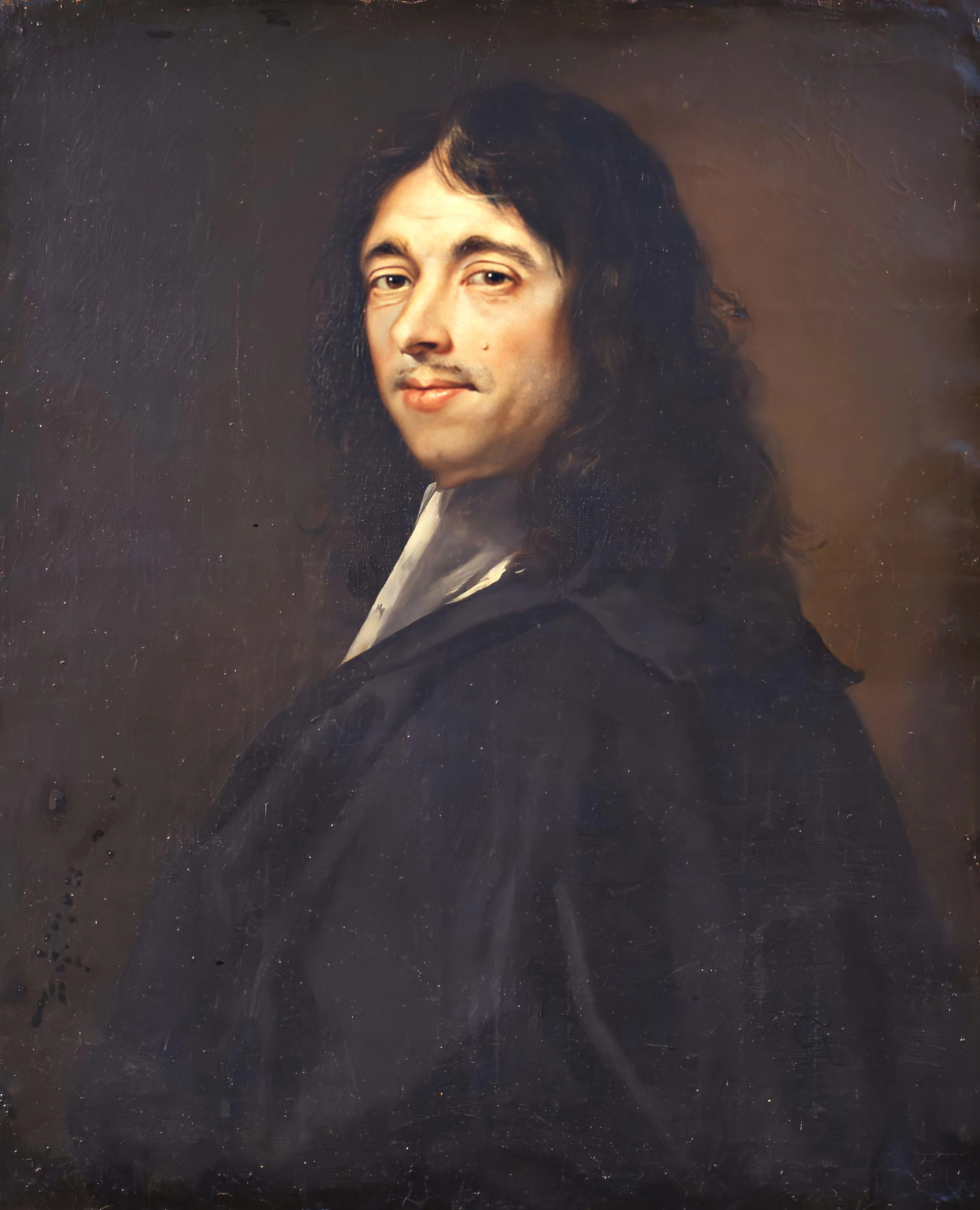
| 6 Quotes | |
| Occup. | Lawyer |
| From | France |
| Born | August 20, 1601 Beaumont-de-Lomagne, France |
| Died | January 12, 1655 France |
| Aged | 53 years |
| Cite | |
Citation Formats
APA Style (7th ed.)
Pierre de fermat biography, facts and quotes. (2026, February 11). FixQuotes. https://fixquotes.com/authors/pierre-de-fermat/
Chicago Style
"Pierre de Fermat biography, facts and quotes." FixQuotes. February 11, 2026. https://fixquotes.com/authors/pierre-de-fermat/.
MLA Style (9th ed.)
"Pierre de Fermat biography, facts and quotes." FixQuotes, 11 Feb. 2026, https://fixquotes.com/authors/pierre-de-fermat/. Accessed 28 Mar. 2026.
Early Life and Background
Pierre de Fermat was born on 1601-08-20 in Beaumont-de-Lomagne in the old province of Guyenne (today in Tarn-et-Garonne), a region of market towns, Latin schools, and ambitious legal families. His father, Dominique Fermat, was a prosperous merchant and municipal figure, and the household sat at the hinge of two worlds: the practical bookkeeping of commerce and the status-laden culture of law. France in Fermat's youth was recovering from the Wars of Religion and reorganizing under Bourbon state-building, where literate administrators could climb by mastering procedure, rhetoric, and precedent.Nothing in his early life marks him as a destined public intellectual; the defining pattern is privacy and self-direction. He grew up in a country that prized humanist learning but also demanded conformity to office and faith. That tension later became his signature: a man who accepted the discipline of the law courts while cultivating, almost in secret, a second life devoted to mathematical invention conducted through letters, marginal notes, and challenges.
Education and Formative Influences
Fermat received a strong classical education, likely at Toulouse, with deep training in Latin and a lawyer's habit of precise language; he also developed an antiquarian interest in Greek authors that led him to philology and textual criticism. He studied law at the University of Orleans and entered the Parlement of Toulouse, one of France's most important sovereign courts, eventually serving as conseiller and later as a chamber official in the criminal division (Chambre de l'Edit). The humanist culture of the robe nobility shaped him: mathematics came to him not as a profession but as a rigorous pastime, pursued with the same appetite for proof, argument, and elegant closure that the courtroom rewarded.Career, Major Works, and Turning Points
Installed in Toulouse as a magistrate, Fermat built a reputation for probity and administrative competence while conducting mathematics largely at night and by correspondence. The 1630s and 1640s brought turning points through contact with Marin Mersenne's circle in Paris: Fermat traded problems and solutions with Rene Descartes (notably on maxima and minima and tangents, anticipating calculus techniques), with Gilles de Roberval, and later with Blaise Pascal in the 1654 correspondence that helped found the mathematical theory of probability. He advanced analytic geometry with a method for finding tangents and extrema; in number theory he introduced what is now called Fermat's method of infinite descent, proved results on sums of two squares, and formulated conjectures that organized the field for centuries. Because he published almost nothing, his oeuvre survived in letters, drafts, and the posthumous 1670 edition of his notes appended to Diophantus' Arithmetica by his son Clement-Samuel Fermat, where the most famous marginal claims were preserved.Philosophy, Style, and Themes
Fermat's inner life is easiest to read through the way he chose to exist intellectually: as an official of the law who refused the normal economy of reputation in the Republic of Letters. He could be generous with correspondents yet psychologically insulated, cultivating distance as a condition for freedom: “I am more exempt and more distant than any man in the world”. The line sounds like aloofness, but it also reads as strategy - a magistrate maintaining independence from court factions and, as a mathematician, refusing to be captured by schools, patrons, or publishing schedules. His most productive solitude was not isolation from people but from noise: he wanted the quiet in which proofs ripen.His mathematics shows a lawyer's taste for sharp hypotheses and decisive conclusions, paired with a poet's love of surprise. He thought in compact arguments, often withholding the full chain while presenting the clinching insight, and he took evident pleasure in the abundance of his discoveries: “I have found a very great number of exceedingly beautiful theorems”. Yet his most notorious sentence reveals both ambition and a blind spot about audience - the conviction that the proof exists is asserted as an aside, not exhibited as a public object: “It is impossible for any number which is a power greater than the second to be written as a sum of two like powers. I have a truly marvelous demonstration of this proposition which this margin is too narrow to contain”. The psychology here is double: confidence bordering on provocation, and an almost private ownership of certainty, as if a proof could remain real even when socially inaccessible. In that tension lies his enduring theme - the struggle between inward clarity and outward communication.
Legacy and Influence
Fermat died on 1655-01-12 while traveling on judicial business at Castres, leaving behind the paradox of an amateur who became foundational. His results and challenges drove the development of number theory from Euler through Lagrange, Legendre, and Gauss; his methods prefigured calculus and influenced the formalization of analytic geometry; his work with Pascal helped legitimize probability as a mathematical discipline. Above all, his marginal claim about what later became Fermat's Last Theorem acted like a lodestone for modern mathematics, culminating in Andrew Wiles' proof in the 1990s and demonstrating how a private note from a provincial lawyer could reorganize the ambitions of generations.Our collection contains 6 quotes written by Pierre, under the main topics: Love - Knowledge - Science - Loneliness.
Other people related to Pierre: Blaise Pascal (Philosopher)
Source / external links