
Pierre Pettigrew Biography Quotes 2 Report mistakes
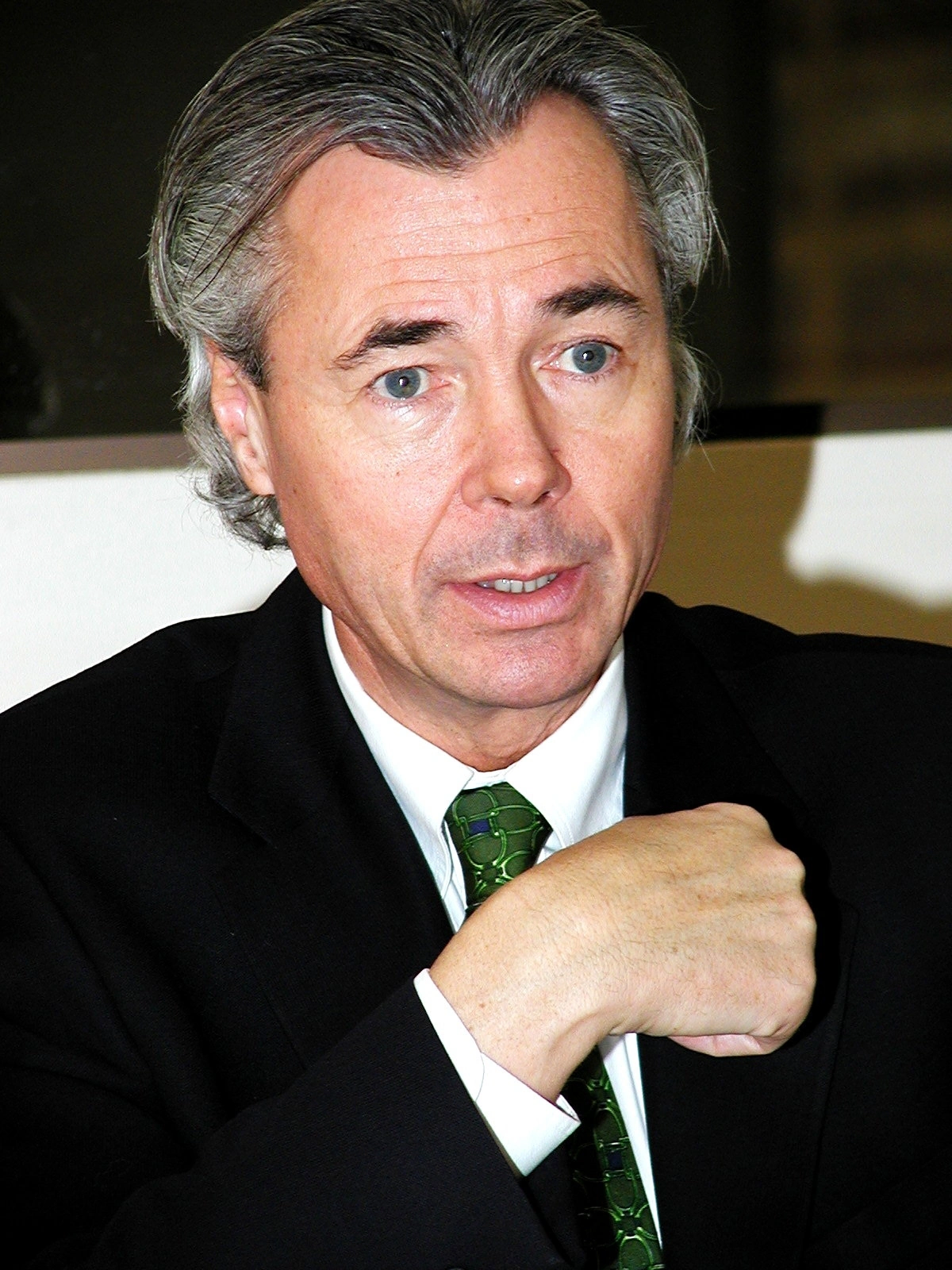
| 2 Quotes | |
| Born as | Pierre Stewart Pettigrew |
| Occup. | Politician |
| From | Canada |
| Born | April 18, 1951 Quebec City, Quebec |
| Age | 74 years |
| Cite | |
Citation Formats
APA Style (7th ed.)
Pierre pettigrew biography, facts and quotes. (2026, February 11). FixQuotes. https://fixquotes.com/authors/pierre-pettigrew/
Chicago Style
"Pierre Pettigrew biography, facts and quotes." FixQuotes. February 11, 2026. https://fixquotes.com/authors/pierre-pettigrew/.
MLA Style (9th ed.)
"Pierre Pettigrew biography, facts and quotes." FixQuotes, 11 Feb. 2026, https://fixquotes.com/authors/pierre-pettigrew/. Accessed 5 Mar. 2026.
Early Life and Background
Pierre Stewart Pettigrew was born on April 18, 1951, in Canada, into a postwar country defining itself through prosperity, immigration, and a growing confidence in federal institutions. His early life unfolded against the long arc of modern Canadian Liberalism - the Pearson-Trudeau years, bilingualism and multiculturalism, and the steady expansion of the welfare state - a political atmosphere that treated government not as an intrusion but as an instrument for social cohesion and national ambition.That milieu mattered: Pettigrew came of age as Canada debated how to reconcile regional identities with a centralized, bilingual federation, and how to translate a middle power's geography into influence. The quiet discipline and rhetorical confidence that later marked him as a cabinet minister were shaped by an era in which policy professionals and party organizers increasingly displaced the older, patronage-heavy style of politics. Even before he held elected office, he presented as a figure comfortable in elite institutions, persuaded that ideas and administration could still move history.
Education and Formative Influences
Pettigrew pursued advanced education that emphasized governance, political economy, and the international order, training that aligned with the Liberal Party's late-20th-century shift toward technocratic management and global engagement. His formative influences were less the romantic nationalism of earlier Canadian politics than the practical craft of state capacity - how to design programs, negotiate agreements, and communicate legitimacy in a diverse society - a toolkit that later made him valuable in complex portfolios where trade, diplomacy, and domestic reform intersected.Career, Major Works, and Turning Points
Entering federal politics as a Liberal, Pettigrew became a prominent cabinet presence during the period when Ottawa sought both fiscal stability and a renewed international profile. Across major assignments - notably in external affairs and trade-related roles - he helped articulate Canada's preference for rules-based globalization and pragmatic diplomacy, balancing human-rights rhetoric with commercial realities. His career is best understood through those turning points when Canada repositioned itself after the Cold War: the rise of the WTO framework, the acceleration of Asia-Pacific economic gravity, and the need for middle powers to trade influence for access by building coalitions, not issuing ultimatums. Pettigrew's public profile rose when he became one of the government's principal voices on these themes, and it narrowed later as party fortunes shifted and public skepticism grew toward managerial politics.Philosophy, Style, and Themes
Pettigrew's governing psychology was anchored in an institutionalist faith: that partnerships, treaties, and multilateral organizations were not abstractions but instruments to civilize power and create predictable outcomes for a trading nation. His language favored long horizons and cumulative trust over theatrical confrontation, and his instincts leaned toward engagement rather than isolation. That approach could read as optimism, but it also revealed a strategist's anxiety about Canada's leverage - a recognition that influence had to be manufactured through relationships, credibility, and presence.In foreign policy he repeatedly framed Canada as a connector nation, arguing for deep bilateral ties with emerging and established giants alike. When he said, “India is a global power and an important partner with whom we are building an intense, broad and enduring relationship”. he was not simply praising India; he was signaling a worldview in which demographic and economic gravity required Canada to diversify beyond traditional Atlantic assumptions. Likewise, his stance toward China stressed rule-making as a means of restraint and opportunity at once: “Canada has always been a strong supporter of China's accession to the WTO... We look forward to playing a constructive role in helping complete China's accession”. That sentence captures Pettigrew's characteristic blend of idealism and calculation - betting that integration into global rules would moderate behavior while expanding markets, and that "constructive" participation was Canada's comparative advantage.
Legacy and Influence
Pettigrew remains a representative figure of turn-of-the-millennium Canadian Liberal governance: internationally minded, policy fluent, and committed to engagement through institutions. His influence lies less in a single signature statute than in the diplomatic posture he embodied - the attempt to convert middle-power constraints into leverage by building durable partnerships and reinforcing global economic rules. The debates that shadow his legacy have only intensified: whether deep engagement with rising powers produces convergence or dependency, and whether managerial competence can satisfy publics that increasingly demand sharper moral clarity and faster economic results.Our collection contains 2 quotes written by Pierre, under the main topics: Peace - Business.
Source / external links