
Pierre Trudeau Biography Quotes 8 Report mistakes
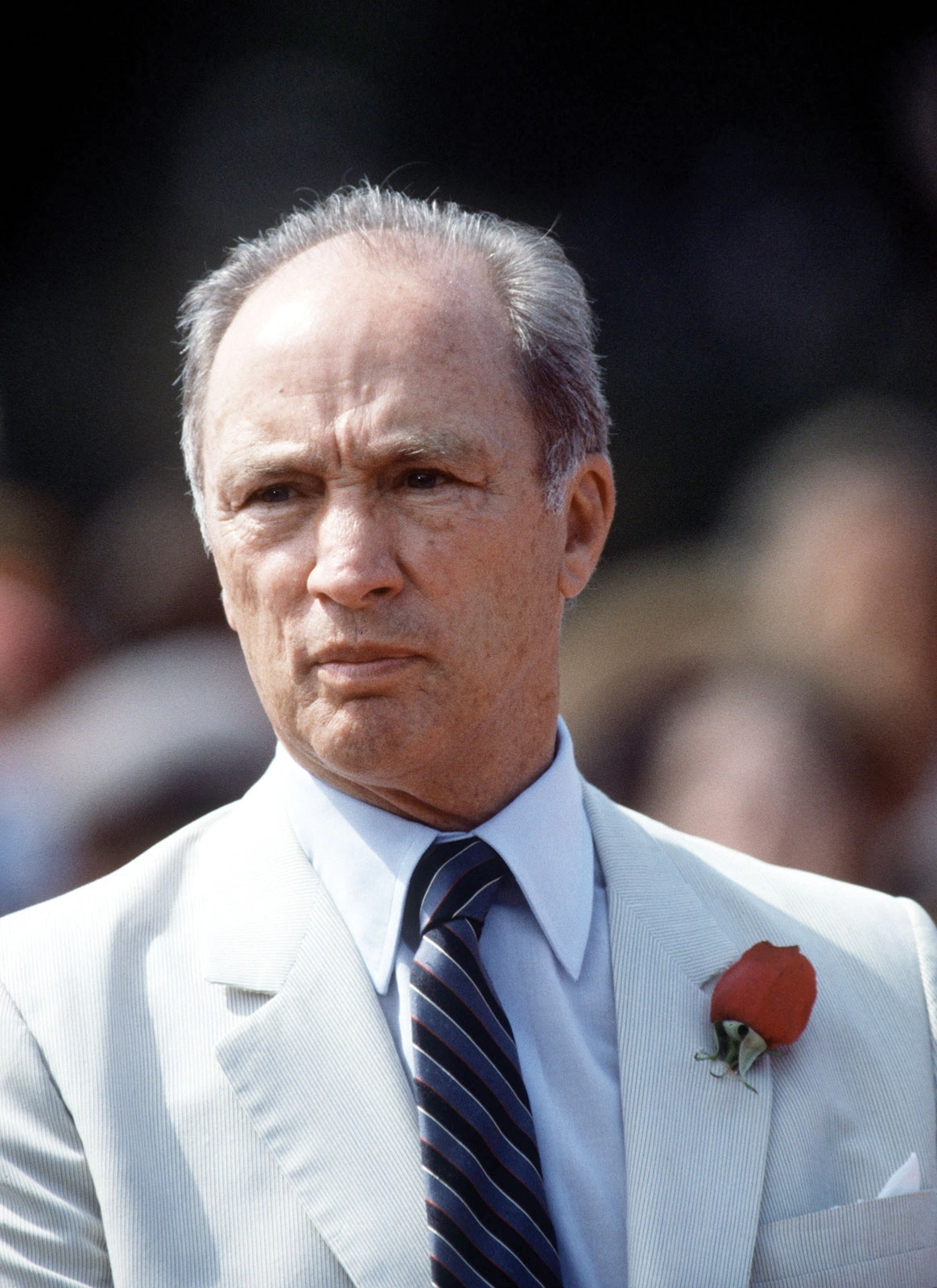
| 8 Quotes | |
| Born as | Joseph Philippe Pierre Yves Elliott Trudeau |
| Occup. | Statesman |
| From | Canada |
| Born | October 18, 1919 Montreal, Quebec |
| Died | September 28, 2000 Montreal, Quebec |
| Aged | 80 years |
| Cite | |
Citation Formats
APA Style (7th ed.)
Pierre trudeau biography, facts and quotes. (2026, February 11). FixQuotes. https://fixquotes.com/authors/pierre-trudeau/
Chicago Style
"Pierre Trudeau biography, facts and quotes." FixQuotes. February 11, 2026. https://fixquotes.com/authors/pierre-trudeau/.
MLA Style (9th ed.)
"Pierre Trudeau biography, facts and quotes." FixQuotes, 11 Feb. 2026, https://fixquotes.com/authors/pierre-trudeau/. Accessed 26 Mar. 2026.
Early Life and Background
Joseph Philippe Pierre Yves Elliott Trudeau was born on October 18, 1919, in Montreal, Quebec, into a prosperous, bilingual household shaped by French-Canadian Catholic convention and the commercial confidence of an interwar city. His father, Charles-Emile Trudeau, built wealth in fuel and automobiles; his mother, Grace Elliott, came from an anglophone Montreal milieu. The blend left Trudeau with a lifelong ear for the tensions and possibilities in a country that was never one thing at once - French and English, local and continental, devout and secular, rural memory and urban ambition.His childhood was materially secure but emotionally marked by early rupture: his father died in 1935, leaving the teenage Trudeau to a mix of discipline and inwardness that later surfaced as self-control under pressure and a taste for intellectual independence. Montreal in the 1930s also meant clerical power, conservative nationalism, and an undercurrent of modernity. Trudeau absorbed the era's arguments about authority and belonging, and he learned to treat identity as something to be interrogated rather than obeyed.
Education and Formative Influences
He studied law at the Universite de Montreal and moved through elite institutions - Harvard University, Sciences Po in Paris, and the London School of Economics - during and after World War II, when democratic states were reinventing themselves against fascism and then against the early Cold War. The formative Trudeau was a reader of constitutional theory and political economy who also encountered European personalism and the practical lessons of wartime mobilization and postwar reconstruction. Returning to Quebec, he became a labor lawyer and a polemicist, co-founding the journal Cite Libre in the 1950s and attacking the authoritarian, clerical-nationalist order associated with Maurice Duplessis, staking out a rare position: fiercely anti-colonial in spirit but skeptical of Quebec separatism as a cure.Career, Major Works, and Turning Points
Trudeau entered federal politics as a Liberal in 1965, quickly becoming minister of justice and then prime minister in 1968, riding "Trudeaumania" into power as Canada modernized its institutions and public culture. As justice minister he helped overhaul the Criminal Code, including major liberalizations around censorship, contraception, and homosexuality; as prime minister (1968-1979, 1980-1984) he pursued official bilingualism, multiculturalism, and a stronger federal state, clashing with Quebec nationalism and Western alienation. The October Crisis of 1970 brought his most controversial act - invoking the War Measures Act against the FLQ - while the 1980 Quebec referendum and the patriation of the Constitution culminated in the Constitution Act, 1982 and the Canadian Charter of Rights and Freedoms. Policy battles included wage and price controls in the inflationary 1970s, energy federalism and the National Energy Program, and a complex relationship with the United States in trade, defense, and continental influence. He retired in 1984, later writing and speaking intermittently as his personal life - including his marriage to Margaret Sinclair and their sons - became inseparable from his public image.Philosophy, Style, and Themes
Trudeau's inner life reads like a contest between romantic risk and juridical order: a man who sought solitude, physical challenge, and a certain theatrical elegance, yet governed by constitutionalism and a belief that rights must be insulated from passion. His famous libertarian provocation, “The state has no business in the bedrooms of the nation”. , was not merely permissiveness; it was a theory of legitimacy in which the state earns authority by refusing to police private conscience. The Charter was the mature expression of that instinct - a transfer of some political conflict from street-level identity struggle to the disciplined arena of courts, principles, and text.At the same time, he was a realist about power and geography, especially Canada's asymmetry with the United States: “Living next to you is in some ways like sleeping with an elephant. No matter how friendly and even-tempered is the beast, if I can call it that, one is affected by every twitch and grunt”. That sentence captures Trudeau's core tension - cosmopolitan openness paired with a defensive architecture of sovereignty. Federalism, bilingualism, and a pan-Canadian citizenship were his answer to internal fragmentation as well: “Canada will be a strong country when Canadians of all provinces feel at home in all parts of the country, and when they feel that all Canada belongs to them”. His style fused intellectual argument with showmanship - the rose in the lapel, the pirouette behind the Queen, the clipped retort - but beneath it was a consistent psychological posture: autonomy, control, and an almost impatient faith that reason could tame history.
Legacy and Influence
Trudeau's enduring influence is constitutional and cultural: the Charter reframed Canadian politics around individual rights, judicial review, and a vocabulary of equality that continues to shape debates on language, Indigenous claims, criminal justice, and religion in public life. His centralizing federalism remains contested - admired for resisting ethnonational breakup, criticized for hardening regional resentments - yet his bet on a civic, bilingual, multicultural Canada profoundly altered the country's self-description and international brand. Even his controversies, from the War Measures Act to energy policy, became templates for later arguments about state power, security, and unity. In Canadian memory he stands as a statesman who tried to make citizenship more portable than birthplace, and who insisted that a modern nation is held together not by blood or church, but by rights, institutions, and the disciplined imagination of belonging.Our collection contains 8 quotes written by Pierre, under the main topics: Motivational - Freedom - Equality - Change - Decision-Making.
Other people related to Pierre: Stephen Harper (Politician), Matthew Perry (Actor), Joe Clark (Scientist), Eugene Forsey (Politician), Frank Scott (Poet), Robert Bourassa (Politician)
Source / external links