
Piers Corbyn Biography Quotes 5 Report mistakes
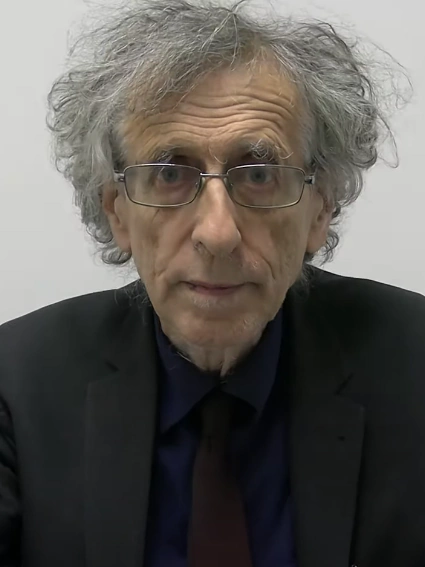
Attr: Piers Corbyn, CC BY 3.0
| 5 Quotes | |
| Born as | Piers Richard Corbyn |
| Occup. | Scientist |
| From | United Kingdom |
| Born | March 10, 1947 London, England |
| Age | 78 years |
| Cite | |
Citation Formats
APA Style (7th ed.)
Piers corbyn biography, facts and quotes. (2026, February 11). FixQuotes. https://fixquotes.com/authors/piers-corbyn/
Chicago Style
"Piers Corbyn biography, facts and quotes." FixQuotes. February 11, 2026. https://fixquotes.com/authors/piers-corbyn/.
MLA Style (9th ed.)
"Piers Corbyn biography, facts and quotes." FixQuotes, 11 Feb. 2026, https://fixquotes.com/authors/piers-corbyn/. Accessed 7 Mar. 2026.
Early Life and Background
Piers Richard Corbyn was born on March 10, 1947, in the United Kingdom, into the long postwar shadow of rationing, rebuilding, and a rising faith in scientific expertise. Britain in the 1950s and 1960s offered a peculiar mix of technocratic optimism and class friction - new universities and laboratories on one side, industrial unrest and political polarization on the other. Corbyn absorbed that atmosphere early: the sense that public life was increasingly mediated by competing claims of authority, and that a well-argued dissent could attract a following.His family background also situated him near the fault lines of politics and public service. He is the brother of Jeremy Corbyn, later leader of the Labour Party, and their divergent public paths - one into party politics, the other into a contrarian scientific and campaigning identity - sharpened Corbyn's tendency to define himself against institutional consensus. That sibling juxtaposition became part of his public mythos: the household that produced both a parliamentary tribune and a street-level polemicist.
Education and Formative Influences
Corbyn trained in physics and established himself early as a capable specialist, including work connected to solar physics. His formative influences were not only technical but also cultural: the late-20th-century arc from scientific triumphalism to public skepticism. As meteorology and climate science became increasingly computational, he gravitated toward the older prestige of direct physical mechanisms and cyclical reasoning, and he developed a taste for combative public explanation - the scientist as debunker, refusing to cede interpretive authority to committees, models, or media intermediaries.Career, Major Works, and Turning Points
Corbyn became best known for promoting long-range weather forecasting through a solar-based approach, associated with his business, WeatherAction, and for his high-profile rejection of mainstream accounts of anthropogenic global warming. From the 1990s onward, and especially as climate politics intensified in the 2000s, he increasingly moved from technical claims about forecasting into a broader campaign against what he framed as exaggerated risk narratives and policy overreach. A key turning point was the way climate debate migrated from specialist journals into mass politics: Corbyn positioned himself not as a cautious minority voice within a field, but as a public antagonist to the new consensus culture around climate, with protest-style rhetoric and theatrical interventions becoming as central to his persona as his scientific training.Philosophy, Style, and Themes
At the core of Corbyn's worldview is a conviction that climate and weather must be interpreted through long historical baselines and physical drivers outside carbon policy. He repeatedly argues for a wide-angle reading of deep time: “The general trend in the last 4, 000 years is that carbon dioxide and temperature have been moving against each other”. The psychological appeal of this claim is its inversion of the dominant story - it casts him as the reader of nature's "real" archive, and it implies that modern anxieties are a parochial misunderstanding of larger cycles. That tendency also expresses a moral stance: present-day institutions, in his telling, exploit short records and selective imagery to manufacture consent.His style is adversarial, skeptical of expertise that arrives packaged as simulations and certainty. “Computer modelling for weather forecasting, and indeed for climate forecasting, has reached its limits”. This is both a technical criticism and an identity statement - a preference for tangible mechanisms (especially solar variability) over probabilistic ensembles, and a temperament that treats centralized knowledge production as inherently political. Even his most provocative tropes reflect a dramatist's instinct for puncturing symbolic narratives: “Polar bears did very well in the warmer times... they're just used as a deceitful heartthrob”. Here the theme is not zoology so much as persuasion - he is diagnosing, and ridiculing, what he sees as emotional governance, insisting that policy is being driven by imagery rather than measurement.
Legacy and Influence
Corbyn's legacy is inseparable from the era in which scientific disputes became culture-war markers. To supporters, he models the dissident technician - a reminder that expertise can be contested and that long-run climate history is complex. To critics, he exemplifies how scientific credentials and selective arguments can be mobilized to resist overwhelming evidence and delay collective action. Either way, he helped shape a distinctive British strain of climate contrarianism: performative, media-savvy, and built on the claim that institutional certainty is itself a warning sign.Our collection contains 5 quotes written by Piers, under the main topics: Nature - Science.
Source / external links