
Pindar Biography Quotes 13 Report mistakes
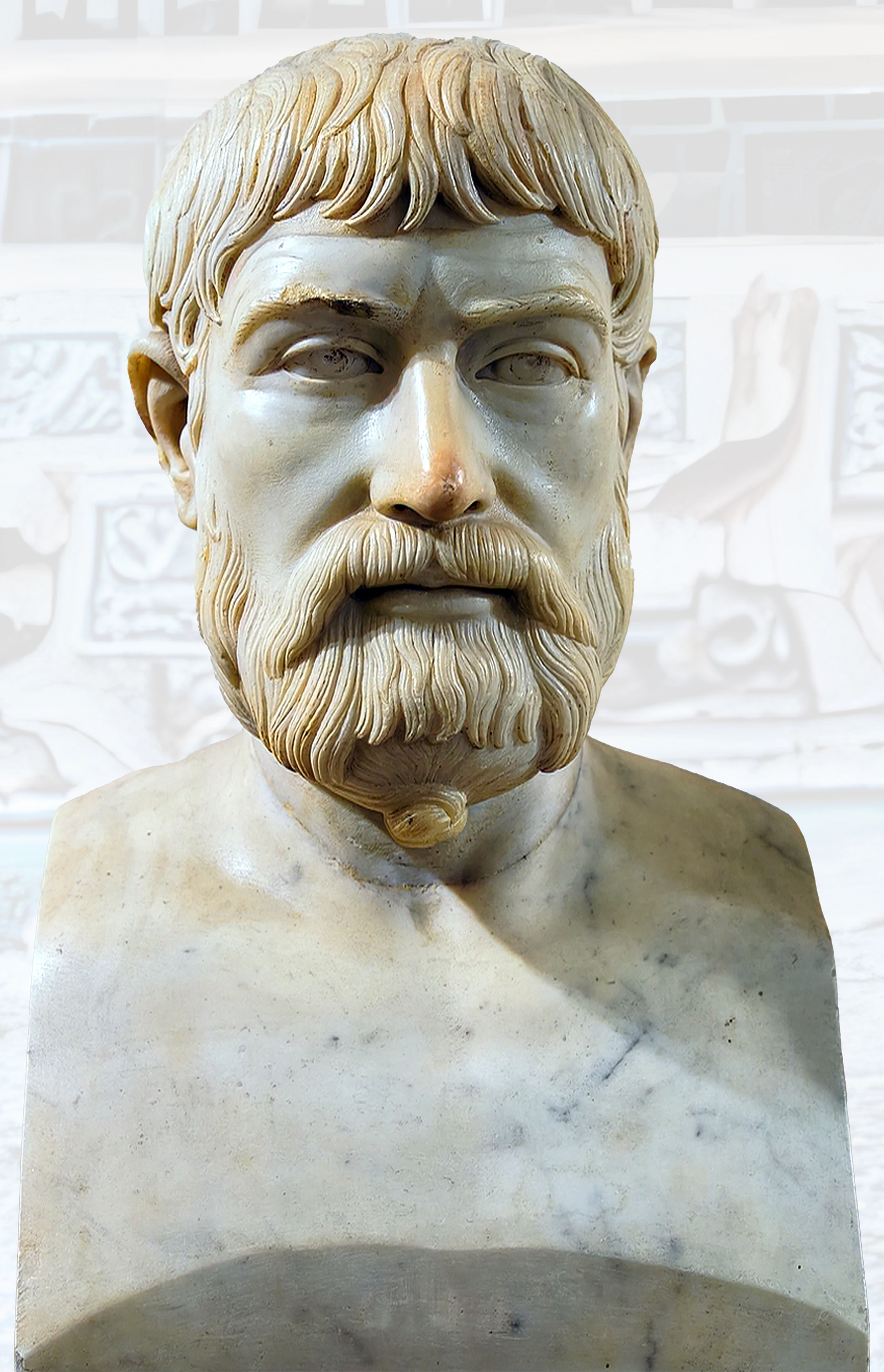
| 13 Quotes | |
| Born as | Πίνδαρος |
| Known as | Pindaros |
| Occup. | Poet |
| From | Greece |
| Born | 518 BC Cynoscephalae, Boiotia |
| Died | 438 BC Argos |
| Cite | |
Citation Formats
APA Style (7th ed.)
Pindar biography, facts and quotes. (2026, February 11). FixQuotes. https://fixquotes.com/authors/pindar/
Chicago Style
"Pindar biography, facts and quotes." FixQuotes. February 11, 2026. https://fixquotes.com/authors/pindar/.
MLA Style (9th ed.)
"Pindar biography, facts and quotes." FixQuotes, 11 Feb. 2026, https://fixquotes.com/authors/pindar/. Accessed 27 Mar. 2026.
Early Life and Background
Pindar (Pindaros, Greek: Pindaros) was born around 518 BCE near Thebes in Boeotia, a region whose aristocratic families, religious festivals, and horse-breeding wealth shaped his imagination. He grew up in a Greece not yet unified by any single power, where city-states competed through war, alliances, and display - and where public song functioned as both art and civic instrument, binding elite households to communal rites. Boeotia, with Thebes as its center, carried an old reputation for tradition and local pride, and Pindar inherited a sense that fame must be earned under the gaze of gods, ancestors, and rivals.His lifetime spanned the Persian Wars and the subsequent rise of Athenian imperial confidence, pressures that sharpened cultural divides: Ionian innovation versus Dorian and Boeotian conservatism, democracy versus older elite patronage, sea power versus landed prestige. Pindar did not write as a neutral observer of this age. His poetry repeatedly returns to the question of how a mortal can stand upright amid sudden fortune and political upheaval - how excellence can be celebrated without denying the fragility of the celebrant. That tension between splendor and limitation became the emotional engine of his best work.
Education and Formative Influences
Ancient testimony places his training within the professional world of choral lyric, where composition was inseparable from performance, music, and dance; he is associated with instruction in Athens and with the broader Simonidean tradition of epinician praise poetry. He absorbed the ritual precision of Panhellenic sanctuaries (Olympia, Delphi, Nemea, Isthmia) and the inherited mythic archive that those sanctuaries guarded, learning how genealogies, local cults, and heroic tales could be adapted to honor a living victor. Just as crucial was a religious sensibility rooted in Apollo and in the ethics of measure: a poet must elevate his patron while acknowledging divine order and the limits placed on human boasting.Career, Major Works, and Turning Points
Pindar became the preeminent composer of epinicia - victory odes commissioned by aristocratic patrons to commemorate athletic triumphs in the four great games - and his surviving corpus centers on the Olympian, Pythian, Nemean, and Isthmian Odes. His clients ranged from Aegina and Thessaly to Sicily; notable commissions include odes for Hieron of Syracuse and for the boxer Diagoras of Rhodes, poems that fuse immediate celebration with mythic exempla and moral counsel. Working through the first half of the fifth century BCE, he perfected a high ceremonial style that could travel across Greece with the victors, turning private achievement into Panhellenic memory. Later tradition reports honors bestowed on him at Delphi, reflecting how closely his art was identified with sacred prestige, even as political currents pulled poleis into sharper conflict.Philosophy, Style, and Themes
Pindar writes from inside an aristocratic ethic of arete: excellence is real, but it is never self-made. Victory requires training, lineage, wealth, and above all divine favor - and the poet is the mediator who translates that volatile gift into lasting renown. His odes repeatedly stage a psychological drama of constraint: he must praise lavishly without tipping into hubris, reveal truths without endangering patron or polis, and carry the listener from the stadium to the realm of myth and back again. This is why his moral advice often arrives as sharpened aphorism within splendor, a reminder that identity is a duty, not a mood: “Learn what you are and be such”. The line is less self-help than aristocratic discipline - a demand that the victor inhabit the role of the admirable without forgetting the gods who authorize it.His style is famously abrupt and architectonic: dense metaphor, sudden transitions, and a controlling intelligence that chooses what to illuminate and what to leave veiled. The odes teach that speech itself must be governed, because fame can curdle into envy and piety into presumption. Hence his caution about disclosure: “Not every truth is the better for showing its face undisguised; and often silence is the wisest thing for a man to heed”. This discretion is psychological as well as political; Pindar often sounds like a man who has seen courts and cities turn on a word. Yet his restraint is paired with a clear-eyed acceptance of mortality. The odes celebrate the victor precisely because time consumes all things: “Seek not, my soul, the life of the immortals; but enjoy to the full the resources that are within thy reach”. In that counsel, the grandeur of his praise becomes an ethics of limits - the highest song is not escape from finitude but a ritualized answer to it.
Legacy and Influence
Pindar set the benchmark for epinician lyric: a fusion of athletic reportage, mythic narrative, religious awe, and ethical instruction that later Greeks treated as a treasury of maxims and models of elevated diction. His difficult magnificence shaped ancient rhetorical education and became a touchstone for Roman and, much later, European poets seeking a "Pindaric" mode of exalted celebration - a style associated with musical energy, bold leaps, and moral altitude. Even where imitated imperfectly, his core achievement endured: he demonstrated how a poet can turn a transient victory into a lasting public artifact, and how praise, at its deepest, is also a meditation on what it means to be human under the gaze of the gods.Our collection contains 13 quotes written by Pindar, under the main topics: Wisdom - Mortality - Live in the Moment - Kindness - Aging.
Other people related to Pindar: John Opie (Artist)
Pindar Famous Works
- -500 Fragments (Poetry)
- -500 Isthmian Odes (Poetry)
- -500 Nemean Odes (Poetry)
- -500 Pythian Odes (Poetry)
- -500 Olympian Odes (Poetry)
Source / external links