
Plutarch Biography Quotes 36 Report mistakes
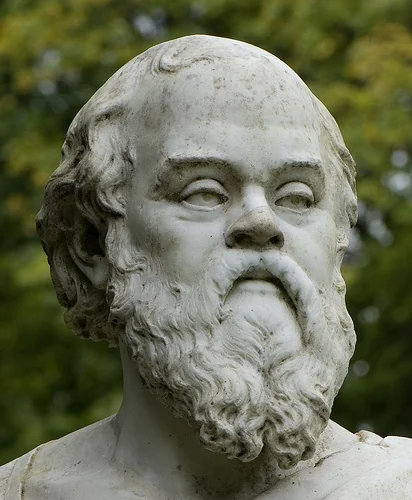
| 36 Quotes | |
| Born as | Πλούταρχος |
| Occup. | Philosopher |
| From | Greece |
| Born | 46 AC Chaeronea, Boeotia |
| Died | 119 AC Delphi, Phocis |
| Cite | |
Citation Formats
APA Style (7th ed.)
Plutarch biography, facts and quotes. (2026, February 2). FixQuotes. https://fixquotes.com/authors/plutarch/
Chicago Style
"Plutarch biography, facts and quotes." FixQuotes. February 2, 2026. https://fixquotes.com/authors/plutarch/.
MLA Style (9th ed.)
"Plutarch biography, facts and quotes." FixQuotes, 2 Feb. 2026, https://fixquotes.com/authors/plutarch/. Accessed 27 Mar. 2026.
Early Life and Background
Plutarch (Ploutarchos, Greek: Ploutarkhos) was born around AD 46 in Chaeronea, a small Boeotian town whose fame rested on memories of older Greek glory and defeat - Philip II of Macedon had crushed a Greek coalition nearby in 338 BCE. By Plutarchs lifetime Chaeronea lay within the Roman empire, and that fact shaped his inner horizon: he inherited Greek language, religion, and civic pride, yet he matured in a world where Roman power set the terms. The tension between local attachment and imperial scale became one of his lifelong engines.He came from a comfortable, locally prominent family (his name suggests prosperity), and he never cultivated the pose of the uprooted intellectual. Instead he fashioned himself as a civic man: a husband and father, a participant in municipal life, and later a priest at Delphi. The consolatory letter he wrote after the death of his young daughter reveals a temperament that sought steadiness rather than display - grief transmuted into moral attention and the disciplined practice of philosophical comfort.
Education and Formative Influences
Plutarch was educated in Athens, likely studying under the Platonist Ammonius, and he absorbed the Middle Platonist project of harmonizing Plato with elements of Aristotle and the best of Stoic ethics while resisting what he saw as Stoic harshness. He read widely in poetry, history, rhetoric, and antiquarian lore, and he trained himself in the art that would become his signature: extracting moral psychology from anecdote. Travel and public speaking took him beyond Greece, and visits to Italy - including Rome - deepened his understanding of the Roman governing class whose lives he would later anatomize.Career, Major Works, and Turning Points
Plutarch returned to Chaeronea as a leading citizen, served in local offices, and built a career less as a court philosopher than as a moralist grounded in community. He lectured, wrote, and maintained friendships with influential Romans; later tradition associates him with imperial favor (often linked to Trajan or Hadrian), though the secure fact is his cultural authority rather than any fixed bureaucratic post. His two great bodies of work are the Parallel Lives (paired biographies of Greek and Roman statesmen, each pair often followed by a comparison) and the Moralia (a vast collection of essays, dialogues, and speeches on ethics, religion, education, politics, and literary criticism). A major turning point was his decision to treat biography as a laboratory of character - a genre capable of rivaling formal philosophy by showing virtue and vice in motion, under pressure, in public.Philosophy, Style, and Themes
Plutarchs philosophy is practical and psychological: he cared less about building a system than about shaping the soul through example, self-scrutiny, and habit. His essays on anger, talkativeness, curiosity, superstition, and the education of children argue that moral improvement is neither accidental nor purely intellectual; it is trained into being. “Character is simply habit long continued”. This line captures his most intimate conviction - that a life is the sediment of repeated choices - and explains why his biographies linger on small acts, private sayings, and the seemingly minor pivot points where a temperament reveals itself.His style blends priestly reverence, a teachers clarity, and a storytellers relish for the telling detail. He could praise Rome for order while warning that republics corrode from within; “An imbalance between rich and poor is the oldest and most fatal ailment of all republics”. The remark is not merely political diagnosis but moral anthropology: inequality breeds envy, flattery, and the appetite for demagogic gifts. Likewise his respect for agency sits alongside a chastened view of necessity: “Fate leads him who follows it, and drags him who resist”. Plutarchs inner world is visible here - a mind seeking freedom without illusion, urging readers to cooperate with circumstance by choosing the honorable path within the limits of fortune.
Legacy and Influence
Plutarch endured because he taught later ages how to read lives as ethical instruments. The Parallel Lives became a quarry for statesmen, dramatists, and moralists: in early modern Europe they shaped ideals of republican virtue and provided narrative matter for Shakespeare (notably in Julius Caesar, Antony and Cleopatra, and Coriolanus, largely through Thomas Norths English translation). His Moralia influenced Christian and humanist moral reasoning, preserving invaluable information about Greek religion, philosophy, and customs while modeling a humane, dialogic way of thinking. Across centuries his central gift has remained stable: a method for seeing public history through the private formation of character, and for making the past feel like a mirror held up to the readers own choices.Our collection contains 36 quotes written by Plutarch, under the main topics: Ethics & Morality - Wisdom - Art - Freedom - Learning.
Other people related to Plutarch: Ralph Waldo Emerson (Philosopher), Michel de Montaigne (Philosopher), Heraclitus (Philosopher), Luc de Clapiers (Writer), Cornelius Nepos (Roman), Cardinal De Retz (Clergyman), Pierre Charron (Philosopher), Anne Bradstreet (Poet), John Langhorne (Poet), Mary Renault (Novelist)
Plutarch Famous Works
- 100 Moralia (Essay Collection)
- 100 Parallel Lives (Biography)
Source / external links