
Pope Francis Biography Quotes 10 Report mistakes
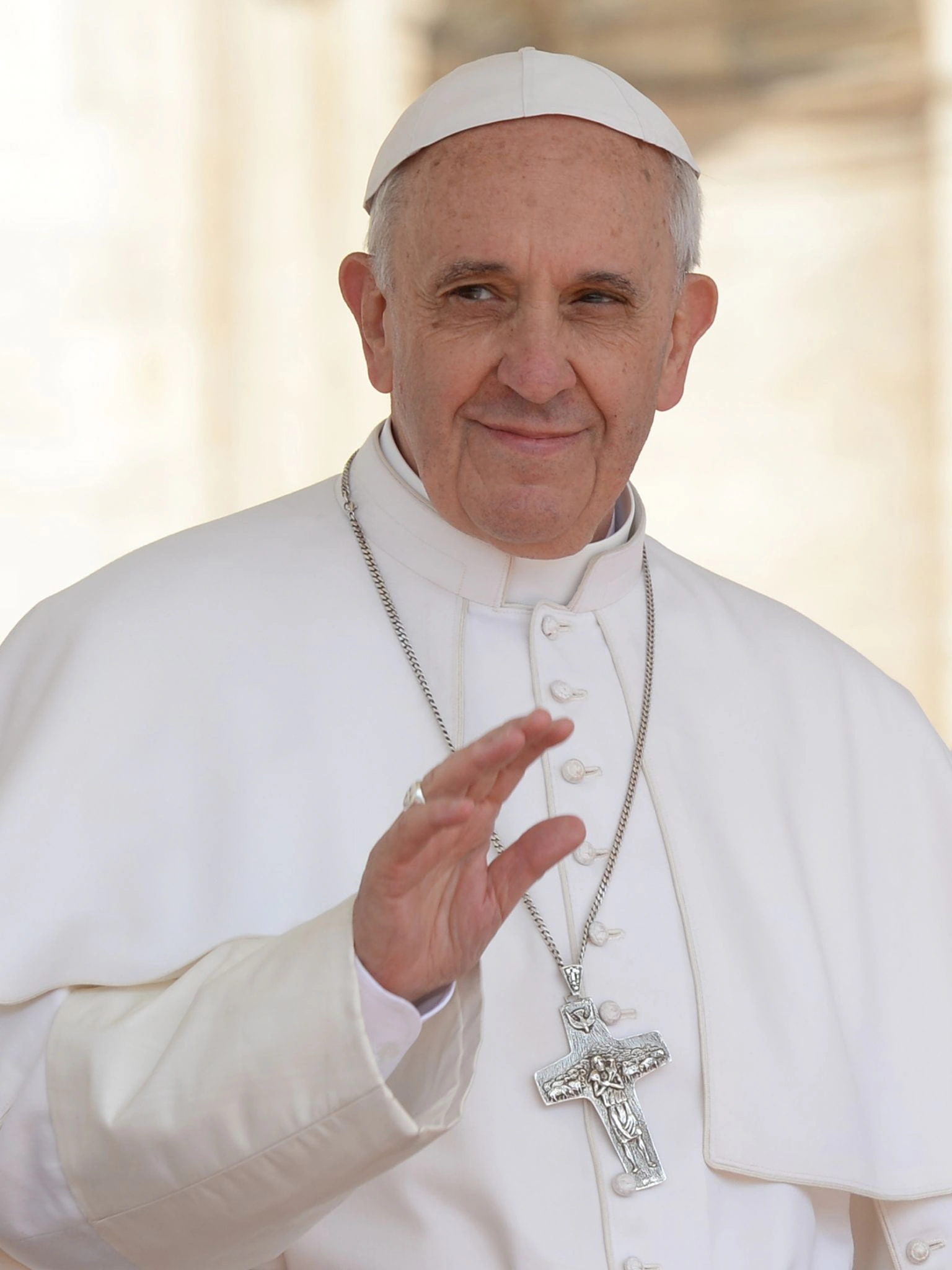
| 10 Quotes | |
| Born as | Jorge Mario Bergoglio |
| Occup. | Pope |
| From | Argentina |
| Born | December 17, 1936 Buenos Aires, Argentina |
| Age | 89 years |
| Cite | |
Citation Formats
APA Style (7th ed.)
Pope francis biography, facts and quotes. (2026, February 11). FixQuotes. https://fixquotes.com/authors/pope-francis/
Chicago Style
"Pope Francis biography, facts and quotes." FixQuotes. February 11, 2026. https://fixquotes.com/authors/pope-francis/.
MLA Style (9th ed.)
"Pope Francis biography, facts and quotes." FixQuotes, 11 Feb. 2026, https://fixquotes.com/authors/pope-francis/. Accessed 12 Feb. 2026.
Early Life and Background
Jorge Mario Bergoglio was born on 1936-12-17 in Buenos Aires, Argentina, the eldest of five children in a family shaped by migration and workaday Catholic piety. His father, Mario Jose Bergoglio, was an Italian immigrant employed as an accountant; his mother, Regina Maria Sivori, also of Italian descent, held the home together with a practical faith and a strong sense of duty. He grew up in a city where European neighborhoods, labor politics, and popular devotion met in the streets - a social laboratory that trained him early to read people, not abstractions.
Adolescence and early adulthood brought him close to the textures of ordinary life he would later defend as pastor and pope: factory rhythms, crowded parishes, and the moral pressure of inequality. A serious respiratory illness led to the removal of part of one lung, leaving him with a lifelong awareness of physical limits and a certain urgency in prayer. Buenos Aires in the mid-20th century also carried the shadow of ideological struggle and periodic violence; in that climate, Bergoglio learned caution with slogans and an instinct to search for the human person behind the argument.
Education and Formative Influences
He trained as a chemical technician before turning decisively toward priesthood, entering the Society of Jesus in 1958. Jesuit formation steeped him in Ignatian discernment - attention to motives, consolation and desolation, and the conviction that God is sought in the concrete. He studied philosophy and theology in Argentina, later spending time in Spain for further Jesuit formation, and became known as a disciplined spiritual director and teacher of literature and psychology as well as theology. The Second Vatican Council set the wider horizon of his priesthood - a Church urged toward pastoral closeness - while Latin America wrestled with poverty, dictatorship, and the contested language of liberation, sharpening his lifelong preference for works of mercy over ideological certainty.
Career, Major Works, and Turning Points
Ordained a priest in 1969, Bergoglio rose quickly: provincial superior of the Jesuits in Argentina (1973-1979), then rector of the Colegio Maximo and later a bishop in Buenos Aires (auxiliary in 1992, coadjutor in 1997, archbishop in 1998). His leadership was tested during Argentina's "Dirty War" (1976-1983), a period that later generated criticism and defense regarding the Church's role; he neither became a political tribune nor retreated from pastoral risk, and his post-dictatorship years emphasized accompaniment, confession, and service in the villas miseria. Created a cardinal in 2001 by John Paul II, he gained a reputation for personal austerity, riding public transport and avoiding courtliness. Elected pope on 2013-03-13 after Benedict XVI's resignation, he chose the name Francis, signaling a program: simplicity, peace, and a Church turned outward. Key texts and initiatives followed - Evangelii gaudium (2013), Laudato si' (2015), Amoris laetitia (2016), Fratelli tutti (2020), and the global Synod on Synodality - alongside reforms of Vatican finances and curial structures, and a pontificate marked by migration crises, polarization, war, and a renewed focus on safeguarding and accountability.
Philosophy, Style, and Themes
Francis' inner life is best read as an Ignatian struggle against self-protective religiosity: he distrusts spiritual vanity and prefers the confessional to the tribunal. His pastoral psychology centers on the conviction that grace works through patience, not performance. "God never tires of forgiving us; we are the ones who tire of seeking his mercy". The line is autobiographical in tone - a man aware of his own limits, wary of perfectionism, and determined to keep the Church oriented toward return rather than exclusion. For him, mercy is not a soft add-on but the very grammar of Christian realism in a world of fracture.
His public style - direct, image-rich, sometimes improvisational - serves a consistent set of themes: the dignity of the poor, the danger of clericalism, and the moral cost of indifference. "The measure of the greatness of a society is found in the way it treats those most in need, those who have nothing apart from their poverty". That insistence, forged in Buenos Aires' margins, explains his emphasis on migrants, the homeless, and economies that discard. It also broadens into ecological responsibility as social responsibility: "We have a responsibility to protect the Earth for future generations. The environment is God's gift to everyone, and in our use of it, we have a responsibility towards the poor, towards future generations, and towards humanity as a whole". Here his theology becomes a moral map - creation, poverty, and peace bound together, with the Church called to witness by proximity rather than prestige.
Legacy and Influence
Francis' enduring influence lies less in novelty than in re-centering: a papacy that elevated mercy, encounter, and the peripheries as tests of credibility, while forcing global Catholicism to confront internal polarization, abuse crises, and the tension between doctrine and pastoral care. He reshaped the papal image from monarchic distance to pastoral closeness, expanded the Church's diplomatic and moral vocabulary around ecology and migration, and pushed synodality as a long game of listening and shared responsibility. Whatever verdict history reaches on particular reforms, his fingerprints remain on the Church's conscience - a persistent call to measure faith by how it treats the wounded, and authority by how closely it walks with them.
Our collection contains 10 quotes written by Pope, under the main topics: Ethics & Morality - Justice - Love - Nature - Kindness.
Other people related to Pope: Hans Kung (Theologian), Roger Mahony (Clergyman), Timothy Radcliffe (Clergyman), John Boehner (Politician), Godfried Danneels (Clergyman), Karl Lehmann (Clergyman), Helen Prejean (Writer), Joe Donnelly (Politician), Dionigi Tettamanzi (Clergyman)
Source / external links