
Pope Paul III Biography Quotes 1 Report mistakes
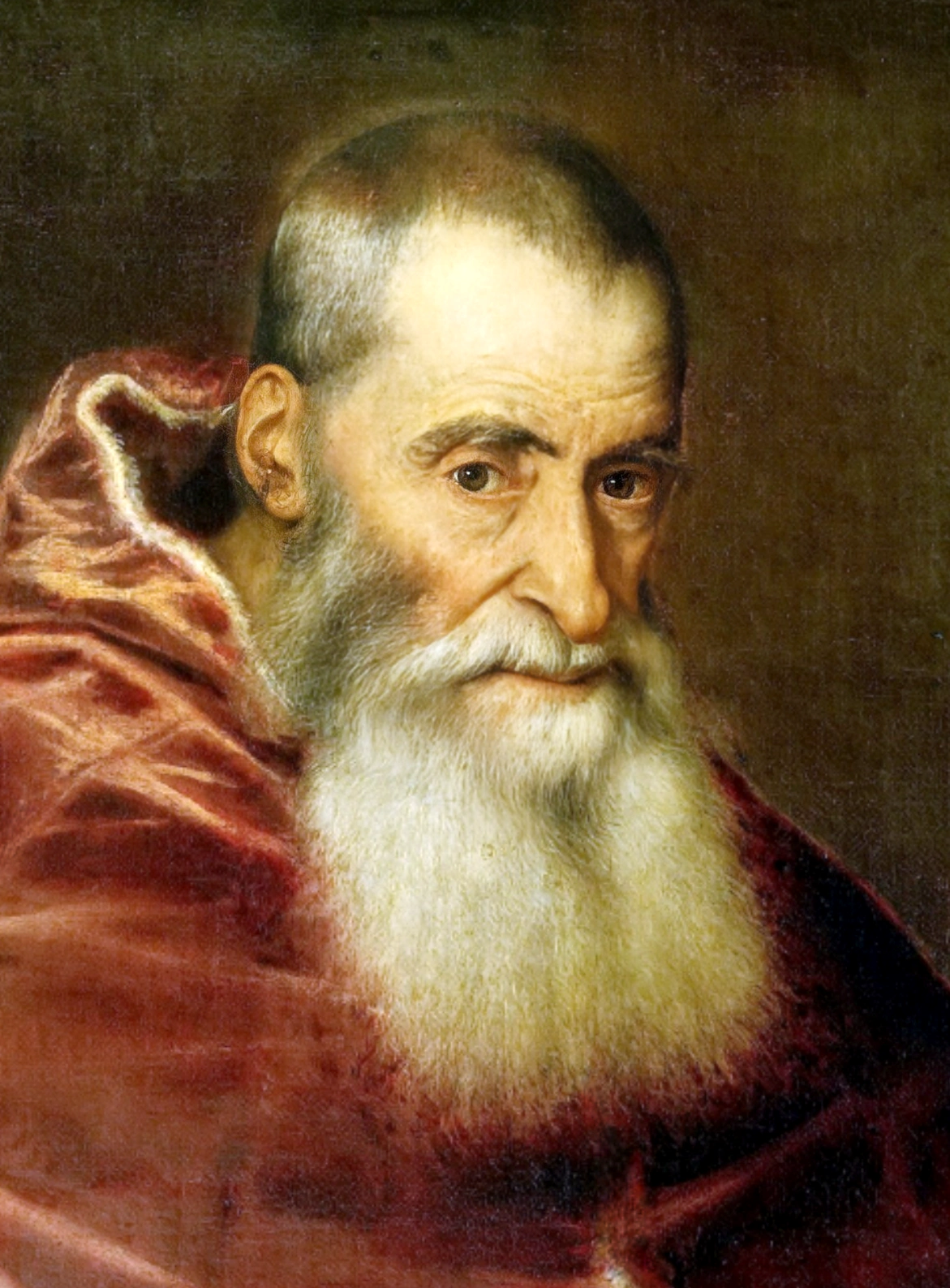
Attr: Titian, Public domain
| 1 Quotes | |
| Born as | Alessandro Farnese |
| Occup. | Clergyman |
| From | Italy |
| Born | February 29, 1468 Canino, Lazio, Papal States |
| Died | November 10, 1549 Rome, Papal States |
| Aged | 81 years |
| Cite | |
Citation Formats
APA Style (7th ed.)
Pope paul iii biography, facts and quotes. (2026, February 11). FixQuotes. https://fixquotes.com/authors/pope-paul-iii/
Chicago Style
"Pope Paul III biography, facts and quotes." FixQuotes. February 11, 2026. https://fixquotes.com/authors/pope-paul-iii/.
MLA Style (9th ed.)
"Pope Paul III biography, facts and quotes." FixQuotes, 11 Feb. 2026, https://fixquotes.com/authors/pope-paul-iii/. Accessed 5 Mar. 2026.
Early Life and Background
Alessandro Farnese was born on February 29, 1468, at Canino in northern Lazio, into a landed noble family whose fortunes were rising with the papal court that dominated central Italy. The Farnese were not yet the dynastic power they would become, but they were close enough to Rome to understand that ecclesiastical office could be both a spiritual vocation and a political engine. His world was the late Quattrocento: city-states jostling for advantage, French and Spanish ambitions hardening into Italian Wars, and a papacy that could look as much like a principality as a church.From the start, Farnese absorbed the practical lessons of his environment. He moved in aristocratic and curial networks where patronage, kinship, and loyalty mattered as much as learning. Like many clerics of his rank, he lived in the tension between Renaissance courtliness and ecclesiastical discipline; he fathered children before priestly ordination, a fact later weaponized by critics but also one that shaped his determination, once pope, to stabilize his family and to harden the institutional boundaries that his own life had blurred.
Education and Formative Influences
He studied in Rome and then at Pisa, where humanist education trained him in Latin eloquence, administrative habits, and the diplomatic sensibility required for navigating princes and prelates. That training, reinforced by long exposure to the curia, made him a pragmatic synthesizer rather than an ideologue: he respected learning and the prestige of classical culture, yet he never mistook elegance for authority. The example of earlier Renaissance popes taught him both the possibilities and the costs of papal statecraft, while the gathering storm of reformist critique pressed him toward a more sober, disciplinary model of leadership.Career, Major Works, and Turning Points
Farnese entered the upper clergy under Pope Alexander VI, who made him cardinal in 1493, launching a decades-long career in which he accumulated benefices, managed diocesan responsibilities, and served as a steady, sometimes cautious broker amid the Italian Wars. His election as Pope Paul III in 1534 proved the decisive turning point: he recognized that the Protestant challenge and the scandal of ecclesiastical corruption demanded more than cosmetic adjustment. He approved the Society of Jesus in 1540, using the new order as an instrument of education, missions, and disciplined obedience; he convened the Council of Trent in 1545, overcoming European rivalries long enough to begin a systematic Catholic response; and he strengthened the Roman Inquisition in 1542, seeking doctrinal clarity and institutional control. Yet the same pontificate was marked by dynastic calculation - notably the advancement of his grandsons and the creation of the Duchy of Parma and Piacenza for his son Pier Luigi - revealing how inseparable family strategy and papal politics still were in his imagination.Philosophy, Style, and Themes
Paul III governed with a jurist's patience and a prince's sense of timing. He seldom chased purity for its own sake; instead he treated reform as a process of restoring credibility without surrendering authority. His inner life can be read as a negotiation between guilt and necessity: a man shaped by the permissive clerical culture of his youth who, once tasked with steering the Church through existential rupture, leaned into rigor. The religious atmosphere of the 1530s and 1540s was charged with ultimata - salvation and damnation, obedience and schism - and his policies reflect a leader who believed the stakes were final, not symbolic.That psychology helps explain the severity that accompanied his cautiousness. In an age when confession, penance, and fear of judgment structured ordinary piety, his reforming energy did not primarily speak the language of optimism. “There is no redemption from hell”. As a thematic key, the line captures the hard edge of his Catholic imagination: once the boundary is crossed, no rhetoric can undo it, and so institutions must be built to prevent the crossing. His support for Trent and the Inquisition was not simply coercion; it was the administrative translation of an eschatological seriousness - a conviction that error was not merely intellectual but spiritually catastrophic, and that the Church must be visibly competent to guide souls and discipline itself.
Legacy and Influence
Paul III stands as the hinge between Renaissance papal magnificence and the machinery of the Counter-Reformation. By authorizing the Jesuits, opening the Council of Trent, and tightening Rome's doctrinal governance, he set in motion reforms that outlasted the political compromises and family maneuvers of his reign. His legacy is therefore double: the architect of Catholic renewal at its institutional foundations, and the last of the great Renaissance pontiffs to treat the papacy as both a universal pastorate and a dynastic power. In the long view, the structures he initiated proved more enduring than the scandals he could not fully escape, shaping Catholic education, discipline, and global reach for centuries.Our collection contains 1 quotes written by Pope, under the main topics: Faith.
Other people related to Pope: John Fisher (Clergyman)
Source / external links