
Prince Charles Biography Quotes 14 Report mistakes
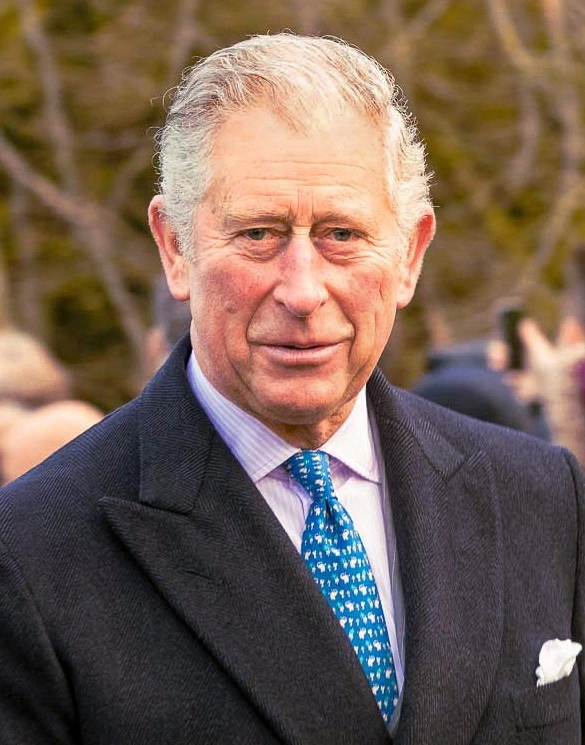
Attr: Mark Jones, CC BY 2.0
| 14 Quotes | |
| Born as | Charles Philip Arthur George |
| Known as | Prince of Wales |
| Occup. | Royalty |
| From | United Kingdom |
| Born | November 14, 1948 Buckingham Palace, London, England |
| Age | 77 years |
| Cite | |
Citation Formats
APA Style (7th ed.)
Prince charles biography, facts and quotes. (2026, February 11). FixQuotes. https://fixquotes.com/authors/prince-charles/
Chicago Style
"Prince Charles biography, facts and quotes." FixQuotes. February 11, 2026. https://fixquotes.com/authors/prince-charles/.
MLA Style (9th ed.)
"Prince Charles biography, facts and quotes." FixQuotes, 11 Feb. 2026, https://fixquotes.com/authors/prince-charles/. Accessed 12 Feb. 2026.
Early Life and Background
Charles Philip Arthur George was born on November 14, 1948, at Buckingham Palace, the first child of Princess Elizabeth and Philip, Duke of Edinburgh, in a United Kingdom still rationing its postwar life and renegotiating its global role. He arrived as the monarchy itself shifted from imperial certainty to television-era scrutiny: his grandmother, Queen Mary, represented an older courtly world, while the young family was pushed into visibility by newsreels, radio, and then mass broadcasting.Raised between London residences and the royal country houses, Charles grew up in an atmosphere of duty and emotional reticence, shaped by a father who prized toughness and a mother whose reign would come to define endurance. Elizabeth II became queen in 1952, making Charles heir apparent at three; childhood for him was therefore never private in the normal sense. The psychological core of his youth was a constant sense of being observed, compared, and prepared, with affection often mediated through protocol and schedule.
Education and Formative Influences
His schooling reflected both tradition and experiment: Hill House in London, Cheam, then Gordonstoun in Scotland, an institution his father admired for its Spartan discipline but which Charles found harsh. Time at Geelong Grammar School in Australia broadened his perspective, followed by Trinity College, Cambridge, where he read history and later received an MA. He also studied Welsh at Aberystwyth in 1969 before his investiture as Prince of Wales, a deliberate attempt to meet a country whose nationalism and deindustrialization were reshaping British politics; the result was a prince trained to hear discontent even while embodying continuity.Career, Major Works, and Turning Points
Invested as Prince of Wales in 1969, Charles served in the Royal Air Force and Royal Navy in the 1970s, then settled into the peculiar labor of an heir: representing the Crown without ruling, and building a platform without seeming partisan. He founded The Prince's Trust in 1976, turning personal influence into practical philanthropy for disadvantaged youth, and later created The Prince's Foundation to promote traditional architecture, crafts, and urban regeneration. His marriage to Lady Diana Spencer in 1981 produced Princes William and Harry but collapsed under intense press pressure, incompatible temperaments, and a long emotional attachment to Camilla Parker Bowles; the 1992 separation, 1996 divorce, and Diana's death in 1997 became defining crises. He married Camilla in 2005, then succeeded as king in 2022 after Elizabeth II's death, inheriting a nation marked by Brexit aftershocks, devolved politics, and a public skeptical of inherited authority.Philosophy, Style, and Themes
Charles's inner life was often described as dutiful yet restless - a man born to wait, compelled to find meaning in work. "All the time I feel I must justify my existence". That sentence is less complaint than diagnosis: he treated privilege as a debt requiring repayment through service, expertise, and tangible projects. It also explains his unusually programmatic interests for a royal - the built environment, ecological limits, youth unemployment, interfaith understanding - domains where he could convert anxiety into stewardship and where moral seriousness could outpace ceremonial constraint.His style mixed traditionalism with impatience at modern ugliness, a sensibility sharpened by wartime memory filtered through architecture and place. "You have to give this much to the Luftwaffe: when it knocked down our buildings it did not replace them with anything more offensive than rubble. We did that". The humor lands because it is sincere: he saw planning failures as a cultural wound, not merely an aesthetic quibble, and he pressed for human-scaled design long before "sustainability" became a consensus term. At the same time, his understanding of monarchy was pragmatic, almost anthropological - "Something as curious as the monarchy won't survive unless you take account of people's attitudes. After all, if people don't want it, they won't have it". Taken together, these themes show a personality balancing inherited permanence with a modern need to persuade, adapting an ancient institution by arguing - sometimes awkwardly - for its usefulness.
Legacy and Influence
Charles's legacy is inseparable from the tensions he embodied: tradition versus reform, private feeling versus public role, environmental warning versus political neutrality. As Prince of Wales he professionalized royal philanthropy and helped normalize early action on climate and conservation, influencing corporate and civic agendas through convening power rather than statute. His controversies - especially around marriage, media, and reports of lobbying - also accelerated demands for transparency, subtly reshaping expectations of what royal legitimacy requires. As king, his enduring influence will be measured less by dramatic constitutional change than by whether he can translate a lifetime of causes and introspection into a calmer, more broadly trusted monarchy.Our collection contains 14 quotes written by Prince, under the main topics: Witty One-Liners - Freedom - Meaning of Life - Parenting - Health.
Other people related to Prince: George III (Royalty), Prince William (Royalty), Arthur Sullivan (Composer), Robert Walpole (Statesman), King James I (Royalty), Edmund Waller (Poet), King George V (Royalty), Bryn Terfel (Musician), Sarah Ferguson (Author), Samuel Daniel (Poet)
Source / external links