
Prince William Biography Quotes 17 Report mistakes
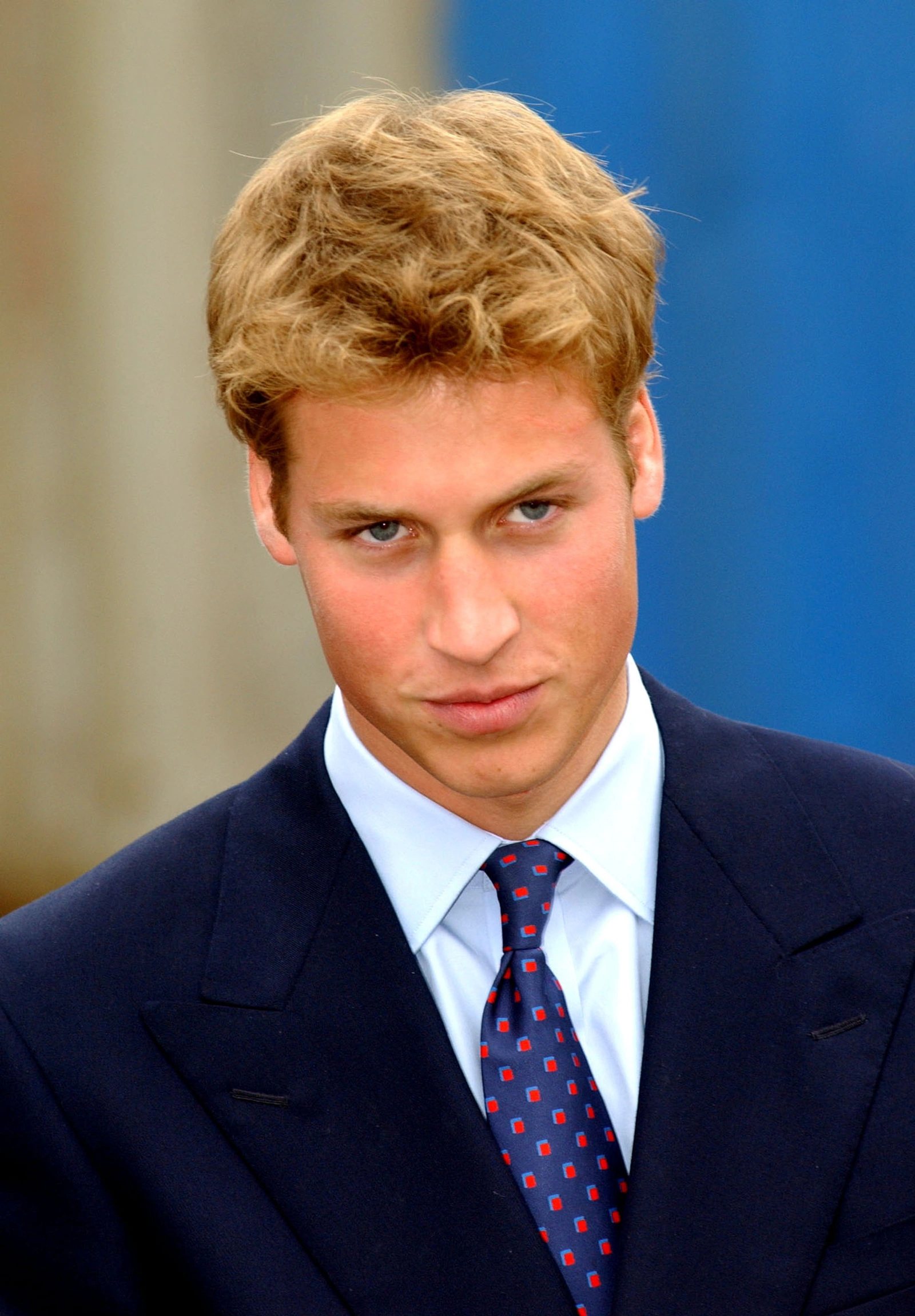
| 17 Quotes | |
| Born as | Prince William Arthur Philip Louis |
| Occup. | Royalty |
| From | United Kingdom |
| Born | June 21, 1982 Paddington, London, United Kingdom |
| Age | 43 years |
| Cite | |
Citation Formats
APA Style (7th ed.)
Prince william biography, facts and quotes. (2026, February 11). FixQuotes. https://fixquotes.com/authors/prince-william/
Chicago Style
"Prince William biography, facts and quotes." FixQuotes. February 11, 2026. https://fixquotes.com/authors/prince-william/.
MLA Style (9th ed.)
"Prince William biography, facts and quotes." FixQuotes, 11 Feb. 2026, https://fixquotes.com/authors/prince-william/. Accessed 28 Mar. 2026.
Early Life and Background
Prince William Arthur Philip Louis was born on June 21, 1982, in London, the first child of Charles, Prince of Wales, and Diana, Princess of Wales. From infancy he embodied a paradox the late-20th-century monarchy could not escape: he was both a carefully managed symbol of continuity and a boy watched with tabloid intensity. Britain in the 1980s and 1990s was convulsed by class politics, media deregulation, and celebrity culture, and the royal family - newly exposed by television and an aggressive press - became a public drama as much as a constitutional institution.His childhood was shaped by a deliberate attempt to widen royal horizons. Diana took William and his younger brother, Prince Harry, beyond palace gates to theme parks, public housing projects, and AIDS wards, teaching him early that duty could not survive as mere ceremony. The rupture of his parents' marriage and their divorce in 1996, followed by Diana's death in Paris on August 31, 1997, forced a private boy into a public rite of mourning. The walk behind his mother's coffin fixed in him a lifelong caution about spectacle and an instinct to protect family life from the camera's appetite.
Education and Formative Influences
William attended Wetherby School and Ludgrove School before entering Eton College in 1995, a modernizing choice that nevertheless placed him at the heart of Britain's elite. After a gap year that included charitable work in Chile and time in Africa, he studied at the University of St Andrews in Scotland, graduating in 2005 with a degree in geography. St Andrews proved formative not only for intellectual independence but for learning ordinary routines under extraordinary scrutiny, and for beginning a relationship with Catherine Middleton that would become central to his public stability and private resilience.Career, Major Works, and Turning Points
Commissioned into the armed forces, William trained at the Royal Military Academy Sandhurst and served in the Blues and Royals, then qualified as a helicopter pilot with the Royal Air Force. From 2009 to 2013 he flew Sea King helicopters with RAF Search and Rescue, a role that grounded royal duty in high-risk public service and gave him a vocation-like competence beyond ceremony. He married Catherine in Westminster Abbey on April 29, 2011, and they later became parents to Prince George (2013), Princess Charlotte (2015), and Prince Louis (2018). After becoming Duke of Cambridge, and later Prince of Wales in 2022 following Queen Elizabeth II's death, he expanded his portfolio: mental health advocacy (including the Heads Together campaign), environmental ambition through the Earthshot Prize launched in 2020, and a visible, sometimes bracing approach to modernizing royal work while defending its constitutional neutrality.Philosophy, Style, and Themes
William's inner life is marked by an unusually explicit negotiation with inheritance: not only titles and expectations, but grief and the public's longing for a repeat of Diana. His public statements reveal a man determined to translate emotion into guardrails - to honor the past without being imprisoned by it. That psychology is clearest when he frames family as both sanctuary and motive force, as in his explanation for giving Catherine Diana's ring: “It's my mother's engagement ring so I thought it was quite nice because obviously she's not going to be around to share any of the fun and excitement of it all - this was my way of keeping her close to it all”. It is sentiment, but also strategy: a controlled disclosure that acknowledges pain while setting terms for what the public may see.His style is pragmatic, mildly self-deprecating, and managerial rather than theatrical. He favors measurable projects, partnerships, and a language of service that tries to sound contemporary without surrendering the monarchy's ritual distance. The creed is straightforward - “My guiding principles in life are to be honest, genuine, thoughtful and caring”. - yet the subtext is a lifelong effort to make character legible in a role often criticized as unearned. He also insists that compassion is not a soft option but a demanding ambition: “People say it's not ambitious, but it is actually quite ambitious wanting to help people”. In an era skeptical of inherited authority, William repeatedly returns to usefulness as legitimacy, treating monarchy less as a birthright than as a platform that must justify itself through outcomes.
Legacy and Influence
William's legacy is still being written, but his influence is already visible in how the British monarchy has tried to recalibrate for the 21st century: fewer patronages, clearer priorities, and an emphasis on mental health, early childhood development, and climate solutions that can survive beyond a single reign. He represents a post-Diana generation of royals shaped by media trauma, determined to protect privacy, and focused on the social contract rather than deference. If he becomes king, the defining question will be whether his ethic of disciplined service can preserve the monarchy's relevance in a volatile United Kingdom - and whether the guarded, grief-aware boy who became a public adult can keep duty humane without letting it become merely symbolic.Our collection contains 17 quotes written by Prince, under the main topics: Witty One-Liners - Friendship - Honesty & Integrity - Mother - Servant Leadership.
Source / external links