
Publius Flavius Vegetius Renatus Biography Quotes 7 Report mistakes
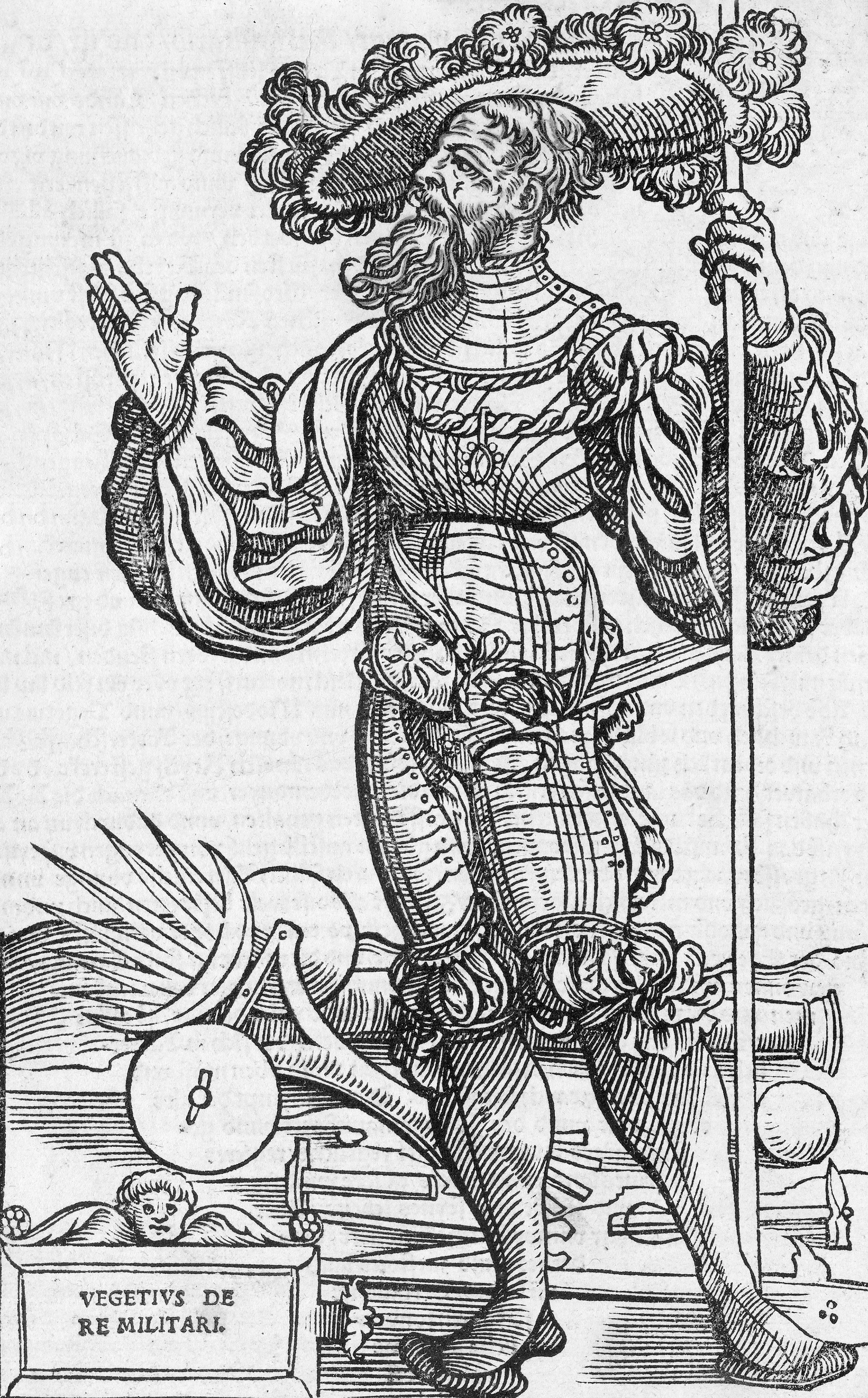
| 7 Quotes | |
| Known as | Vegetius |
| Occup. | Writer |
| From | Rome |
| Born | Rome, Italy |
| Died | Rome, Italy |
| Cite | |
Citation Formats
APA Style (7th ed.)
Publius flavius vegetius renatus biography, facts and quotes. (2026, February 11). FixQuotes. https://fixquotes.com/authors/publius-flavius-vegetius-renatus/
Chicago Style
"Publius Flavius Vegetius Renatus biography, facts and quotes." FixQuotes. February 11, 2026. https://fixquotes.com/authors/publius-flavius-vegetius-renatus/.
MLA Style (9th ed.)
"Publius Flavius Vegetius Renatus biography, facts and quotes." FixQuotes, 11 Feb. 2026, https://fixquotes.com/authors/publius-flavius-vegetius-renatus/. Accessed 28 Mar. 2026.
Early Life and Background
Publius Flavius Vegetius Renatus emerges from the late Roman world as more voice than visage - a writer whose surviving identity is largely the argument he made for Rome's recovery. He is usually placed in the later 4th century CE, when the empire, administratively resilient, faced chronic military strain: frontier pressure, civil conflict, and the steady substitution of emergency improvisation for long habit. His Latin name suggests a man of status within the Flavian-named elite of the period, perhaps connected to imperial service, but the sources do not securely anchor his birthplace, family, or social ascent. The later tradition that calls him "from Rome" fits the outlook of his work: an author who writes as though the center can still set standards for the whole.What can be drawn with more confidence is the milieu that shaped him. Vegetius wrote in an era when "Roman" increasingly meant an empire of many peoples held together by law, taxation, and a professional army that no longer mirrored the smallholding citizen-soldier ideal. The shock of setbacks in the West - and the sense that discipline had slackened - gave his program its urgency. He positions himself as a loyal diagnostician: not a general recounting campaigns, but a civil intellectual arguing that order, training, and correct institutions were themselves weapons.
Education and Formative Influences
Vegetius was steeped in the Latin technical and antiquarian tradition, the kind of education that read earlier authorities, extracted rules, and treated the past as a storehouse of workable procedures. His method in the Epitoma rei militaris (often called De re militari) is compilation with purpose: he ransacks earlier Roman practice and older writers, then reframes them for a present he considers decadent. That habit reflects both a bureaucratic mind and a moralist's temperament - the conviction that decline is legible in neglected routines, and that restoration can begin on the page through lucid, enforceable prescriptions.Career, Major Works, and Turning Points
Vegetius' career is obscure; he is commonly understood as a high-ranking civil official rather than a soldier, writing to an emperor (often identified as Theodosius I in some scholarly reconstructions, though certainty is elusive) to influence policy at the top. His major surviving work, the Epitoma rei militaris, organizes recruitment, training, discipline, equipment, tactics, logistics, and siegecraft into a program for rebuilding effective forces; a second treatise, the Digesta artis mulomedicinae, applies similar orderly thinking to veterinary care for pack animals, exposing how war depended on mundane systems of transport and animal health. The turning point that animates both is the late empire's realization that professionalism alone could not compensate for eroded standards - that institutional memory had to be recovered, written down, and imposed.Philosophy, Style, and Themes
Vegetius' inner life can be inferred from his preferred levers of change: rules, repetition, and fear of waste. He distrusts heroic spontaneity and treats courage as something manufactured by institutions. “Few men are born brave. Many become so through training and force of discipline”. The sentence is not only advice; it is a psychological thesis. For Vegetius, the soldier's soul is plastic, and the state's duty is to shape it through drill, selection, and punishment - a worldview suited to a late imperial administrator trying to reduce uncertainty by standardizing human behavior.His style is sober, didactic, and relentlessly causal: if Rome once won, it was because it trained; if it now loses, it is because it has stopped. “We find that the Romans owed the conquest of the world to no other cause than continual military training, exact observance of discipline in their camps, and unwearied cultivation of the other arts of war”. Beneath the parade of regulations lies a moral narrative in which discipline is both technique and virtue. Even his strategic prudence is ethical in tone, compressing an entire political theology into a maxim: “In time of peace prepare for war”. Peace, for Vegetius, is not an interval of relaxation but the only season when real readiness can be built.
Legacy and Influence
Vegetius became one of the most influential military writers in European history precisely because he wrote for readers who were not always soldiers: kings, clerics, administrators, and captains in need of a portable Roman authority. Copied through the Middle Ages and Renaissance, translated widely, and mined for precepts, De re militari helped define what "Roman discipline" meant long after the late empire that produced him had changed beyond recognition. His enduring influence is less a catalog of tactics than a civic psychology: the belief that large institutions can train courage, that logistics and routine decide outcomes, and that decline is reversible when a polity is willing to relearn the hard, repetitive arts it once practiced daily.Our collection contains 7 quotes written by Publius, under the main topics: War - Self-Discipline - Military & Soldier.
Publius Flavius Vegetius Renatus Famous Works
- 390 De re militari (Book)
Source / external links