
Queen Christina Biography Quotes 2 Report mistakes
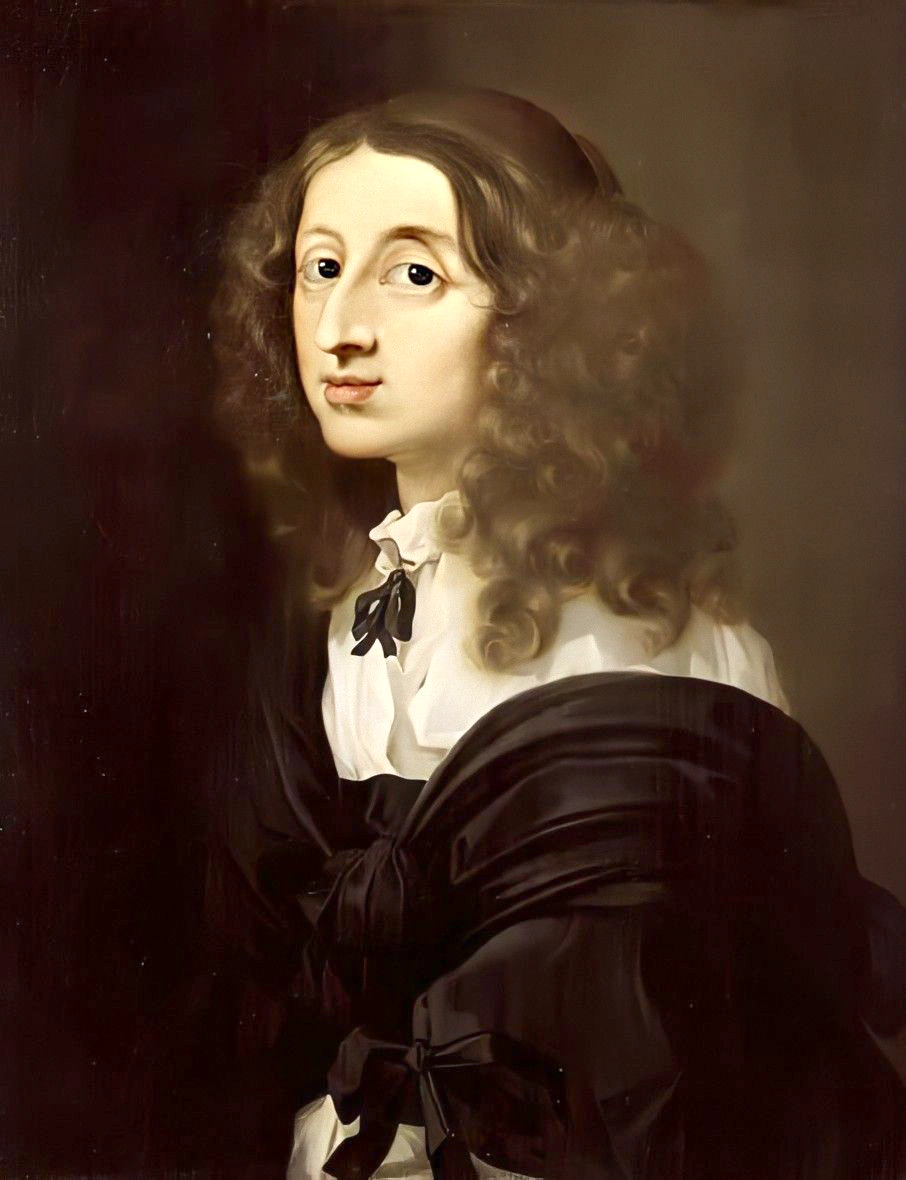
Attr: Sébastien Bourdon, Public domain
| 2 Quotes | |
| Born as | Christina Alexandra |
| Occup. | Royalty |
| From | Sweden |
| Born | December 8, 1626 Tre Kronor Castle, Stockholm |
| Died | April 19, 1689 Rome, Papal States |
| Aged | 62 years |
| Cite | |
Citation Formats
APA Style (7th ed.)
Queen christina biography, facts and quotes. (2026, February 11). FixQuotes. https://fixquotes.com/authors/queen-christina/
Chicago Style
"Queen Christina biography, facts and quotes." FixQuotes. February 11, 2026. https://fixquotes.com/authors/queen-christina/.
MLA Style (9th ed.)
"Queen Christina biography, facts and quotes." FixQuotes, 11 Feb. 2026, https://fixquotes.com/authors/queen-christina/. Accessed 5 Mar. 2026.
Birth and family background
Christina of Sweden was born on 18 December 1626 in Stockholm, the only surviving legitimate child of King Gustavus Adolphus (Gustav II Adolf) and Maria Eleonora of Brandenburg. When Gustavus Adolphus was killed at the Battle of Lutzen in 1632 during the Thirty Years War, the six-year-old princess succeeded to the throne. A regency council governed in her name, led by the powerful chancellor Axel Oxenstierna, who stabilized the realm and preserved Sweden's gains as a rising Baltic power.Education and formation
Raised in a Lutheran court yet encouraged to read broadly, Christina received an unusually rigorous humanist education. Her tutors, including the learned bishop Johannes Matthiae, trained her in Latin, history, philosophy, and statecraft. She cultivated friendships and patronage ties with the Swedish nobility, notably Magnus Gabriel De la Gardie, while developing a lifelong taste for scholarship, theater, and debate. At court she formed a close bond with Ebba Sparre, whose wit and culture made her a favored companion. From an early age Christina declared she would not marry, an aversion that shaped the dynastic politics around her.Accession to personal rule
Christina assumed personal control of government in 1644, while the Thirty Years War still raged. She worked within the constitutional framework the regency had refined but tried to assert a monarch's independent judgement. Crowned in 1650, she styled her rule as that of a learned sovereign. She expanded the nobility, rewarded counselors and favorites, and sought to raise Sweden's profile as a European power, decisions that contributed to mounting fiscal strain.Foreign policy and the Peace of Westphalia
Christina's reign coincided with the negotiation and conclusion of the Peace of Westphalia in 1648, to which she gave consistent support. Swedish plenipotentiaries, including Johan Oxenstierna (son of the chancellor) and Johan Adler Salvius, secured valuable territories and influence in northern Germany, consolidating Sweden as an imperial power along the Baltic. While Sweden's military successes had been secured under her father's campaigns, Christina's ministers translated battlefield advantage into durable diplomatic gains.Court culture and intellectual ambition
Determined to make Stockholm a center of letters, Christina collected books, antiquities, and paintings and corresponded with scholars across Europe. The French ambassador Pierre Chanut became an important conduit for ideas and people. In 1649 she invited Rene Descartes to Sweden to assist in founding an academy and to advise on philosophy; the philosopher's early morning lessons in the winter palace proved taxing, and he died in Stockholm in 1650, an episode that later fed debate about the demands of her court. These years fixed her reputation as a paradoxical ruler: austere in work habits, prodigal in patronage, and impatient with court convention.Succession, finances, and abdication
By the late 1640s Christina faced a cluster of problems: the cost of war and patronage, pressure from the Estates to curtail largesse, and the unresolved question of marriage and succession. In 1649 she persuaded the Estates to accept her cousin Karl Gustav (Charles X Gustav) as heir presumptive. In a carefully staged ceremony at Uppsala Castle on 6 June 1654, she abdicated the throne in his favor. The gesture preserved the Vasa line while freeing her from obligations she increasingly disliked.Conversion and first travels
After abdication Christina left Sweden through the Baltic and Central Europe. In 1655, at Innsbruck, she publicly embraced Roman Catholicism, a step long anticipated by her private reading and conversations with Catholic scholars. The conversion ended any practical hope of reclaiming authority in Lutheran Sweden but opened to her the salons, courts, and academies of Catholic Europe. She visited Brussels and Paris, where she was received by Anne of Austria and Louis XIV and attracted admiration and suspicion in equal measure.The Monaldeschi affair and failed political projects
Her sojourn in France culminated in the notorious execution of her master of the horse, Gian Rinaldo Monaldeschi, in the Galerie des Cerfs at Fontainebleau in 1657, after she accused him of betraying her correspondence. The act shocked the French court and hardened diplomatic attitudes toward her independence. Around the same time, schemes circulated to place her on the throne of Naples, but they came to nothing amid Franco-Spanish rivalry and papal caution.Rome and the making of a cultural court
Rome became Christina's principal home from 1655 onward. Welcomed by Pope Alexander VII, she established a residence at the Palazzo Riario and gathered around herself a circle of cardinals, scholars, and artists. The closest among them was Cardinal Decio Azzolino, a skilled politician whose counsel and friendship sustained her Roman career. She founded an academy often called the Accademia Reale, sponsored philosophical and scientific disputations, and in 1671 opened the Teatro Tordinona, Rome's first public opera house, encouraging new music despite periodic papal censorship. Musicians such as Arcangelo Corelli found in her orbit a discerning patron. Her salons became meeting grounds for antiquarians, poets, and natural philosophers, and the cosmopolitan breadth of her collections, books, manuscripts, coins, and paintings, gave tangible shape to her intellectual ambitions.Returns to the north and later ambitions
Christina returned to the Baltic region more than once. After the death of Charles X Gustav in 1660 she visited Stockholm, where negotiations over her maintenance and status foundered on religious and constitutional limits; she departed again, now fully a European rather than a Swedish politician. She briefly advanced her candidacy for the Polish throne in the 1660s, but without decisive backing her hopes faded. Rome, with occasional stays in the Spanish Netherlands and other Italian cities, remained the center of her life.Character and convictions
Christina cultivated a self-consciously learned and unconventional identity. She dressed plainly by court standards, favored conversation over ceremony, and delighted in paradox. Her refusal to marry confounded dynastic expectation; her letters to Ebba Sparre and others reveal a language of intimate affection unusual for royal correspondence of the time. A sincere Catholic convert, she nevertheless defended a broad liberty of inquiry and prided herself on protecting writers and musicians regardless of origin.Final years, death, and legacy
In her last years Christina remained a fixture of Roman cultural life, now under Pope Innocent XI. She arranged her affairs to benefit institutions she esteemed. When she died in Rome on 19 April 1689, the city honored her with obsequies befitting a sovereign. She was buried in the grottoes of St. Peter's Basilica, one of the few women accorded that distinction. Her splendid library, including many Greek and Latin manuscripts, passed largely to the Vatican Library, where the Reginensis collections still preserve her name, while much of her art and antiquities entered Roman noble collections, notably that of the Odescalchi family.Christina's life traced an arc from warrior-king's daughter to European woman of letters. Around her stood statesmen like Axel Oxenstierna and Charles X Gustav in the north; ambassadors such as Pierre Chanut in France; philosophers like Rene Descartes; and, in Rome, cardinals and artists led by Decio Azzolino and Arcangelo Corelli. Few seventeenth-century rulers shaped their own legend so deliberately. The academy culture that flourished in Rome after her death, including the Arcadian movement founded soon afterward by writers who had frequented her circle, bears lasting witness to the ambition and reach of her curious, cultivated mind.
Our collection contains 2 quotes written by Queen, under the main topics: Wisdom - Self-Improvement.
Other people related to Queen: Greta Garbo (Actress)
Source / external links