
Queen Elizabeth II Biography Quotes 14 Report mistakes
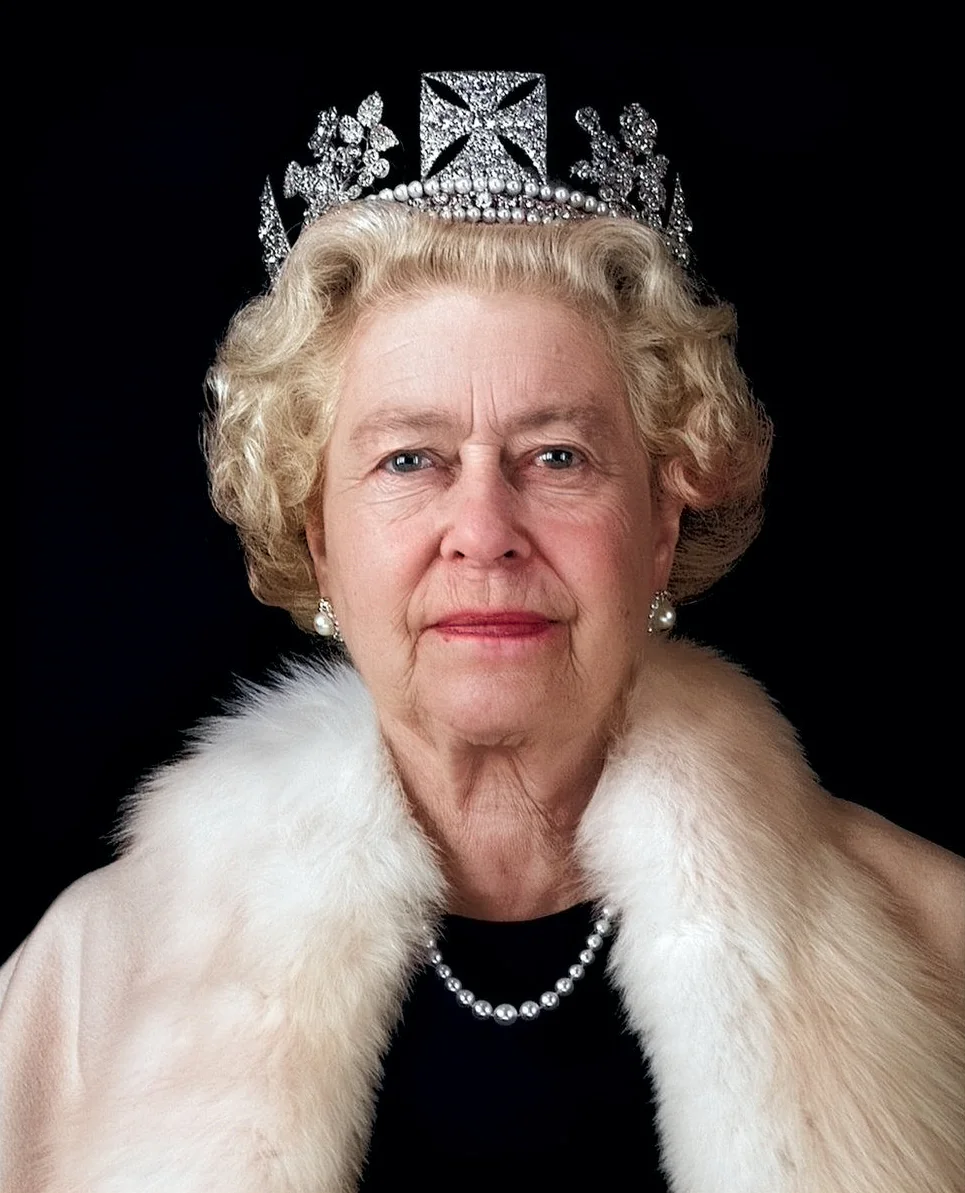
| 14 Quotes | |
| Occup. | Royalty |
| From | England |
| Born | April 21, 1926 London, England |
| Died | September 8, 2022 |
| Aged | 96 years |
| Cite | |
Citation Formats
APA Style (7th ed.)
Queen elizabeth ii biography, facts and quotes. (2026, February 2). FixQuotes. https://fixquotes.com/authors/queen-elizabeth-ii/
Chicago Style
"Queen Elizabeth II biography, facts and quotes." FixQuotes. February 2, 2026. https://fixquotes.com/authors/queen-elizabeth-ii/.
MLA Style (9th ed.)
"Queen Elizabeth II biography, facts and quotes." FixQuotes, 2 Feb. 2026, https://fixquotes.com/authors/queen-elizabeth-ii/. Accessed 25 Mar. 2026.
Early Life and Background
Elizabeth Alexandra Mary Windsor was born on April 21, 1926, in Mayfair, London, the first child of the Duke and Duchess of York (the future George VI and Queen Elizabeth). Her early world was intimate and sheltered - 145 Piccadilly, Windsor, Balmoral - yet already thick with ceremony. As a child she learned to perform steadiness, the family virtue, in public settings where private feeling was never quite allowed to be private.History re-cast her life in 1936: the abdication crisis pushed her father onto the throne, making ten-year-old Elizabeth heir presumptive. The Second World War then pressed the monarchy into a new kind of visibility - radio, newsreels, moral symbolism - while the Blitz made the royal family's presence in London a political statement. By the time she was a teenager, duty was no longer an expectation but an identity, reinforced by the public pledge she gave on her 21st birthday in 1947 to serve throughout her life.
Education and Formative Influences
Elizabeth was educated privately at home, a deliberately traditional preparation shaped by constitutional monarchy rather than academic specialization: history, languages (notably French), and the disciplined routines of court life. Her tutors included Henry Marten of Eton, who trained her in constitutional practice - the red boxes, the distinction between counsel and command, and the limits that make a sovereign powerful chiefly by restraint. Wartime experience added its own curriculum: she joined the Auxiliary Territorial Service in 1945, learning mechanics and driving, a rare taste of ordinary competence that complemented the royal script of composure.Career, Major Works, and Turning Points
She acceded in 1952 and was crowned in 1953, the first coronation televised, aligning ancient ritual with mass media. Over 70 years she reigned through the dismantling of empire, the redefinition of the Commonwealth, and recurring constitutional tests - decolonization, industrial conflict, the Troubles, devolution, Brexit - while maintaining the monarchy's political neutrality. Turning points came when neutrality collided with emotion and public scrutiny: the annus horribilis of 1992; the crisis after Diana's death in 1997; and later, a careful modernization under pressure from tabloid culture and social media. Her "works" were less authored texts than constitutional performances - weekly audiences with prime ministers from Churchill to Truss, state visits, wartime and pandemic broadcasts, and the continuous, calibrated use of symbolism to keep the institution legible.Philosophy, Style, and Themes
Elizabeth II's governing philosophy was pragmatic faith in continuity: the crown as a stabilizing form, not an agenda. She acknowledged the oddity at the heart of her office without trying to explain it away, admitting that “The British Constitution has always been puzzling and always will be”. That candor reveals a psychological method - accept complexity, reduce drama, proceed anyway. Her style was the visible discipline of the impersonal: measured speech, controlled facial affect, and a preference for understatement that made rare moments of direct feeling unusually potent.Her language repeatedly returned to service, reconciliation, and the moral labor of belonging. At her coronation she framed sovereignty as obligation, insisting, “Therefore I am sure that this, my Coronation, is not the symbol of a power and a splendor that are gone but a declaration of our hopes for the future, and for the years I may, by God's Grace and Mercy, be given to reign and serve you as your Queen”. Yet she also understood that public life exacts private costs; in one of her most quoted lines, she distilled mourning into a credo: “Grief is the price we pay for love”. Read psychologically, these sentences map her inner bargain - affection expressed through duty, grief borne as proof of attachment, and hope sustained by ritual. Her Christianity was neither theatrical nor merely ceremonial; it functioned as an inner technology for endurance, translating personal vulnerability into serviceable public meaning.
Legacy and Influence
Elizabeth II died on September 8, 2022, at Balmoral Castle, closing an era in which her presence became a kind of national weather - steady, sometimes distant, always assumed. Her influence lies in how she refashioned monarchy from imperial centerpiece to constitutional witness, using consistency, selective modernization, and carefully timed emotion to keep the institution viable amid accelerating cultural change. For admirers, she modeled duty as a lifelong craft; for critics, she embodied inherited privilege and the unresolved histories of empire. Either way, her reign left a template for symbolic leadership in a media-saturated democracy: authority maintained not by command, but by endurance, restraint, and the disciplined conversion of private life into public service.Our collection contains 14 quotes written by Queen, under the main topics: Wisdom - Leadership - Peace - Servant Leadership - Legacy & Remembrance.
Other people related to Queen: Prince William (Royalty), Prince Harry (Royalty), Maryon Pearson (Statesman), Kate Middleton (Celebrity), Princess Anne (Royalty), Helen Clark (Statesman), Frederick Forsyth (Author), Emperor Hirohito (Royalty), Dominic West (Actor), Jan Morris (Writer)