
Queen Victoria Biography Quotes 15 Report mistakes
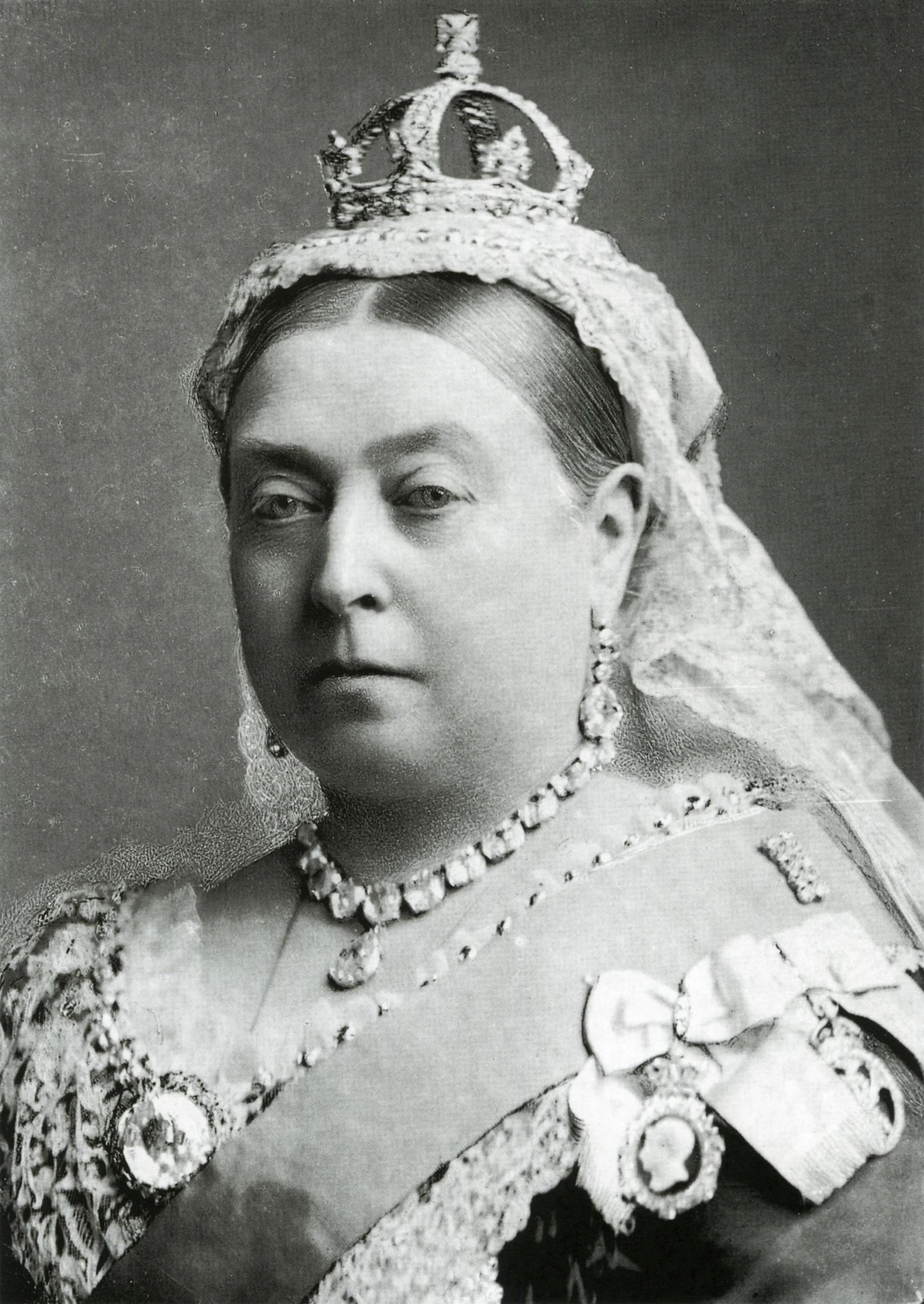
| 15 Quotes | |
| Born as | Alexandrina Victoria |
| Occup. | Royalty |
| From | United Kingdom |
| Born | May 24, 1819 Kensington Palace, London |
| Died | January 22, 1901 Osborne House, Isle of Wight |
| Aged | 81 years |
| Cite | |
Citation Formats
APA Style (7th ed.)
Queen victoria biography, facts and quotes. (2026, February 11). FixQuotes. https://fixquotes.com/authors/queen-victoria/
Chicago Style
"Queen Victoria biography, facts and quotes." FixQuotes. February 11, 2026. https://fixquotes.com/authors/queen-victoria/.
MLA Style (9th ed.)
"Queen Victoria biography, facts and quotes." FixQuotes, 11 Feb. 2026, https://fixquotes.com/authors/queen-victoria/. Accessed 6 Mar. 2026.
Early Life and Background
Alexandrina Victoria was born on May 24, 1819, at Kensington Palace in London, the only child of Prince Edward, Duke of Kent (a son of George III), and Princess Victoria of Saxe-Coburg-Saalfeld. Her position in the line of succession was initially uncertain, but a cascade of deaths among George III's sons left the small, brown-haired princess unexpectedly close to the crown. Her father died of pneumonia in January 1820, leaving her mother a widowed foreign princess with limited money, fragile political standing, and a single, immensely consequential child.Victoria's childhood was shaped by seclusion and scrutiny. Under the "Kensington System", devised by her mother's comptroller Sir John Conroy, she lived with constant supervision, rigid schedules, and the expectation that dependence could be converted into future influence. The loneliness of that regime sharpened her will: she learned early to treat affection, access, and even family life as matters entangled with power. By her teens she was already practicing the stance that would define her reign - to be looked at, judged, and courted, while quietly judging back.
Education and Formative Influences
Tutored at Kensington, Victoria was educated for duty more than display: English history, constitutional principles, geography, music, and languages (notably French and German), with a strict moral cast. The decisive intellectual formation came from Lord Melbourne, the Whig prime minister who became her political mentor after her accession in 1837. From him she learned the arts of constitutional monarchy - to ask, to delay, to write, to remember - while maintaining the sovereign's prerogatives within the new reality of party government. Her private journals, begun in youth and continued obsessively, became both a workshop of self and a running record of how feeling could be disciplined into statecraft.Career, Major Works, and Turning Points
Victoria became queen on June 20, 1837, at 18, severing Conroy's hopes and establishing her own household. The early reign saw the Bedchamber Crisis (1839), revealing how personal intimacy and political authority could collide even in a constitutional system; it also brought repeated assassination attempts (1840-1849), which she survived with a mixture of fear, defiance, and public theater. Her marriage to Prince Albert of Saxe-Coburg and Gotha in 1840 transformed the monarchy: Albert acted as organizer, editor, and modernizer, championing the Great Exhibition of 1851 and pressing a reforming, morally earnest public image. Their partnership produced nine children and a pan-European dynastic web, while her long reign encompassed industrial acceleration, imperial expansion, and contentious reforms - from the 1832 and 1867 Reform Acts' aftermath to Irish crises, the Crimean War, and the rise of mass politics. Albert's death in 1861 broke her, triggering years of withdrawal; later she re-emerged, cultivated links with Disraeli, accepted the title Empress of India in 1876, and navigated the monarchy into the age of newspapers, railways, and global prestige. Her principal "works" were political: tens of thousands of letters, memoranda, and audiences that helped set the monarchy's tone, and the carefully managed domestic ideal she projected as national myth.Philosophy, Style, and Themes
Victoria's inner life was an argument between appetite and discipline. She craved intimacy yet feared dependence, loved ritual yet resented intrusion, and measured people with an almost managerial candor: “The important thing is not what they think of me, but what I think of them”. That sentence is less arrogance than defensive architecture - the self-protective inversion of a life spent on display. It also captures her governing style: relentless evaluation of ministers, courtiers, and relatives, recorded in brisk marginalia and letters, as if classification could keep emotion from overwhelming the office.Her themes were domesticity, hierarchy, and moral order - and her blind spots were as instructive as her virtues. She could be fiercely protective of women as individuals (especially in cases of violence), yet hostile to organized claims for equality, writing with startling heat: “The Queen is most anxious to enlist everyone in checking this mad, wicked folly of 'Women's Rights'”. The psychology beneath it is inseparable from her own experience of exceptional female power: she treated her authority as personal destiny rather than transferable principle, and she feared that politicized gender would unmake the family model on which she had rebuilt the monarchy after Georgian scandal. Even her humor and maternal frankness reveal how she turned private life into governance: “Being pregnant is an occupational hazard of being a wife”. In her mind, duty was not abstract - it was bodily, repetitive, and costly, and that realism lent her public virtue both credibility and severity.
Legacy and Influence
Victoria died on January 22, 1901, at Osborne House on the Isle of Wight, after 63 years on the throne - a reign that became shorthand for an era. The "Victorian" label endures because she helped fuse monarchy with middle-class respectability while presiding over a Britain remade by industry, empire, and reform. Her descendants sat on European thrones, her papers shaped how later generations imagined constitutional royalty, and her example - grieving widow, dutiful sovereign, stubborn moralist - became a template monarchs still negotiate, whether by imitation or rejection.Our collection contains 15 quotes written by Queen, under the main topics: Witty One-Liners - Wisdom - Art - Never Give Up - Parenting.
Other people related to Queen: Wilhelm II (Statesman), Charles Kingsley (Clergyman), Carry Nation (Activist), Anna Neagle (Actress), Elizabeth II (Royalty), Arthur Helps (Historian), Philip Guedalla (Historian), Henry Morton Stanley (Explorer), Norman Macleod (Writer), Edward Lear (Artist)
Source / external links