
Quentin Tarantino Biography Quotes 39 Report mistakes
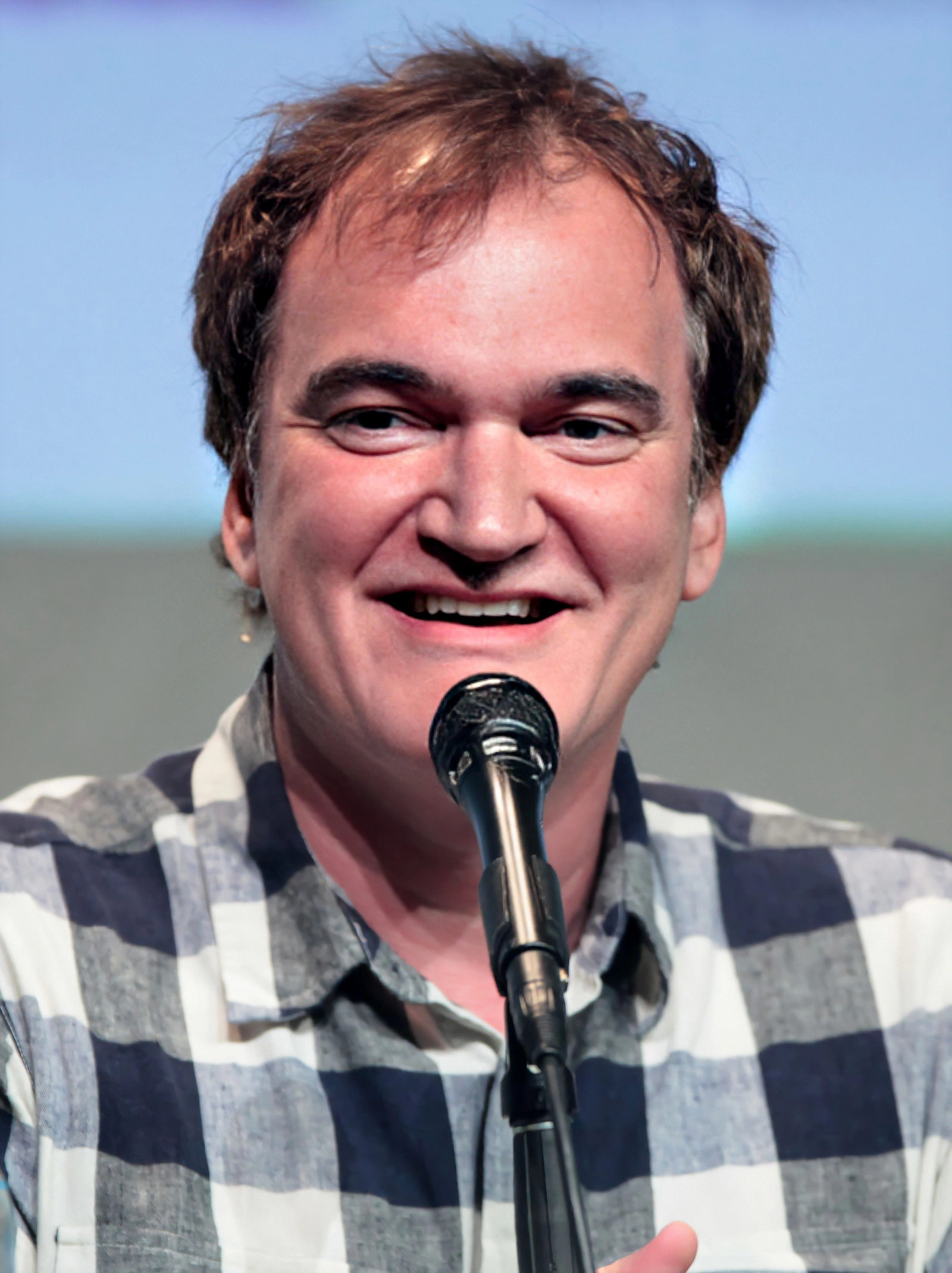
| 39 Quotes | |
| Occup. | Director |
| From | USA |
| Born | March 27, 1963 |
| Age | 62 years |
| Cite | |
Citation Formats
APA Style (7th ed.)
Quentin tarantino biography, facts and quotes. (2026, February 11). FixQuotes. https://fixquotes.com/authors/quentin-tarantino/
Chicago Style
"Quentin Tarantino biography, facts and quotes." FixQuotes. February 11, 2026. https://fixquotes.com/authors/quentin-tarantino/.
MLA Style (9th ed.)
"Quentin Tarantino biography, facts and quotes." FixQuotes, 11 Feb. 2026, https://fixquotes.com/authors/quentin-tarantino/. Accessed 11 Feb. 2026.
Early Life and Background
Quentin Jerome Tarantino was born March 27, 1963, in Knoxville, Tennessee, and raised primarily in Los Angeles by his mother, Connie McHugh. He grew up without a stable relationship with his father, Tony Tarantino, and often spoke of childhood as a time of intense observing - of adults, of voices, of how power moves through a room. Southern California in the 1970s offered him a rough education in pop culture as a shared language: television, grindhouse marquees, neighborhood movie theaters, and the heat of car radios became his vernacular before he had professional craft.Los Angeles also gave him a double consciousness: glamour always nearby, and the working-class reality of getting through the week. That tension later reappeared in his films as a fascination with people performing roles - criminals acting tough, lovers acting cool, professionals pretending they are not afraid - until violence or tenderness punctures the mask. Early jobs and aimless stretches did not read to him as detours so much as material: the kinds of days where you memorize dialogue, store up grudges, and measure yourself against legends you have never met.
Education and Formative Influences
Tarantino did not take the conventional academic route. He left formal schooling early and remade himself through self-directed study, devouring films across genres and eras while living in the orbit of Los Angeles movie culture. In the late 1980s he worked at Video Archives in Manhattan Beach, where conversation functioned like a seminar - arguing cuts, actors, directors, and the invisible mechanics of why one scene sings and another dies. This period shaped his inner discipline: he trained his memory, sharpened his ear for vernacular speech, and built a private canon that treated pulp, arthouse, and exploitation as parts of the same language.Career, Major Works, and Turning Points
After writing scripts in obscurity, Tarantino broke through when True Romance (script sold 1991; film released 1993) and Natural Born Killers (script later heavily rewritten; film 1994) signaled a new voice in American cinema. He then arrived as a director with Reservoir Dogs (1992), a contained heist aftermath that used talk, suspense, and sudden brutality as equal instruments. Pulp Fiction (1994) became the turning point: nonlinear structure, charismatic profanity, and pop-mythmaking won the Palme d'Or at Cannes and reshaped 1990s independent film economics. He expanded his canvas with Jackie Brown (1997), then returned to operatic violence and genre synthesis in Kill Bill: Vol. 1 (2003) and Vol. 2 (2004). Later works - Death Proof (2007), Inglourious Basterds (2009), Django Unchained (2012), The Hateful Eight (2015), and Once Upon a Time in Hollywood (2019) - deepened his preoccupation with performance, revenge, and alternate history, while affirming him as a director whose name functions like a brand: dialogue-driven, music-sculpted, and unapologetically cinematic.Philosophy, Style, and Themes
Tarantino builds movies out of devotion and combat: devotion to the pleasures of genre, and combat against blandness, condescension, and safe taste. His famous candor about influence is not a confession but an aesthetic program - "I steal from every movie ever made". In his hands, borrowing becomes transformation: a shot, riff, or rhythm is not quoted to flatter the source but recontextualized until it carries new emotional charge. He has repeatedly pointed to the mythic clarity and moral geometry of Leone - "Sergio Leone was a big influence on me because of the spaghetti westerns". - and you can see it in his widescreen standoffs, his patience before gunfire, and his belief that music can turn waiting into suspense.Under the surface pyrotechnics sits a storyteller who distrusts prestige for prestige's sake. His long scenes are built like oral tales, full of detours that test whether an audience will stay with the voice. "I like it when somebody tells me a story, and I actually really feel that that's becoming like a lost art in American cinema". That hunger for narrative control links to his psychology: an only-child intensity, a need to hold the room, and a craftsman's pride in delivering payoff. His films repeatedly ask who gets to write the script of history, who gets to be remembered, and what violence does to the people who talk the most - characters whose chatter is armor until it is suddenly not.
Legacy and Influence
Tarantino helped redefine late-20th-century American filmmaking by proving that cinephilia could be commercial, that talk could be action, and that independent films could look and sound as bold as studio spectacles. He revived and repurposed careers (notably John Travolta, Pam Grier, Robert Forster) and elevated actors through role-defining collaborations (Samuel L. Jackson, Uma Thurman, Christoph Waltz, Leonardo DiCaprio, Brad Pitt). His fingerprints are everywhere in post-1994 cinema: nonlinear crime narratives, needle-drop soundtracks, self-aware genre mashups, and dialogue that treats pop trivia as character psychology. Controversies around violence, race, and representation remain part of his public story, but so does his enduring accomplishment: he made films that feel like arguments for cinema itself, insisting that style is not decoration but destiny.Our collection contains 39 quotes written by Quentin, under the main topics: Motivational - Wisdom - Dark Humor - Music - Writing.
Other people related to Quentin: David Carradine (Actor), Jean-Luc Godard (Director), Daryl Hannah (Actress), Jennifer Jason Leigh (Actress), Ennio Morricone (Composer), Chiaki Kuriyama (Actress), Sydney Sweeney (Actress), Dick Dale (Musician), Diane Kruger (Model), Steve Buscemi (Actor)