
Quintus Ennius Biography Quotes 8 Report mistakes
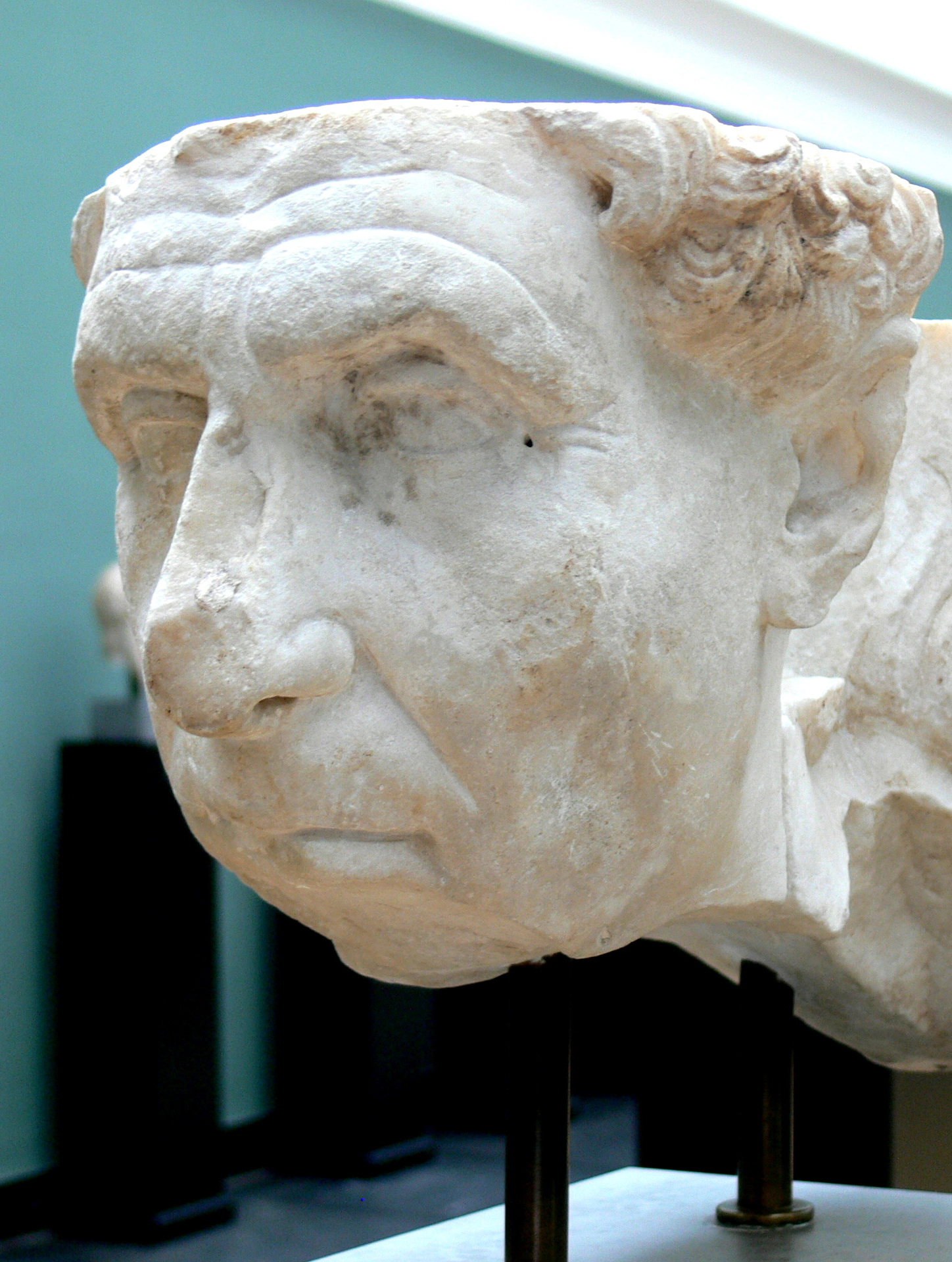
| 8 Quotes | |
| Occup. | Poet |
| From | Rome |
| Born | 239 BC Rome, Italy |
| Died | 169 BC Rome, Italy |
| Cite | |
Citation Formats
APA Style (7th ed.)
Quintus ennius biography, facts and quotes. (2026, February 11). FixQuotes. https://fixquotes.com/authors/quintus-ennius/
Chicago Style
"Quintus Ennius biography, facts and quotes." FixQuotes. February 11, 2026. https://fixquotes.com/authors/quintus-ennius/.
MLA Style (9th ed.)
"Quintus Ennius biography, facts and quotes." FixQuotes, 11 Feb. 2026, https://fixquotes.com/authors/quintus-ennius/. Accessed 5 Mar. 2026.
Early Life and Background
Quintus Ennius was born around 239 BCE at Rudiae in Calabria, a borderland of languages and loyalties in the heel of Italy. Later writers called him "trilingual" - at home among Oscan, Greek, and Latin - and that fact is not trivia but a clue to his inner makeup: he was formed in an Italy where Roman power was expanding faster than Roman literary culture could name itself. He came of age as the Republic braced against Carthage, and the pressure of war and empire made questions of identity acute: who counted as Roman, and what kind of memory could hold a widening world together?Ennius arrived in Rome not as an aristocrat but as a professional of words, the sort of man a conquering city needed and distrusted. Tradition places him serving in Sardinia as a soldier before being brought to Rome by Marcus Porcius Cato in 204 BCE - an origin story that already contains the tensions of his career. He lived in an era when patronage was a tool of politics, and a poet who could translate Greek prestige into Latin authority could become both useful and dangerous. Rome in Ennius' lifetime was remaking the Mediterranean; Ennius set out to remake Rome's self-understanding.
Education and Formative Influences
His education was as much cultural as scholastic: he absorbed Hellenic literary forms and philosophical habits, then tested how far Latin could be stretched to carry them. He admired Homer not only for narrative sweep but for the idea that poetry could be a public archive, a "memory machine" for a people; he also took from Greek tragedy and satire a taste for moral argument and sharp social observation. The result was a temperament drawn to big structures - epic history, civic exempla, ethical maxims - yet restless with inherited diction, pushing Latin toward a new, more elastic register.Career, Major Works, and Turning Points
Ennius became the central poetic voice of mid-Republican Rome. His masterpiece, the Annales, in eighteen books, recast Roman history as epic, famously adopting Greek-style dactylic hexameter and beginning with the Trojan roots of Rome before moving through the Republic's wars; it offered a continuous narrative of national destiny in a meter that sounded like the prestige of Homer. He also wrote tragedies (often adapted from Euripides), praetextae on Roman subjects, and a medley of other works known from fragments, including the Satires and the philosophical-tinged Euhemerus. Key turning points were his integration into elite circles - especially the Scipionic milieu - and his success in making Greek forms feel Roman rather than imported. If Naevius had fought Rome with satire, Ennius tried to give Rome a mirror it could admire without flinching.Philosophy, Style, and Themes
Ennius' psychology comes through in the way he treats poetry as both civic service and personal afterlife. His famous confidence that renown outlives the body is not mere vanity but a doctrine of cultural permanence: “Let no one weep for me, or celebrate my funeral with mourning; for I still live, as I pass to and fro through the mouths of men”. In a Republic that prized ancestral masks and family fame, Ennius asserted a different immortality, one earned through language rather than lineage. That stance helped a provincial newcomer claim a place among Rome's ruling memories.Yet he was no simple court-poet. Ennius wrote with a moralist's bite and a realist's caution about power, fear, and public speech. His maxim “They hate whom they fear”. reads like a distilled lesson from Rome's competitive politics, where friendship could be tactical and suspicion a kind of currency. Likewise, “To open his lips is crime in a plain citizen”. suggests a poet acutely aware of the risks of speaking truth in a hierarchical society - and of why poetry, with its masks and meters, can say what ordinary prose cannot. Stylistically he favored compressed sententiae, striking archaisms, and a forward-driving narrative line; thematically he welded Roman exemplum to Greek-scale reflection, turning battles and councils into laboratories of character.
Legacy and Influence
Ennius stood for centuries as Rome's foundational epicist: the poet who taught Latin to sound like history and history to sound like fate. Though later eclipsed by Virgil, he supplied the template Virgil refined - national epic as moral education, hexameter as the language of state memory, and the poet as custodian of Rome's meaning. Fragments of his lines haunted Roman schooling and rhetoric, and his influence traveled through Cicero's admiration and the tragic tradition into the whole idea that Roman identity could be authored. In making a Republic's wars into a coherent story, Ennius helped invent the cultural Rome that later Romans believed had always existed.Our collection contains 8 quotes written by Quintus, under the main topics: Witty One-Liners - Wisdom - Freedom - Honesty & Integrity - Legacy & Remembrance.
Quintus Ennius Famous Works
- -166 Ambracia (Tragedy)
- -170 Protrepticus (Poetry)
- -179 The Euhemerus (Philosophical poem)
- -180 The Epicharmus (Philosophical poem)
- -180 Saturae (Satire)
- -180 Hedyphagetica (Poetry)
- -202 Annales (Poetry)
Source / external links