
R. D. Laing Biography Quotes 20 Report mistakes
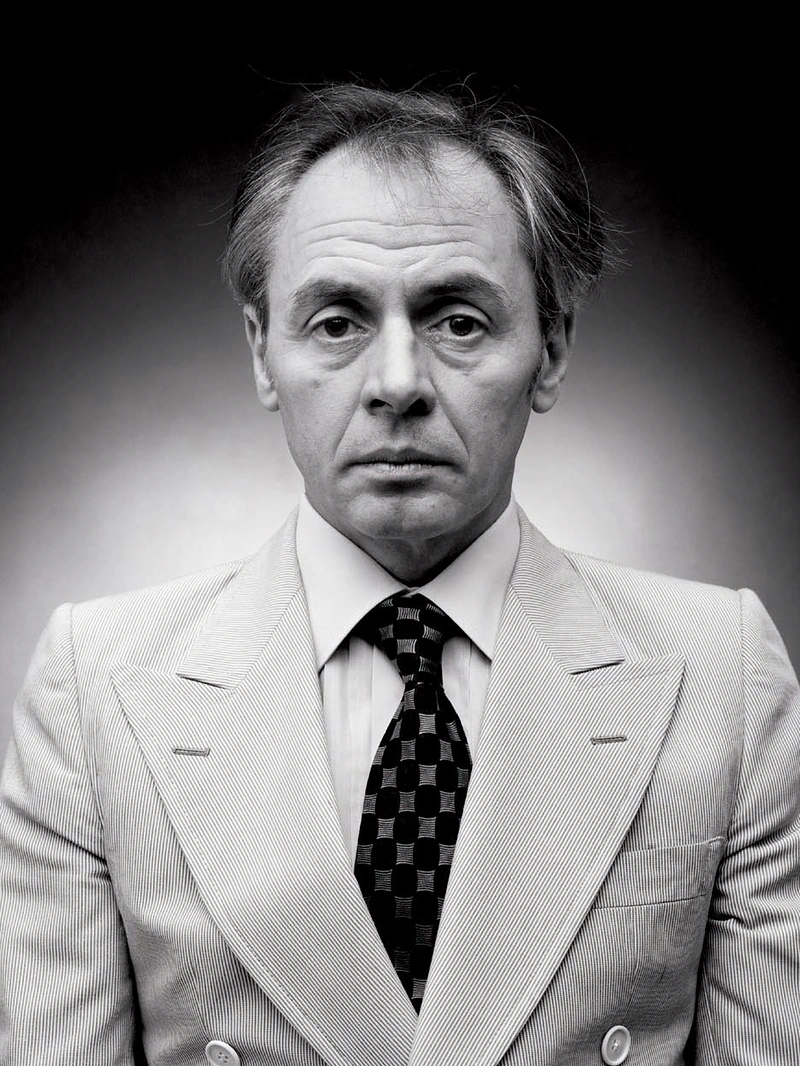
Attr: Hag's Photography
| 20 Quotes | |
| Born as | Ronald David Laing |
| Occup. | Psychologist |
| From | Scotland |
| Born | October 7, 1927 Glasgow, Scotland |
| Died | August 23, 1989 London, England |
| Cause | Heart attack |
| Aged | 61 years |
| Cite | |
Citation Formats
APA Style (7th ed.)
R. d. laing biography, facts and quotes. (2026, February 11). FixQuotes. https://fixquotes.com/authors/r-d-laing/
Chicago Style
"R. D. Laing biography, facts and quotes." FixQuotes. February 11, 2026. https://fixquotes.com/authors/r-d-laing/.
MLA Style (9th ed.)
"R. D. Laing biography, facts and quotes." FixQuotes, 11 Feb. 2026, https://fixquotes.com/authors/r-d-laing/. Accessed 5 Mar. 2026.
Early Life and Background
Ronald David Laing was born on October 7, 1927, in Govanhill, Glasgow, an industrial city marked by Depression-era hardship, sectarian tension, and the aftershocks of World War I. He grew up in a working- to lower-middle-class household with a father employed in engineering and a family atmosphere he later described as emotionally constricted and steeped in moral vigilance. Glasgow in the 1930s and 1940s offered Laing a daily lesson in how private suffering could be hidden behind respectable routines, and how fear, shame, and authority could govern intimate life as surely as any law.As a teenager he gravitated to music, philosophy, and the careful study of speech and silence - early signs of the meticulous listener he would become. The Second World War and its aftermath formed the larger weather of his youth: rationing, trauma, and the reorganization of British institutions, including medicine. For Laing, the era sharpened a lifelong suspicion that societies could normalize coercion while calling it care, and that "sanity" often meant adaptation to unspoken rules rather than genuine well-being.
Education and Formative Influences
Laing studied medicine at the University of Glasgow, graduating in the early 1950s, and trained in psychiatry during a period when British mental hospitals were still dominated by custodial routines even as new somatic treatments and the first antipsychotic drugs arrived. Service in the Royal Army Medical Corps and subsequent hospital posts brought him into close contact with psychosis, institutional power, and the gap between clinical labels and lived experience. Intellectually he drew on existential and phenomenological currents - Kierkegaard, Nietzsche, Heidegger, Sartre, and especially interpersonal and phenomenological psychiatry - while also absorbing psychoanalytic ideas without becoming a doctrinaire Freudian. The central formative influence was methodological: the conviction that one must attempt to understand a person's world from the inside, not merely classify it from the outside.Career, Major Works, and Turning Points
By the late 1950s and early 1960s Laing emerged as a galvanizing, polarizing figure in British psychiatry, working in Glasgow and then London while publishing work that challenged the reigning medical model of severe mental illness. His breakthrough book, "The Divided Self" (1960), argued that psychotic experience could be approached as intelligible strategies for survival under unbearable interpersonal conditions, not simply as meaningless defect; it made him a leading voice in what came to be called anti-psychiatry, though he resisted the label. "Self and Others" (1961), "Sanity, Madness and the Family" (with Aaron Esterson, 1964), and "The Politics of Experience" (1967) extended his critique of the family as a field of conflicting demands and of psychiatry as an arm of social control. A practical turning point came with Kingsley Hall (mid-1960s), an experimental therapeutic community associated with the Philadelphia Association, where conventional hospital hierarchy was minimized and residents and clinicians lived together - an attempt to test whether psychosis could be met with companionship rather than containment. Fame, controversy, and the counterculture amplified his reach, but also intensified the personal strains and professional backlash that would mark his later decades.Philosophy, Style, and Themes
Laing's central preoccupation was the relationship between suffering and social context: how a person comes to experience the self as unsafe, watched, or unreal, and how families and institutions can unwittingly ratify that terror. His writing mixed clinical vignette, philosophical argument, and moral indictment, insisting that diagnostic certainty often concealed failures of attention. “The range of what we think and do is limited by what we fail to notice. And because we fail to notice that we fail to notice, there is little we can do to change; until we notice how failing to notice shapes our thoughts and deeds”. In that sentence lies his psychology of everyday blindness: defenses and conventions are not merely personal habits but shared agreements that decide what can be spoken, what must be denied, and who gets defined as "ill".He treated psychosis less as an alien invasion than as a desperate attempt at meaning when ordinary language and trust collapse. “Schizophrenia cannot be understood without understanding despair”. The claim was not sentimental; it was a rebuke to clinical detachment that reduced anguish to symptoms, and it exposed Laing's own emotional seriousness - his tendency to read madness as a verdict on the environment as well as on the mind. Yet he was wary of romanticizing breakdown, framing crisis as dangerous and ambivalent: “Madness need not be all breakdown. It may also be break-through. It is potential liberation and renewal as well as enslavement and existential death”. His style, at once lyrical and prosecutorial, sought to restore moral complexity to encounters that modern psychiatry often streamlined into compliance, risk management, and medication.
Legacy and Influence
Laing died on August 23, 1989, leaving a legacy that is both indispensable and contested. He helped push psychiatry toward listening: toward phenomenological description, patient narratives, and attention to family dynamics and institutional power - currents that fed therapeutic community movements, parts of family therapy, and later recovery-oriented mental health advocacy. Critics faulted him for overextending social explanations of psychosis, underplaying biology, and allowing charisma to outrun evidence; admirers credit him with humanizing a field that too often confused management with understanding. In the long view, Laing endures not as the man who "solved" schizophrenia, but as the thinker who made it harder to dismiss extreme experience as mere defect, and who insisted that the ethics of care begin with taking another person's reality seriously.Our collection contains 20 quotes written by D. Laing, under the main topics: Witty One-Liners - Ethics & Morality - Wisdom - Love - Mortality.