
Rabindranath Tagore Biography Quotes 45 Report mistakes
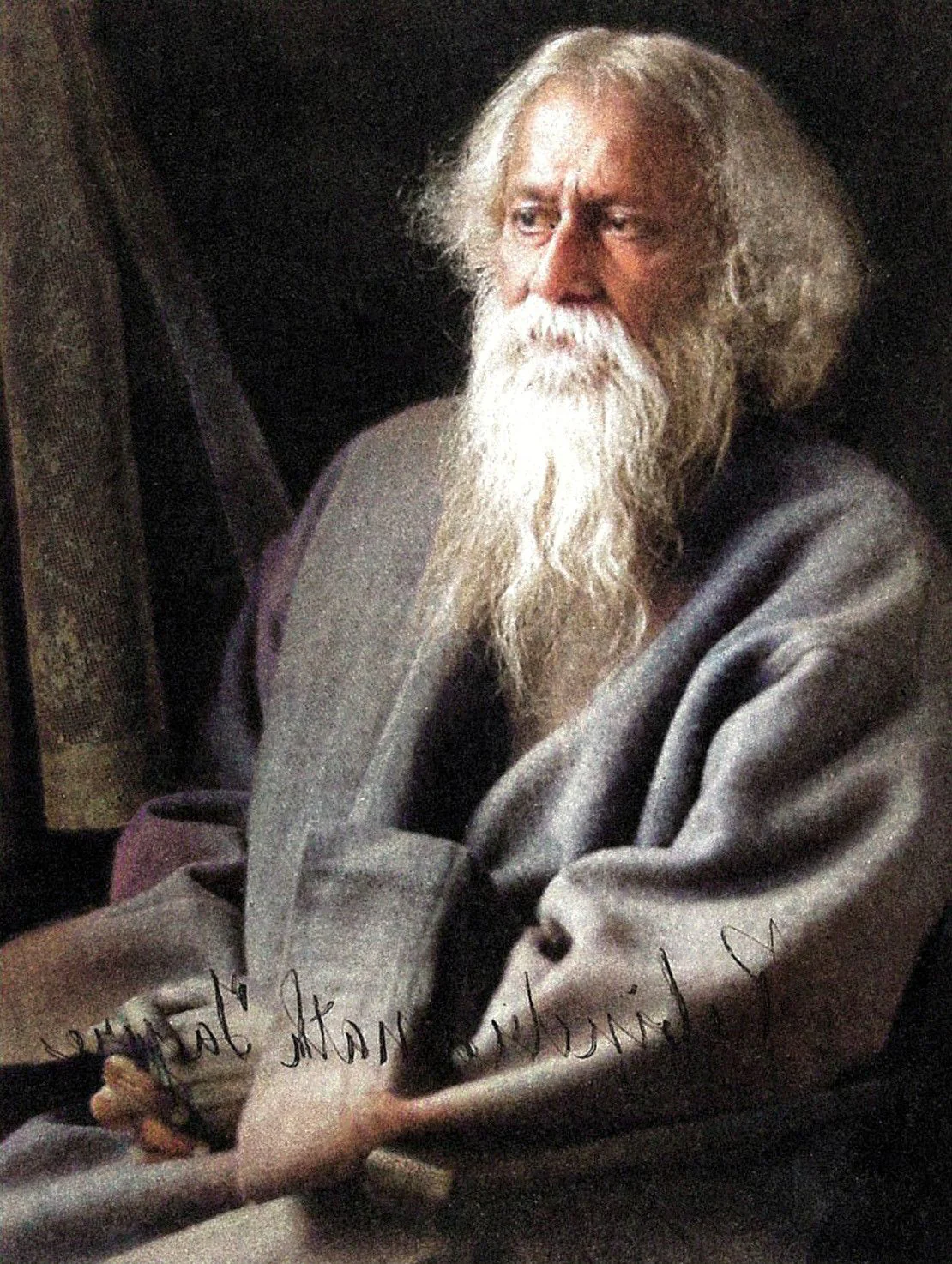
| 45 Quotes | |
| Occup. | Poet |
| From | India |
| Born | May 6, 1861 Jorasanko mansion, Calcutta, India |
| Died | August 7, 1941 |
| Aged | 80 years |
| Cite | |
Citation Formats
APA Style (7th ed.)
Rabindranath tagore biography, facts and quotes. (2026, February 2). FixQuotes. https://fixquotes.com/authors/rabindranath-tagore/
Chicago Style
"Rabindranath Tagore biography, facts and quotes." FixQuotes. February 2, 2026. https://fixquotes.com/authors/rabindranath-tagore/.
MLA Style (9th ed.)
"Rabindranath Tagore biography, facts and quotes." FixQuotes, 2 Feb. 2026, https://fixquotes.com/authors/rabindranath-tagore/. Accessed 4 Mar. 2026.
Early Life and Background
Rabindranath Tagore was born on 1861-05-06 in Calcutta (now Kolkata) into the affluent, reformist Tagore family of Jorasanko, a household that sat at the crossroads of the Bengal Renaissance. His father, Debendranath Tagore, was a leader in the Brahmo Samaj, and the family mansion functioned as a salon where theater, music, religious debate, and nationalist argument mingled with Western education. In a city shaped by British imperial administration and a newly assertive Bengali intelligentsia, Tagore absorbed both the privileges and the psychic frictions of colonial modernity.Childhood for Tagore was marked by solitude and observation rather than the routines of conventional schooling. He wandered through the Jorasanko grounds, watched servants and relatives move through a dense social world, and began writing early. His mother, Sarada Devi, died when he was young, and the emotional atmosphere of a large, hierarchical household - intimate yet impersonal - fed a lifelong preoccupation with longing, separation, and the search for a home that was spiritual as much as domestic.
Education and Formative Influences
Tagore resisted classroom regimentation, learning instead through private tutors, family mentorship, and voracious reading of Bengali, Sanskrit, and English literature. In 1878 he traveled to England, briefly studying law at University College London, but the deeper education came from contact with Romantic poetry, European music, and cosmopolitan debate, which he filtered through the Upanishads and the Brahmo ideal of a formless, ethical divinity. Returning to India without a degree, he carried a conviction that true culture must be lived - in language, land, and community - not merely certified.Career, Major Works, and Turning Points
Tagore published poems as a teenager and matured into a writer who remade Bengali lyric, song, short fiction, and drama while also becoming a public moral voice. He managed family estates in East Bengal in the 1890s, where riverine village life sharpened his social vision and produced stories later gathered in collections such as Galpaguchchha. His international breakthrough came with Gitanjali (Song Offerings), which he translated into English; the book and his London lectures helped earn him the 1913 Nobel Prize in Literature, the first awarded to a non-European. The upheavals of empire shaped his turning points: after the 1919 Jallianwala Bagh massacre he renounced his British knighthood, and he pursued an alternative institution-building politics through Santiniketan and Visva-Bharati University, founded to unite Indian and world learning. In later decades he wrote major prose and poetry, including the novel Gora and works such as Ghare-Baire (The Home and the World), while composing songs that became the national anthems of India and Bangladesh.Philosophy, Style, and Themes
Tagore's inner life was a disciplined attempt to reconcile sensuous beauty with ethical responsibility. His work treats the self not as an isolated ego but as a porous participant in relationship - with nature, with other people, and with a reality larger than any sect. He distrusted moral activism that hardens into vanity, warning that “He who is too busy doing good finds no time to be good”. The line reads like a self-check against the temptations of celebrity and political posturing that he knew intimately after the Nobel Prize turned him into a global emblem.His style moves between songlike simplicity and philosophical density, often using river, sky, and seasons as instruments for metaphysics. Love, for Tagore, is not ownership but release, a psychology of generosity that resists both patriarchal control and nationalist possession: “Love does not claim possession, but gives freedom”. Even his meditations on mortality refuse nihilism; they convert loss into a changed kind of presence, as in “Death is not extinguishing the light; it is only putting out the lamp because the dawn has come”. Across poems, stories, and essays, he stages the drama of a mind trying to stay tender without becoming naive, and universal without turning abstract.
Legacy and Influence
Tagore died on 1941-08-07 in Calcutta, leaving an oeuvre that still sets the standard for Bengali literature and a model of the poet as institution-builder, educator, and conscience. His songs (Rabindra Sangeet) remain a living repertoire; his fiction helped define the modern Indian short story; and his essays on nationalism, education, and civilization continue to provoke debate for their refusal of chauvinism alongside their insistence on cultural self-respect. Visva-Bharati endures as a monument to his belief in learning as encounter, and his global afterlife - through translation, performance, and political memory - keeps renewing the question that drove him: how to inhabit modernity without surrendering the soul.Our collection contains 45 quotes written by Rabindranath, under the main topics: Motivational - Ethics & Morality - Wisdom - Truth - Art.
Other people related to Rabindranath: Amartya Sen (Philosopher), Xu Zhimo (Poet)
Frequently Asked Questions
- Rabindranath Tagore works and achievements: Tagore's major works include 'Gitanjali,' 'Gora,' and 'The Home and the World.' He was the first Asian to win the Nobel Prize in Literature and composed India's national anthem.
- Rabindranath Tagore story: One of Tagore's well-known stories is 'Kabuliwala,' which explores the theme of the emotional bond between a father and a daughter, transcending cultural and national boundaries.
- Rabindranath Tagore date of death: Rabindranath Tagore died on August 7, 1941.
- Rabindranath Tagore biography in English project: A project on Rabindranath Tagore’s biography might include his literary contributions, philosophical views, his role in Indian society, and his lasting impact on arts and education.
- Rabindranath Tagore biography in English short note: Rabindranath Tagore was an influential Indian poet and polymath known for his profound works including 'Gitanjali.' He won the Nobel Prize in Literature in 1913 and was also a promoter of Indian culture and education.
- Rabindranath Tagore born: Rabindranath Tagore was born on May 7, 1861, in Calcutta, India.
- Rabindranath Tagore summary: Rabindranath Tagore was an Indian poet, writer, composer, and philosopher who reshaped Bengali literature and music in the late 19th and early 20th centuries. He became the first non-European to win the Nobel Prize in Literature in 1913.
- How old was Rabindranath Tagore? He became 80 years old
Rabindranath Tagore Famous Works
- 1922 Muktadhara (Play)
- 1916 Hungry Stones and Other Stories (Short Story Collection)
- 1916 The Home and the World (Novel)
- 1912 The Post Office (Play)
- 1910 Gitanjali (Book)
- 1903 Chokher Bali (Novel)
- 1898 Muktadhara (Short Story Collection)
Source / external links