
Rafael Cadenas Biography Quotes 10 Report mistakes
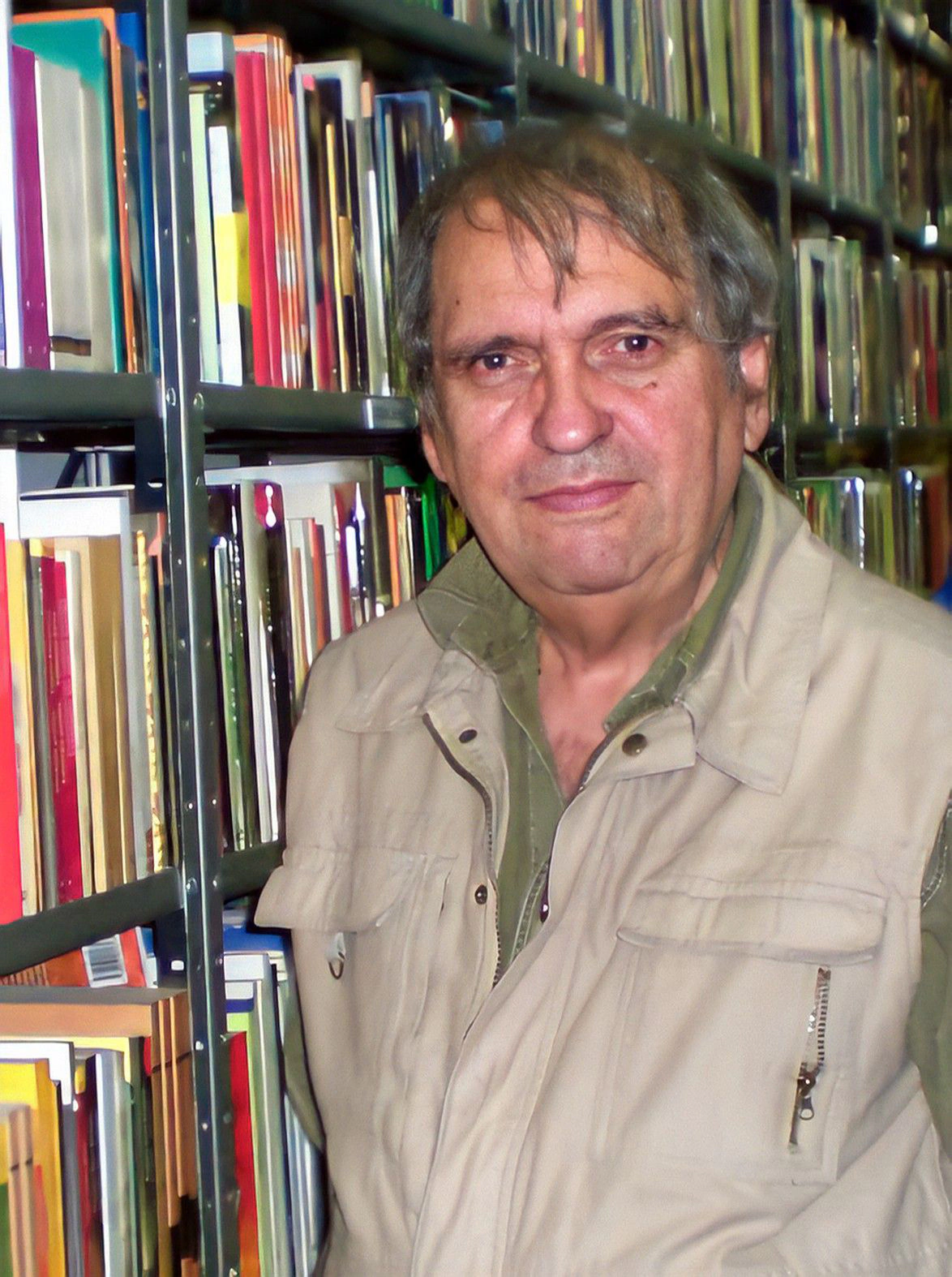
| 10 Quotes | |
| Occup. | Poet |
| From | Venezuela |
| Born | April 8, 1930 Barquisimeto, Lara |
| Age | 95 years |
| Cite | |
Citation Formats
APA Style (7th ed.)
Rafael cadenas biography, facts and quotes. (2026, February 11). FixQuotes. https://fixquotes.com/authors/rafael-cadenas/
Chicago Style
"Rafael Cadenas biography, facts and quotes." FixQuotes. February 11, 2026. https://fixquotes.com/authors/rafael-cadenas/.
MLA Style (9th ed.)
"Rafael Cadenas biography, facts and quotes." FixQuotes, 11 Feb. 2026, https://fixquotes.com/authors/rafael-cadenas/. Accessed 6 Mar. 2026.
Early Life and Background
Rafael Cadenas was born on April 8, 1930, in Barquisimeto, Lara state, a dry inland city where light, dust, and distance shape a temperament toward inwardness. He grew up as Venezuela was being reordered by oil wealth and political authoritarianism - a country of sudden modernity that could feel, for many young writers, like an external spectacle moving faster than the self could assimilate. That early contrast between public noise and private conscience would later become one of his enduring tensions.In his youth he gravitated toward books and the felt precision of language rather than public roles, but he also belonged to a generation for whom politics was unavoidable. Venezuela in the 1940s and early 1950s cycled through democratic hopes and repression, culminating in the dictatorship of Marcos Perez Jimenez. The pressure of the era pushed many young intellectuals toward activism, clandestine circles, and the risk of exile - experiences that sharpened Cadenas's later suspicion of ideological certainty and his insistence on an ethics of attention.
Education and Formative Influences
Cadenas pursued studies that brought him into Caracas's literary and philosophical conversations, where European modernism, Spanish Golden Age verse, and contemporary Latin American poetics were all living influences; his reading ranged widely, but the crucial formation was less a school than a discipline - to treat the sentence as a moral act. His political involvement on the left during the dictatorship led to exile on the Caribbean island of Trinidad in the 1950s, a displacement that forced a reckoning with solitude, estrangement, and the hard work of seeing one's own mind without the familiar mirrors of homeland and group identity.Career, Major Works, and Turning Points
Returning to Venezuela after the fall of Perez Jimenez in 1958, Cadenas became a central voice in the country's post-dictatorship culture as a poet, essayist, and teacher, associated early with the Sardio group and later with Tabla Redonda, both committed to renewing Venezuelan letters and interrogating politics without surrendering poetry to slogans. His breakout book, "Los cuadernos del destierro" (1960), distilled exile into a sober spiritual diary, but it was "Falsas maniobras" (1966) and especially "Derrota" (first circulated in the 1960s) that captured a generation's disillusionment with heroic postures, exposing how revolutionary rhetoric can become another mask for the ego. Later collections such as "Intemperie" (1977) and "Memorial" (2001) deepened his meditative, stripped style, while his essays and teaching helped shape younger writers. In advanced age his international recognition broadened - including the Cervantes Prize (2022) - without altering the basic direction of his work: toward clarity, self-scrutiny, and a hard-won compassion.Philosophy, Style, and Themes
Cadenas's inner life, as his poems imply, is a workshop of vigilance: he distrusts the self when it becomes theatrical, and he distrusts history when it demands that the individual flatten his experience into a role. His verse turns repeatedly to renunciation not as defeatism but as a method for returning perception to reality. “The true search begins when we cease to be the protagonists of our own lives and become mere witnesses to the unfolding of existence”. That sentence could be read as the psychological key to "Derrota": the poem is not an anthem of failure but an exorcism of the need to be someone, to win, to be right - a refusal of the ego's hunger to narrate itself as hero, victim, or judge.Formally, he is a poet of austerity: short lines, spare images, and a conversational gravity that hides its craft behind apparent plainness. The theme of silence is not decorative but ethical, a way to stop violence at its origin in the mind's haste to possess. “Only in the silence of oneself can we hear the other, understand the other, only in the silence of oneself can we be with the other”. In Cadenas, the lyric "I" is repeatedly corrected by listening - to others, to time, to the body's finitude. Freedom, for him, is likewise an inward act rather than a slogan, especially in societies tempted by caudillos, parties, and salvational programs: “Being free means not believing in the mirrors of the world, but in oneself”. The mirrors are politics, prestige, even literary identity; the self he proposes is not self-importance but presence, the capacity to see without distortion.
Legacy and Influence
Cadenas endures as one of the definitive moral imaginations of Venezuelan poetry - a writer who carried his country through dictatorship, democratic turbulence, and later national fracture by insisting that the first revolution must occur in attention and language. His influence can be traced in Latin American poets who prize sobriety over performance and in readers who come to him not for ornament but for guidance: how to live without lying to oneself, how to speak without coercion, how to hold solitude without turning it into bitterness. The honors late in his life ratified what his work had long made clear - that his quiet rigor, forged in exile and tempered by disillusionment, offered a durable model of dignity for literature in the Americas.Our collection contains 10 quotes written by Rafael, under the main topics: Wisdom - Writing - Freedom - Meaning of Life - Live in the Moment.
Frequently Asked Questions
- Rafael Cadenas Derrota: “Derrota” is one of Rafael Cadenas’ most famous poems, a powerful, introspective piece often read as a reflection on disillusionment and personal/political defeat.
- Rafael Cadenas poems: Rafael Cadenas is a Venezuelan poet (born 1930), known for works like “Derrota” and books such as “Falsas maniobras” and “Amante.”
- How old is Rafael Cadenas? He is 95 years old
Rafael Cadenas Famous Works
- 1998 Apuntes sobre San Juan de la Cruz y la mística (Book)
- 1992 Gestiones (Book)
- 1992 Dichos (Book)
- 1983 Amante (Book)
- 1966 Falsas maniobras (Book)
- 1960 Los cuadernos del destierro (Book)
Source / external links