
Rafic Hariri Biography Quotes 9 Report mistakes
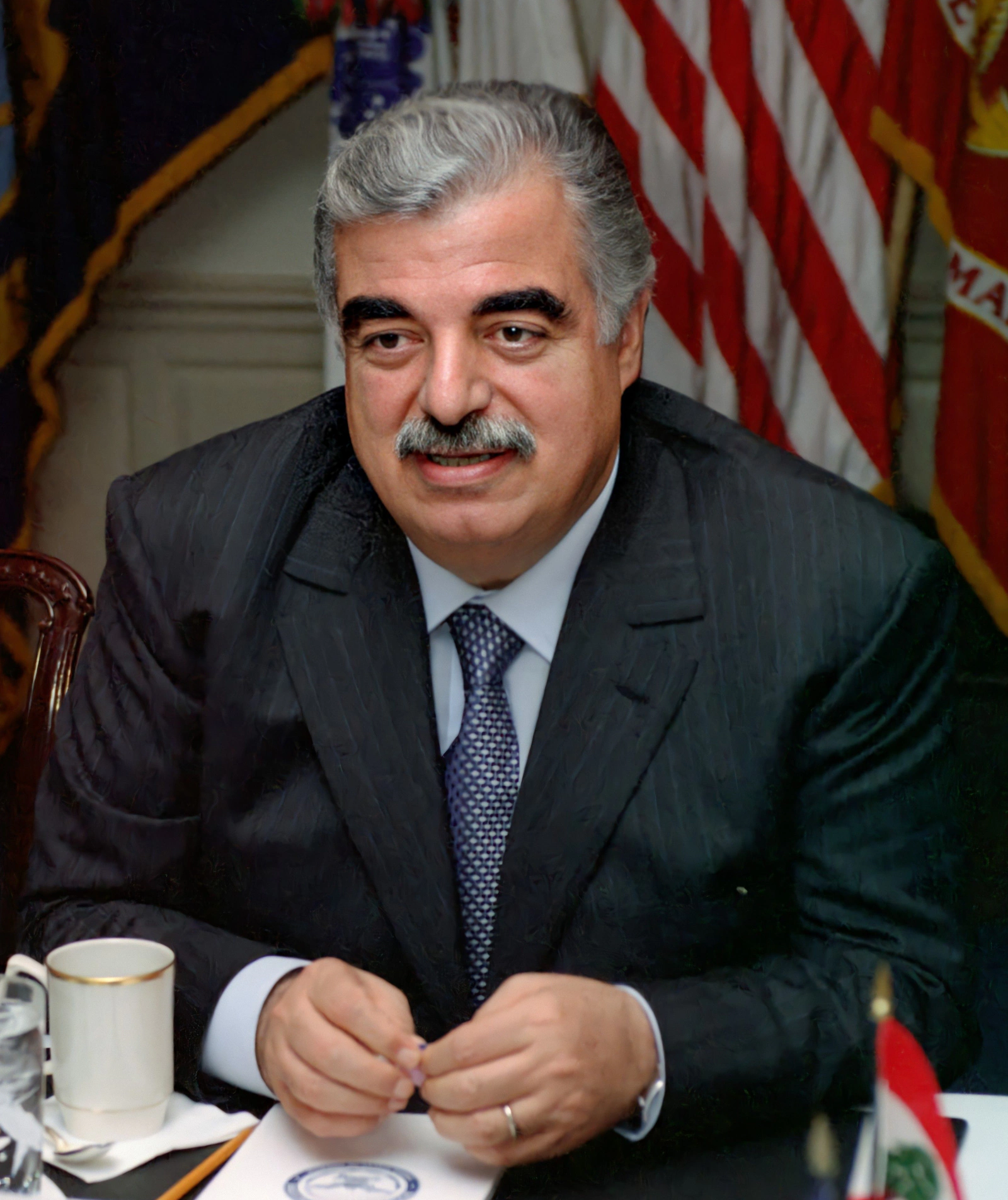
Attr: Helene C. Stikkel
| 9 Quotes | |
| Born as | Rafic Bahaa El Deen Al Hariri |
| Occup. | Statesman |
| From | Lebanon |
| Spouses | Nidal Bustani Nazik Hariri |
| Born | November 1, 1944 Sidon, Lebanon |
| Died | February 14, 2005 Beirut, Lebanon |
| Aged | 60 years |
| Cite | |
Citation Formats
APA Style (7th ed.)
Rafic hariri biography, facts and quotes. (2026, February 11). FixQuotes. https://fixquotes.com/authors/rafic-hariri/
Chicago Style
"Rafic Hariri biography, facts and quotes." FixQuotes. February 11, 2026. https://fixquotes.com/authors/rafic-hariri/.
MLA Style (9th ed.)
"Rafic Hariri biography, facts and quotes." FixQuotes, 11 Feb. 2026, https://fixquotes.com/authors/rafic-hariri/. Accessed 12 Feb. 2026.
Early Life
Rafic Bahaa El Deen Al Hariri was born on November 1, 1944, in Sidon, a historic port city in southern Lebanon. He grew up in a modest Sunni Muslim family and was shaped by the aspirations and constraints of a Lebanon struggling with uneven development and, later, the approach of civil war. From an early age he showed a practical bent for business and organization. After secondary schooling, he pursued commerce studies before seeking opportunities abroad as the Lebanese economy and political order became more fragile in the 1960s.Rise in Saudi Arabia
Hariri moved to Saudi Arabia as a young man and entered the booming construction sector at a moment when the kingdom was channeling oil wealth into infrastructure. Through drive, negotiation skills, and an ability to deliver large projects, he built a reputation that culminated in the creation of Saudi Oger, which became one of the country's leading contractors. His firm won high-profile public works contracts and his standing grew with the Saudi leadership, including King Fahd bin Abdulaziz and Crown Prince Abdullah, relationships that later proved central to his political influence. By the late 1970s and 1980s he had amassed substantial wealth, but he also directed considerable resources toward Lebanon as it descended into civil war.Philanthropy and the Taif Agreement
Hariri's philanthropy began early and became a hallmark of his public identity. Through the Hariri Foundation he financed studies for tens of thousands of Lebanese students abroad and at home, invested in schools and vocational training, and supported hospitals and cultural institutions. He helped fund relief and reconstruction projects even before the guns fell silent, paying for rubble removal and repairs in battered neighborhoods. His access to Saudi decision-makers made him a pivotal facilitator of the 1989 Taif Agreement, the Saudi- and Arab League, sponsored framework that ended the Lebanese Civil War. He was not a formal signatory, but he worked the contacts that brought Lebanese parliamentarians and factional leaders to consensus alongside Arab interlocutors such as Saudi officials and Lebanese Speaker Hussein Husseini.Entry into Government
With the war's end, Hariri returned to Beirut as a figure uniquely positioned to mobilize capital and international goodwill. In 1992 President Elias Hrawi asked him to form a government. Hariri assembled a team that blended technocrats and loyalists, among them Fouad Siniora, a trusted financial aide who later became finance minister and, after Hariri's death, prime minister. Hariri moved quickly to stabilize the collapsing currency and rebuild state capacity. He appointed Riad Salameh as central bank governor, betting that financial credibility and reconstruction could restore growth.Rebuilding Beirut
Hariri's most visible project was the reconstruction of downtown Beirut through Solidere, a company chartered to expropriate, consolidate, and redevelop the devastated center of the capital. The plan aimed to make Beirut a regional services hub with restored heritage facades, new infrastructure, and modern office space. The project attracted foreign investment and transformed the skyline, but it also drew criticism for favoring property developers, displacing small owners, and prioritizing grand projects over social housing. Hariri's supporters credited him with giving war-weary Lebanon a tangible symbol of recovery; his critics saw an urban model tilted toward elite interests.Allies, Rivals, and Governance
Hariri's first premiership unfolded under the heavy shadow of Syrian control. He navigated a complex alignment with the Syrian leadership, including Hafez al-Assad and later Bashar al-Assad, while working with domestic power brokers such as Amal leader Nabih Berri and Druze leader Walid Jumblatt. He maintained contact with Hezbollah, led by Hassan Nasrallah, whose arms and politics were shaped by both domestic and regional dynamics. Within Lebanon, Hariri developed a media network, including Future TV, and consolidated a political current that evolved into the Future Movement. His stance was pragmatic and transactional, aimed at sustaining growth and stability, but it required compromises that alienated portions of the electorate and some reformers.Setbacks and Return
In 1998 Emile Lahoud became president with Syrian backing, and Hariri left office, succeeded by Salim Hoss. The new period tightened the role of the security apparatus and constrained Hariri's room for maneuver. In 2000 he returned to the premiership after parliamentary elections, arguing for a new push on growth and reform. With French President Jacques Chirac as a key ally, he convened international donor conferences, notably Paris II in 2002, to manage Lebanon's mounting public debt in exchange for reforms. His strategy prioritized reconstruction, services, and financial engineering to buy time for growth. Critics cautioned that the debt trajectory was unsustainable and that governance reforms lagged behind.Clash with Syrian Influence
The early 2000s brought rising tensions over the extent of Syrian influence in Lebanese politics. Hariri's relationship with President Emile Lahoud deteriorated sharply. In 2004, under pressure from Damascus, Lebanon's parliament extended Lahoud's term, a move that triggered international criticism and United Nations Security Council Resolution 1559, promoted by France and the United States, calling for respect of Lebanese sovereignty and the withdrawal of foreign forces. Hariri resigned in October 2004. Around the same time, there was a failed assassination attempt against his ally Marwan Hamadeh, deepening fears that violence would be used to settle political scores.Assassination
On February 14, 2005, Hariri's convoy was struck by a massive bomb near the St. George Hotel on Beirut's seafront. The blast killed him and many others, including his close associate and parliamentarian Bassel Fleihan, who died of his injuries weeks later. The assassination shocked the country and reverberated globally. Hundreds of thousands poured into the streets in grief and anger. The killing catalyzed the Cedar Revolution, a broad coalition that coalesced around demands to end Syrian military and intelligence presence. Under intense domestic and international pressure, Syrian troops withdrew from Lebanon in April 2005.Investigations and the Tribunal
A United Nations investigation led by Detlev Mehlis began soon after the assassination and examined the roles of Lebanese and Syrian security figures. This process evolved into the Special Tribunal for Lebanon, established to prosecute those responsible. Years later, in 2020, the tribunal convicted Salim Ayyash, tried in absentia, for participation in the crime, while acquitting others; Hezbollah rejected the tribunal's findings. The proceedings, although incomplete in the eyes of many, underscored the intersection of Lebanese politics with regional rivalries and the fragility of its institutions.Family and Succession
Hariri was married to Nazek Hariri and had several children, among them Bahaa Hariri, Saad Hariri, Ayman Hariri, and Hind Hariri. Saad stepped into political leadership after the assassination, eventually serving as prime minister. Longtime associates, including Fouad Siniora, took on pivotal roles in government. Allies such as Walid Jumblatt and Samir Geagea, and independent voices like the journalist Gebran Tueni, became prominent in the post-assassination landscape, even as new waves of political violence claimed additional figures. The realignment of 2005 reshaped the party system, with the March 14 coalition emerging in opposition to a bloc that included Hezbollah and Amal under Nabih Berri.Legacy
Rafic Hariri's legacy is entwined with the reconstruction and rebranding of postwar Lebanon. Supporters view him as the nation's post-conflict builder, a statesman who mobilized Arab and international support, restored confidence in Beirut, and invested heavily in education and human capital. They point to thousands of graduates who became professionals at home and abroad, and to a downtown that symbolized a return to normal life. Detractors emphasize the costs: rising public debt, uneven development, the social consequences of Solidere's model, and the compromises made under Syrian tutelage. His tenure illustrates the possibilities and limits of using business methods to run a fragmented state emerging from war.Commemoration
Hariri was buried in central Beirut beside the Mohammad Al-Amin Mosque, a complex he had supported. Each year, mourners gather to mark his assassination, and his image remains visible in public spaces and political rhetoric. For many Lebanese, he came to represent both a promise of prosperity and the vulnerabilities of a small country caught between powerful neighbors and global currents. His life, shaped by enterprise, diplomacy, and the ceaseless bargaining of Lebanese politics, left an imprint still felt in the country's institutions, its skyline, and its debates over sovereignty, development, and accountability.Our collection contains 9 quotes written by Rafic, under the main topics: Justice - Peace - Change - Human Rights - War.
Source / external links