
Rafic Hariri Biography Quotes 9 Report mistakes
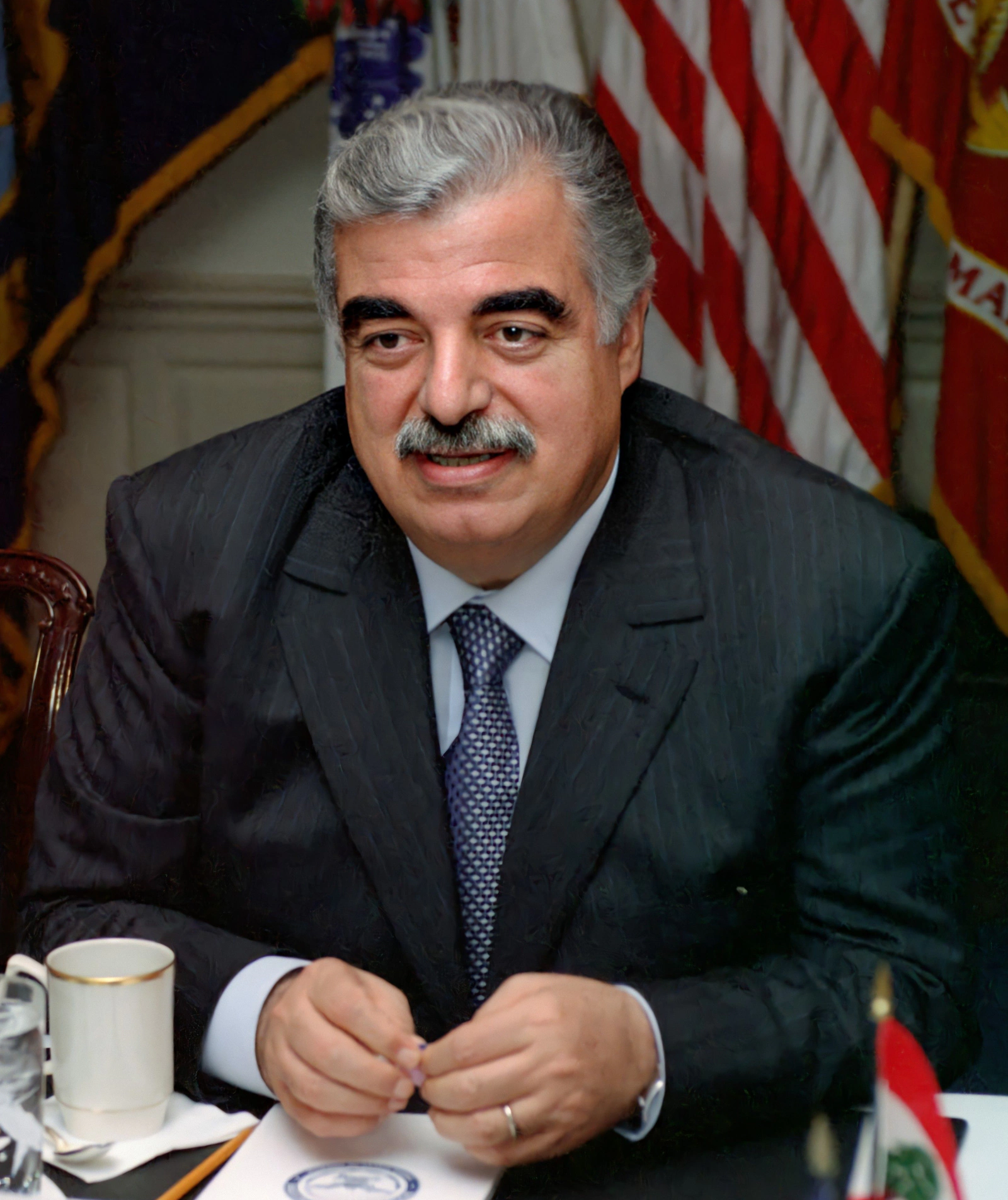
Attr: Helene C. Stikkel
| 9 Quotes | |
| Born as | Rafic Bahaa El Deen Al Hariri |
| Occup. | Statesman |
| From | Lebanon |
| Spouses | Nidal Bustani Nazik Hariri |
| Born | November 1, 1944 Sidon, Lebanon |
| Died | February 14, 2005 Beirut, Lebanon |
| Aged | 60 years |
| Cite | |
Citation Formats
APA Style (7th ed.)
Rafic hariri biography, facts and quotes. (2026, March 14). FixQuotes. https://fixquotes.com/authors/rafic-hariri/
Chicago Style
"Rafic Hariri biography, facts and quotes." FixQuotes. March 14, 2026. https://fixquotes.com/authors/rafic-hariri/.
MLA Style (9th ed.)
"Rafic Hariri biography, facts and quotes." FixQuotes, 14 Mar. 2026, https://fixquotes.com/authors/rafic-hariri/. Accessed 3 Apr. 2026.
Early Life and Background
Rafic Bahaa El Deen Al Hariri was born on November 1, 1944, in the port city of Sidon, in southern Lebanon, into a modest Sunni Muslim family whose circumstances were far from the elite circles he would later dominate. His childhood unfolded under the fragile compact of independent Lebanon: a mercantile republic balancing sects, regions, and outside pressures, but already marked by uneven development. Sidon, commercially active yet socially stratified, gave Hariri an early education in inequality, patronage, and ambition. He came of age in a society where public life depended not only on institutions but on networks of trust, mediation, and favors - habits that would become central to his political method.
The formative fact of his generation was that Lebanon's promise and vulnerability were inseparable. In his youth, Beirut represented Arab modernity - banking, education, publishing, tourism - but the country's prosperity rested on delicate compromises and regional instability. Hariri absorbed both sides of that reality: the attraction of growth and the ever-present threat of collapse. Those who knew his early trajectory often noted not ideology first but drive - a practical, disciplined, almost unsentimental determination to rise. Yet beneath the businessman-to-be was a provincial Lebanese sensibility: loyalty to family, instinct for communal balance, and a conviction that national stature could be built through material reconstruction.
Education and Formative Influences
Hariri studied business administration at the Arab University of Beirut, graduating in the 1960s as Lebanon still projected confidence to the region. University life in Beirut exposed him to the city's cosmopolitanism, to Arab nationalism's aftershocks, and to the emerging belief that technocratic competence could solve political disorder. But his decisive formation came after he left for Saudi Arabia in 1965. There he worked first as an employee, then built his own contracting fortune through Ciconest, and later through Saudi Oger, whose expansion made him one of the Arab world's richest men. Saudi Arabia taught him scale, statecraft through personal relations, and the utility of proximity to power, especially his ties to King Fahd and the Saudi royal court. Wealth did not simply enrich him; it trained him to think in terms of projects, timetables, leverage, and elite mediation. By the late 1970s and 1980s, as Lebanon descended into civil war, Hariri had become both financier and broker - funding students, charities, and eventually political initiatives - shaping his self-image as a man who could convert private success into national rescue.
Career, Major Works, and Turning Points
Hariri's public ascent accelerated during the last phase of the Lebanese Civil War, when he used money, diplomacy, and Saudi backing to support the negotiations that culminated in the 1989 Taif Agreement, the framework that ended large-scale fighting and rebalanced Lebanon's confessional order. He became prime minister in 1992, again from 1992 to 1998, and from 2000 to 2004, dominating postwar Lebanon even when out of office. His great project was reconstruction: rebuilding downtown Beirut through Solidere, restoring infrastructure, reasserting monetary confidence alongside Banque du Liban, and presenting Lebanon as open for business after ruin. Admirers saw a builder restoring a shattered capital; critics saw debt-fueled neoliberalism, privatized urban memory, and an economy skewed toward finance and real estate. He maneuvered constantly among Syrian tutelage, Lebanese factionalism, Saudi interests, and Western capitals, while also competing with President Emile Lahoud and security networks aligned with Damascus. His resignation in October 2004 followed mounting conflict over Syrian influence, especially the extension of Lahoud's term. On February 14, 2005, Hariri was assassinated in a massive truck bombing on the Beirut seafront. His killing became a historical rupture, triggering the Cedar Revolution, the withdrawal of Syrian troops, and a new, volatile era in Lebanese politics.
Philosophy, Style, and Themes
Hariri's philosophy was less a doctrine than a grammar of restoration. He believed legitimacy could be rebuilt materially - through roads, schools, telecommunications, credit, and the symbolic repair of Beirut itself. Hence his insistence that “We need to restore the confidence in the country, first of all”. The key word was confidence: investor confidence, civic confidence, international confidence, and, in a deeper psychological sense, confidence that Lebanon had not been fatally broken by war. He practiced politics as reassurance under pressure. His style was conciliatory, transactional, and future-oriented, often minimizing ideological rupture in favor of managed coexistence. “We don't think that we are in a quarrel with anybody. We may have a difference of opinion, but we'll not allow such differences of opinion to grow into a problem that stands in the way of reconstructing the country and regaining the democratic path”. That sentence captures his inner method: to depersonalize conflict, isolate obstruction, and return discourse to reconstruction.
At the same time, Hariri was not merely a technocrat in a suit. He was an Arab statesman shaped by Lebanon's front-line exposure to the Arab-Israeli conflict and by the Palestinian question's constant pressure on Lebanese sovereignty. His language on Israel could be blunt, even accusatory: “On the other hand, we have in Israel, an Israeli government which has been elected by the Israeli people. Their political agenda is not for peace. They are from the camp anti-peace”. This harder edge reveals a man often misread as only pragmatic. He sought foreign capital and Western ties, but he also understood that Lebanese recovery could not be detached from regional injustice, occupation, and the unresolved terms of war and peace. Psychologically, he fused two impulses not easily reconciled: builder's optimism and siege consciousness. He wanted a normal state in an abnormal neighborhood, and that tension defined both his reach and his limits.
Legacy and Influence
Hariri's legacy is immense, divisive, and still unfinished. He redefined the scale of postwar ambition in Lebanon, creating a model of leadership that mixed private wealth, patronage, philanthropy, regional diplomacy, and state rebuilding. Thousands of Lebanese students benefited from his scholarships; Beirut's skyline and road network still bear his imprint; Sunni political leadership after him was measured against his authority, especially through the rise of his son Saad Hariri. Yet the Hariri era also left structural burdens: high public debt, fragile growth, and a political economy overly dependent on services, borrowing, and elite bargains. His assassination transformed him from power broker into martyr for many Lebanese, and from that moment his image ceased to belong only to his allies. He came to symbolize both the possibility of a sovereign, outward-looking Lebanon and the tragedy of a state where reform, wealth, and political murder remain entangled.
Our collection contains 9 quotes written by Rafic, under the main topics: Justice - War - Change - Peace - Human Rights.
Source / external links